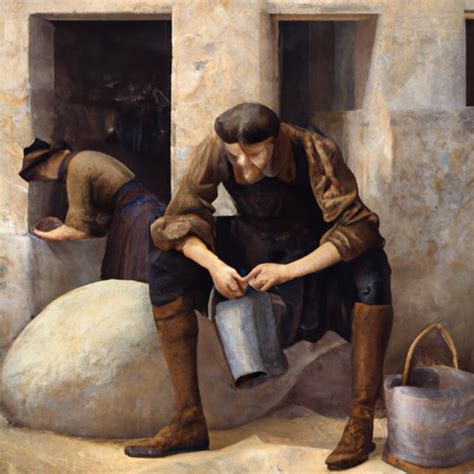
Realism is an art movement that emerged in the mid-19th century, characterized by its focus on depicting everyday life and common objects with accuracy and detail. Unlike idealistic or romanticized representations, realist artists sought to capture the true essence of their subjects, often portraying scenes that were mundane, unidealized, or even disturbing.

The Appeal of Ordinary Life
One of the primary reasons that realist artists were drawn to their subject matter was their fascination with the inherent beauty and drama of everyday life. Instead of seeking inspiration in grand historical events or mythological figures, realists found inspiration in the mundane aspects of human existence. They believed that even the most ordinary objects and experiences could be transformed into works of art through careful observation and meticulous representation.
Social Commentary and Criticism
Realist artists also used their work to comment on the social issues of their time. Many realists were deeply concerned about the poverty, inequality, and injustice that they witnessed around them. Through their art, they sought to raise awareness about these problems and to provoke viewers to reflect on their own role in society.
For example, Gustave Courbet’s painting “The Stone Breakers” (1849) depicts two laborers toiling away at their task, their bodies bent and faces contorted in expressions of exhaustion and despair. The painting serves as a powerful indictment of the harsh working conditions and social injustice of the time.
The Rise of Industrialization and Urbanization
The emergence of realism coincided with a period of rapid industrialization and urbanization in Europe and the United States. These transformative changes brought significant shifts in society, including the rise of a working class, the growth of cities, and the decline of traditional rural life. Realist artists were fascinated by these changes and sought to capture the impact that they had on the lives of ordinary people.
A Break from Idealistic Conventions
Prior to the rise of realism, art had been dominated by idealistic conventions that emphasized beauty, harmony, and idealized forms. Realist artists rejected these conventions, arguing that art should reflect the true nature of the world as it was, not as it was idealized.
They believed that by capturing the imperfections, complexities, and even ugliness of life, they could create a more authentic and meaningful form of art.
Key Figures and Movements
Some of the most prominent realist artists include:
- Gustave Courbet (1819-1877)
- Jean-François Millet (1814-1875)
- Honoré Daumier (1808-1879)
- Thomas Eakins (1844-1916)
Related Art Movements:
- Academic Realism
- Ashcan School
- Social Realism
Impact and Legacy
Realism had a profound impact on the development of art and continues to influence artists today. It helped to liberate artists from the constraints of idealism and opened up new possibilities for the representation of everyday life. Realist techniques and principles have been adopted by a wide range of artists, from Impressionists to contemporary realists.
Table 1: Key Characteristics of Realism
| Characteristic | Description |
|---|---|
| Focus on everyday life | Depicts subjects from daily experience, often including mundane or commonplace scenes |
| Accuracy and detail | Emphasizes careful observation and precise representation of form, texture, and color |
| Social commentary | Often used to comment on social issues, such as poverty, inequality, and environmental degradation |
| Rejection of idealism | Breaks from idealized conventions of beauty and perfection, focusing on the authenticity of life |
| Emphasis on process | Valued the process of observation and execution, often leaving brushstrokes and imperfections visible |
Table 2: Prominent Realist Artists and Their Major Works
| Artist | Major Work(s) | Description |
|---|---|---|
| Gustave Courbet | The Stone Breakers (1849) | Depicts two laborers toiling away at a harsh task, capturing the realities of industrial labor |
| Jean-François Millet | The Gleaners (1857) | Shows a group of poor women collecting leftover grain after the harvest, highlighting the hardships of rural life |
| Honoré Daumier | Third-Class Carriage (1862) | Depicts passengers in a crowded third-class train carriage, emphasizing the cramped and uncomfortable conditions |
| Thomas Eakins | The Gross Clinic (1875) | Shows a surgical operation in progress, capturing the gruesome and clinical realities of medical procedures |
Table 3: Impact of Realism on Art and Society
| Impact | Description |
|---|---|
| Liberated artists from idealism | Allowed artists to explore a wider range of subjects and styles, embracing the complexities of life |
| Influenced Impressionism and other movements | Impressionists adopted realist techniques and focus on everyday life, while expanding on them with looser brushwork and emphasis on light |
| Raised awareness of social issues | Brought attention to social injustices and problems, prompting discussion and activism |
| Contributed to the development of photography | Realism’s emphasis on accuracy and detail influenced the development of photography as a means of documenting life |
Table 4: Key Differences between Realism and Idealism
| Characteristic | Realism | Idealism |
|---|---|---|
| Subject matter | Everyday scenes, common objects | Grand historical events, mythological figures |
| Focus | Accuracy, detail | Beauty, harmony, idealized forms |
| Social commentary | Present | Absent |
| Rejection of conventions | Embraced | Adhered to |
| Emphasis on process | Valued | Subordinate to finished product |
FAQs
1. What were the main reasons that realist artists were drawn to their subject matter?
Realist artists were drawn to everyday life, social commentary, the impact of industrialization, the rejection of idealistic conventions, and the rise of photography.
2. Which artists are considered key figures in the realist movement?
Gustave Courbet, Jean-François Millet, Honoré Daumier, and Thomas Eakins are among the most prominent realist artists.
3. How did realism impact the development of art?
Realism liberated artists from idealism, influenced Impressionism and other movements, raised awareness of social issues, and contributed to the development of photography.
4. What are the key differences between realism and idealism in art?
Realism focuses on everyday scenes with accuracy and detail, while idealism emphasizes beauty, harmony, and idealized forms. Realism often includes social commentary, while idealism does not.
5. Why is realism still relevant today?
Realism’s principles of observation, accuracy, and authenticity continue to influence contemporary artists and help us to connect with the complexities of the world around us.
6. What are some modern applications of realist techniques?
Realist techniques can be used in various fields, such as scientific illustration, forensic art, and medical imaging, where accuracy and detail are crucial.
7. How can I incorporate realist principles into my own art?
Start by observing your surroundings closely, paying attention to details and textures. Experiment with different materials and techniques to create realistic representations. Don’t be afraid to depict the imperfections and complexities of life.
8. What are some tips for aspiring realist artists?
Practice regularly to hone your observation and drawing skills. Study the works of master realist artists. Immerse yourself in different environments to gain a wide range of experiences and perspectives.