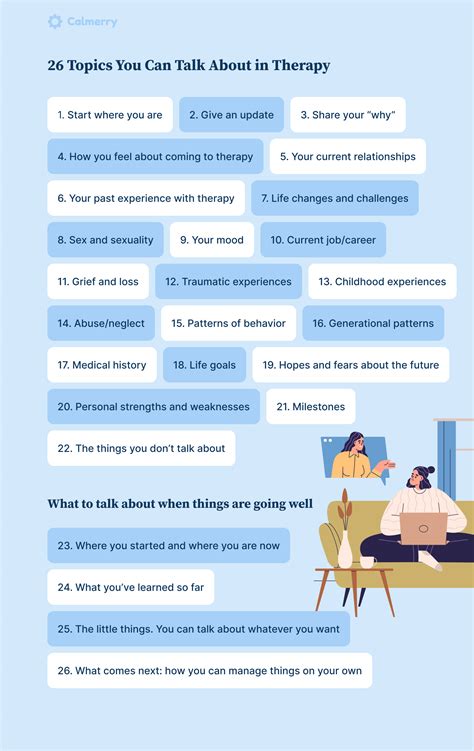
Therapy is a safe and supportive space where you can talk about anything that’s on your mind. However, it can be difficult to know where to start, especially if you’re not used to talking about your feelings.

Here are some ideas for what you can talk to your therapist about:
- Your thoughts and feelings. What are you struggling with? What’s making you happy? What are your goals?
- Your relationships. How are you getting along with your family, friends, and significant other?
- Your work or school life. Are you feeling stressed or overwhelmed? Do you feel like you’re not meeting your potential?
- Your physical health. How are you taking care of yourself? Are you getting enough sleep, eating healthy foods, and exercising regularly?
- Your mental health. Do you have any symptoms of depression, anxiety, or other mental health conditions?
- Your past experiences. How have your past experiences shaped who you are today?
It’s important to remember that you don’t have to talk about everything all at once. Start with what feels most comfortable and go from there. Your therapist is there to listen and support you, so don’t be afraid to talk about anything that’s on your mind.
Tips for Talking to Your Therapist
Here are some tips for talking to your therapist:
- Be honest and open. The more honest you are with your therapist, the more they can help you.
- Don’t be afraid to talk about your feelings. Even if you’re embarrassed or ashamed of your feelings, it’s important to talk about them with your therapist.
- Be specific. Don’t just say that you’re feeling “down.” Instead, describe your symptoms in detail so that your therapist can understand what you’re going through.
- Be patient. Therapy takes time. Don’t expect to feel better overnight.
Common Mistakes to Avoid
Here are some common mistakes to avoid when talking to your therapist:
- Don’t try to be perfect. No one is perfect, and your therapist doesn’t expect you to be.
- Don’t compare yourself to others. Everyone is different, and your journey is unique.
- Don’t give up. If you’re not feeling better after a few sessions, don’t give up. Therapy takes time.
How to Find a Therapist
If you’re looking for a therapist, there are a few things you can do:
- Ask your doctor or other healthcare provider for a referral.
- Contact your insurance company to see if they offer mental health coverage.
- Do an online search for therapists in your area.
- Ask friends or family members for recommendations.
Once you’ve found a few therapists, schedule an appointment for a consultation. This will give you a chance to meet the therapist and see if they’re a good fit for you.
Benefits of Therapy
Therapy can help you:
- Manage stress and anxiety
- Improve your relationships
- Cope with difficult life events
- Achieve your goals
- Live a happier and more fulfilling life
If you’re struggling with your mental health, therapy can help. Don’t be afraid to reach out for help.
Additional Resources
Here are some additional resources that you may find helpful:
- The National Alliance on Mental Illness
- The Anxiety and Depression Association of America
- The American Psychological Association
Conclusion
Therapy is a powerful tool that can help you improve your mental health and well-being. If you’re struggling with your mental health, don’t be afraid to reach out for help. A therapist can help you understand your symptoms, develop coping mechanisms, and achieve your goals.
Frequently Asked Questions
Here are some frequently asked questions about therapy:
- How much does therapy cost? The cost of therapy varies depending on the therapist, the type of therapy, and the insurance coverage you have.
- How often should I go to therapy? The frequency of therapy sessions varies depending on your individual needs.
- How long does therapy take? Therapy can take anywhere from a few months to a few years, depending on your individual needs.
- Can I get therapy online? Yes, you can get therapy online through platforms like TalkSpace and BetterHelp.
Table 1: Common Mental Health Conditions
| Condition | Symptoms |
|---|---|
| Depression | Feeling sad, hopeless, and worthless; losing interest in activities; having trouble sleeping or concentrating |
| Anxiety | Feeling nervous, anxious, or on edge; having difficulty concentrating; having trouble sleeping |
| Post-traumatic stress disorder (PTSD) | Having flashbacks, nightmares, or intrusive thoughts about a traumatic event; avoiding reminders of the event; feeling numb or detached |
| Bipolar disorder | Having episodes of mania (feeling very happy, energetic, and impulsive) and depression (feeling very sad, hopeless, and worthless) |
| Schizophrenia | Having hallucinations (seeing or hearing things that aren’t there) or delusions (believing things that aren’t true) |
Table 2: Benefits of Therapy
| Benefit | Description |
|---|---|
| Reduced stress and anxiety | Therapy can help you manage stress and anxiety by teaching you coping mechanisms and relaxation techniques. |
| Improved relationships | Therapy can help you improve your relationships by teaching you communication skills and conflict resolution strategies. |
| Coping with difficult life events | Therapy can help you cope with difficult life events by providing you with support and guidance. |
| Achieving your goals | Therapy can help you achieve your goals by providing you with motivation and support. |
| Living a happier and more fulfilling life | Therapy can help you live a happier and more fulfilling life by helping you understand yourself better and develop coping mechanisms for dealing with challenges. |
Table 3: Tips for Finding a Therapist
| Tip | Description |
|---|---|
| Ask your doctor or other healthcare provider for a referral. | Your doctor or other healthcare provider may be able to refer you to a therapist who specializes in your area of need. |
| Contact your insurance company to see if they offer mental health coverage. | Many insurance companies offer mental health coverage, which can help you pay for therapy. |
| Do an online search for therapists in your area. | There are many online directories that can help you find therapists in your area. |
| Ask friends or family members for recommendations. | Friends or family members who have been to therapy may be able to recommend a therapist to you. |
Table 4: Common Mistakes to Avoid When Talking to Your Therapist
| Mistake | Description |
|---|---|
| Trying to be perfect | No one is perfect, and your therapist doesn’t expect you to be. |
| Comparing yourself to others | Everyone is different, and your journey is unique. |
| Giving up | If you’re not feeling better after a few sessions, don’t give up. Therapy takes time. |