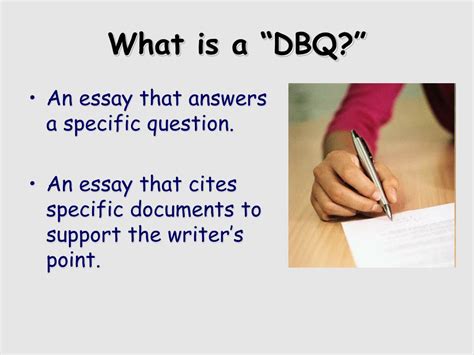
A Document-Based Question (DBQ) is a type of essay question that requires students to analyze and interpret historical documents in order to develop a cogent argument about a particular topic. DBQs are commonly used in language arts and social studies classes, and they play a vital role in helping students develop their critical thinking, research, and writing skills.

Key Features of a DBQ
- Historical Documents: DBQs present students with a collection of historical documents that relate to a specific topic or issue. These documents can include letters, diaries, speeches, newspaper articles, government reports, and other primary sources.
- Historical Context: In addition to the documents, DBQs often provide students with a brief historical context that sets the stage for the topic. This context may include information about the time period, the major events that led up to the issue, and the key的人物 involved.
- Prompt: The DBQ prompt is a question that students must answer using the provided documents and their own knowledge of the historical context. The prompt typically asks students to analyze the documents, identify patterns or themes, and develop an argument about the topic.
Benefits of DBQs
DBQs offer a number of benefits for students, including:
- Critical Thinking: DBQs require students to think critically about historical evidence, identify bias, and develop their own interpretations of the past.
- Research Skills: DBQs help students develop their research skills by requiring them to locate, evaluate, and synthesize information from multiple sources.
- Writing Skills: DBQs give students an opportunity to practice writing clear, concise, and well-supported essays.
- Historical Understanding: DBQs help students deepen their understanding of historical events and issues by exposing them to primary source materials.
How to Write a DBQ Essay
Writing a DBQ essay involves a number of steps:
- Read and Analyze the Documents: Carefully read each of the documents provided in the DBQ. Pay attention to the main points, the author’s bias, and the relevance of the document to the prompt.
- Identify Patterns and Themes: Determine the common themes or patterns that emerge from the documents. This will help you develop your argument for the essay.
- Develop an Argument: Formulate a thesis statement that answers the prompt and is supported by the documents. Your thesis statement should be specific and defensible.
- Write the Essay: Organize your essay into paragraphs that support your thesis statement. Use evidence from the documents to backing up your claims.
- Proofread and Revise: Carefully proofread your essay for errors in grammar, spelling, and formatting. Make sure that your essay is well-organized and easy to follow.
Tips for Success
Here are some tips for success when writing a DBQ essay:
- Read the prompt carefully: Make sure you understand the question and what it is asking you to do.
- Take notes on the documents: Write down key points, identify bias, and note any connections between the documents.
- Develop a strong thesis statement: Your thesis statement should be specific, defensible, and relevant to the prompt.
- Use evidence from the documents: Support your claims with specific evidence from the documents.
- Write clearly and concisely: Use clear, concise language and avoid unnecessary jargon.
- Proofread carefully: Check your essay for errors in grammar, spelling, and formatting.
Conclusion
DBQs are a valuable tool for teaching history and developing critical thinking skills. By analyzing historical documents, students can gain a deeper understanding of the past and develop their ability to think critically about evidence.