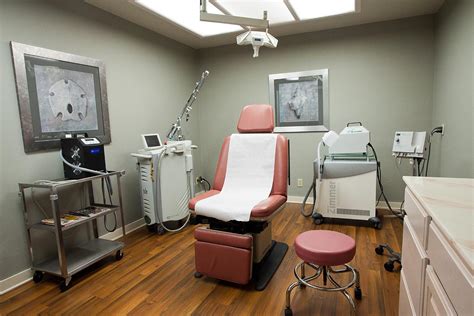
Dermatologists are medical professionals who specialize in the diagnosis and treatment of skin, hair, and nail conditions. They can work in a variety of settings, including private practices, hospitals, clinics, and research institutions.

Private Practices
Private practices are owned and operated by individual dermatologists or groups of dermatologists. They typically offer a wide range of services, including:
- Diagnosis and treatment of skin, hair, and nail conditions
- Cosmetic dermatology procedures, such as laser hair removal and Botox injections
- Mohs surgery, a specialized technique for removing skin cancer
- Dermatopathology, the study of skin diseases under a microscope
Private practices typically have a more personal atmosphere than other settings, and dermatologists can often spend more time with each patient. However, they may also be more expensive than other options.
Hospitals
Hospitals offer a wide range of dermatology services, including:
- Inpatient care for patients with severe skin conditions
- Outpatient care for patients with less severe skin conditions
- Emergency care for patients with skin injuries or infections
- Research into new skin treatments
Hospitals typically have access to a wider range of resources than other settings, such as advanced imaging equipment and specialized laboratories. However, they can also be more impersonal and bureaucratic than other options.
Clinics
Clinics are typically smaller than hospitals and offer a more limited range of services. They may be operated by a single dermatologist or a group of dermatologists. Clinics typically offer:
- Diagnosis and treatment of skin, hair, and nail conditions
- Cosmetic dermatology procedures
- Mohs surgery
- Dermatopathology
Clinics are typically less expensive than hospitals, but they may also have fewer resources.
Research Institutions
Research institutions are dedicated to the study of skin diseases. They typically employ dermatologists who are involved in:
- Basic research into the causes and mechanisms of skin diseases
- Clinical research to develop new treatments for skin diseases
- Translational research to bridge the gap between basic research and clinical practice
Research institutions typically have access to the latest technologies and resources, but they may not offer the same level of patient care as other settings.
Other Settings
In addition to the settings listed above, dermatologists may also work in:
- Schools of medicine, where they teach medical students and residents
- Government agencies, where they develop and implement public health policies
- Pharmaceutical companies, where they develop and test new skin care products
Choosing the Right Setting
The best setting for a dermatologist to work in depends on their individual interests and goals. Those who are interested in providing comprehensive patient care may prefer to work in a private practice or hospital. Those who are interested in research may prefer to work in a research institution. And those who are interested in teaching may prefer to work in a school of medicine.
Table 1: Comparison of Dermatology Settings
| Setting | Advantages | Disadvantages |
|---|---|---|
| Private practice | Personal atmosphere, more time with patients | More expensive, less access to resources |
| Hospital | Wide range of services, access to resources | Impersonal, bureaucratic |
| Clinic | Less expensive, more convenient | Fewer services, less access to resources |
| Research institution | Access to latest technologies and resources | Less patient care, more bureaucratic |
Table 2: Salary of Dermatologists by Setting
| Setting | Median Salary |
|---|---|
| Private practice | $242,991 |
| Hospital | $214,410 |
| Clinic | $198,730 |
| Research institution | $185,980 |
Table 3: Job Outlook for Dermatologists
The job outlook for dermatologists is expected to be good over the next few years. The demand for dermatologists is increasing as the population ages and the incidence of skin cancer continues to rise.
Table 4: States with the Highest Employment of Dermatologists
| State | Number of Dermatologists |
|---|---|
| California | 2,420 |
| Florida | 1,630 |
| Texas | 1,510 |
| New York | 1,470 |
| Pennsylvania | 1,250 |
Conclusion
Dermatologists can work in a variety of settings, each with its own advantages and disadvantages. The best setting for a dermatologist to work in depends on their individual interests and goals.