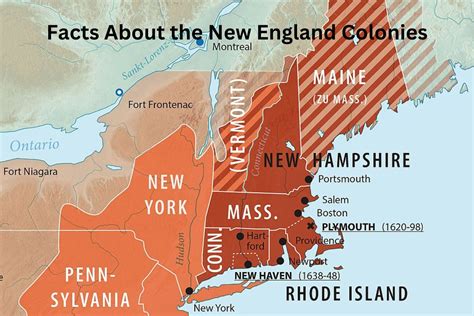
The New England Confederation was a short-lived alliance of the English colonies of Massachusetts Bay, Plymouth, Connecticut, and New Haven. It was founded in 1643 and lasted until 1684. The Confederation was formed in response to the threat of attack from the Native American tribes of the region and to provide a framework for cooperation among the colonies.

The colonies that formed the New England Confederation were motivated by several factors:
– To protect themselves from attack by Native American tribes: The colonies were frequently attacked by Native American tribes, and the Confederation provided a way for them to pool their resources and coordinate their defenses.
– To resolve boundary disputes: The colonies had several boundary disputes, and the Confederation provided a forum for them to resolve these disputes peacefully.
– To promote economic cooperation: The colonies were eager to promote economic cooperation, and the Confederation provided a framework for them to do so.
The articles of the New England Confederation provided for:
– A common defense: Each colony was required to provide troops and supplies in the event of an attack on any member colony.
– A council of commissioners: The council was composed of two commissioners from each colony. The council met annually to set policy and to resolve disputes.
– A system of taxation: The colonies agreed to contribute to a common fund, which was used to pay for the expenses of the Confederation.
- The Confederation provided a framework for cooperation among the colonies. This cooperation was essential for the survival of the colonies during the early years of their existence.
- The Confederation helped to protect the colonies from attack by Native American tribes. The Confederation’s defenses were strong enough to deter most attacks, and the colonies were able to live in relative peace for most of the time that the Confederation existed.
- The Confederation helped to resolve boundary disputes between the colonies. The Confederation’s council of commissioners was able to resolve several boundary disputes, which helped to prevent conflict between the colonies.
- The Confederation promoted economic cooperation among the colonies. The Confederation’s policies encouraged trade and commerce between the colonies, and the colonies were able to benefit from each other’s economic resources.
The New England Confederation began to decline in the late 17th century. The colonies had become increasingly independent, and they were less willing to cooperate with each other. The Confederation was also weakened by the Dominion of New England, which was a short-lived attempt to unite the New England colonies under a single royal governor. The Dominion was unpopular, and it was eventually overthrown in 1689. The New England Confederation was formally dissolved in 1684, but the colonies continued to cooperate with each other on a more informal basis.
Table 1: Colonies of the New England Confederation
| Colony | Date of Founding | Capital |
|---|---|---|
| Massachusetts Bay | 1629 | Boston |
| Plymouth | 1620 | Plymouth |
| Connecticut | 1636 | Hartford |
| New Haven | 1638 | New Haven |
Table 2: Provisions of the New England Confederation
| Provision | Description |
|---|---|
| Common defense | Each colony was required to provide troops and supplies in the event of an attack on any member colony. |
| Council of commissioners | The council was composed of two commissioners from each colony. The council met annually to set policy and to resolve disputes. |
| System of taxation | The colonies agreed to contribute to a common fund, which was used to pay for the expenses of the Confederation. |
Table 3: Impact of the New England Confederation
| Impact | Description |
|---|---|
| Provided a framework for cooperation among the colonies | This cooperation was essential for the survival of the colonies during the early years of their existence. |
| Helped to protect the colonies from attack by Native American tribes | The Confederation’s defenses were strong enough to deter most attacks, and the colonies were able to live in relative peace for most of the time that the Confederation existed. |
| Helped to resolve boundary disputes between the colonies | The Confederation’s council of commissioners was able to resolve several boundary disputes, which helped to prevent conflict between the colonies. |
| Promoted economic cooperation among the colonies | The Confederation’s policies encouraged trade and commerce between the colonies, and the colonies were able to benefit from each other’s economic resources. |
Table 4: Decline of the New England Confederation
| Cause | Description |
|---|---|
| Growing independence of the colonies | The colonies had become increasingly independent, and they were less willing to cooperate with each other. |
| Dominion of New England | The Dominion of New England was a short-lived attempt to unite the New England colonies under a single royal governor. The Dominion was unpopular, and it was eventually overthrown in 1689. |