Understanding Voting Districts

In American politics, voting districts, also known as electoral districts, are geographical areas established to elect representatives to legislative bodies. These districts are designed to ensure fair and equal representation for all citizens by dividing a population into smaller, manageable units. By demarcating specific boundaries, voting districts establish the parameters for who can vote for a particular candidate or issue.
Purpose and Significance
Voting districts play a crucial role in the democratic process:
- Fair Representation: They ensure that all citizens have an equal voice in choosing their representatives.
- Accountability: Elected officials are held accountable to the voters within their districts, enhancing responsiveness.
- Political Diversity: Voting districts can foster political diversity by ensuring that different perspectives and interests are represented in legislative bodies.
- Administrative Convenience: Smaller geographical units simplify election administration and voter registration.
Types of Voting Districts
There are two main types of voting districts:
- Single-Member Districts: Constituents elect a single representative to represent the entire district.
- Multi-Member Districts: Voters elect multiple representatives, allowing for proportional representation of different political parties or groups.
Creation and Redistricting
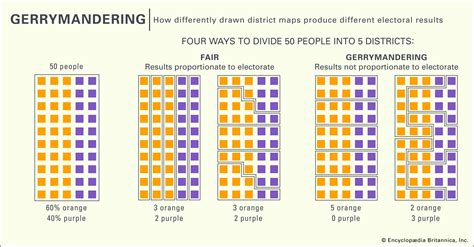
Voting districts are typically established through a process called redistricting, which involves redrawing district boundaries to reflect population changes and ensure equal representation. Redistricting can be a contentious process, with political parties often attempting to gerrymander districts to favor their candidates.
Gerrymandering
Gerrymandering is the practice of manipulating district boundaries to create an unfair advantage for a particular political party or candidate. This can be achieved by:
- Packing: Concentrating voters of one party into a few districts, reducing their influence in other areas.
- Cracking: Splitting voters of one party across multiple districts, diminishing their ability to elect their preferred candidate.
Remedies for Gerrymandering
Several legal and political measures have been implemented to address gerrymandering:
- Independent Redistricting Commissions: Nonpartisan bodies responsible for drawing district boundaries.
- Anti-Gerrymandering Laws: Prohibiting districts that are irregularly shaped or dilute the voting power of certain groups.
- Court Challenges: Litigation to challenge gerrymandered districts.
Examples
- In the United States, there are 435 voting districts for the House of Representatives.
- The United Kingdom has 650 parliamentary constituencies.
- The European Parliament has 705 voting districts.
Importance for AP Human Geography
Voting districts are a key concept in AP Human Geography as they:
- Influence political participation and representation.
- Reflect population distribution and diversity.
- Impact election outcomes and the balance of power.
| Type | Description | Advantages | Disadvantages |
|---|---|---|---|
| Single-Member Districts | Constituents elect a single representative for the entire district. | Simple, unambiguous representation; accountability of elected officials to constituents. | Potential for gerrymandering; reduced diversity. |
| Multi-Member Districts | Voters elect multiple representatives, ensuring proportional representation. | Higher degree of political diversity; representation of minority interests. | Complex and less intuitive; potential for intra-district competition. |
| At-Large Districts | The entire jurisdiction or region is considered a single voting district. | Easy to create and administer; proportional representation. | Less accountability of elected officials to specific communities; potential for domination by majority groups. |
| Proportional Representation Districts | Districts are designed to ensure that the percentage of seats won by each party reflects the percentage of votes received. | High degree of political diversity; fair representation of minority interests. | Complex and difficult to implement; potential for instability. |
- Data Collection: Demographic and geographic data are gathered to determine the size and population distribution of the jurisdiction.
- Districting Plan Development: Proposals for new district boundaries are created, balancing factors such as population equality, compactness, and community of interest.
- Public Input: Citizens and stakeholders are given opportunities to review and provide feedback on proposed plans.
- Approval: The redistricting plan is submitted for approval by the appropriate governing body, such as a state legislature or independent commission.
- Implementation: The new district boundaries are put into effect for subsequent elections.
- Establish independent redistricting commissions with bipartisan or nonpartisan membership.
- Enact laws prohibiting irregularly shaped districts or the dilution of voting power for certain groups.
- Encourage citizen participation in the redistricting process to ensure transparency and accountability.
- Utilize technology and data analysis to identify potential gerrymandering practices.
Voting districts are fundamental to democratic representation. By dividing a population into manageable units, they ensure fair and equal voting rights for all citizens. However, the creation and maintenance of voting districts can be fraught with challenges, such as gerrymandering. Understanding the types, creation process, and potential pitfalls of voting districts is essential for effective civic participation and transparent governance.