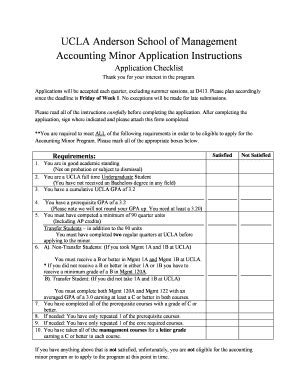
In the competitive realm of finance, a minor in accounting from the prestigious UCLA Anderson School of Management can unlock a world of lucrative career opportunities. The program empowers students with a comprehensive understanding of accounting principles, financial reporting, and auditing, equipping them to navigate the complex landscape of the business world.
Why Pursue a UCLA Minor in Accounting?
According to the Bureau of Labor Statistics, the median annual salary for accountants and auditors in the U.S. is over $70,000. With a minor in accounting from UCLA, you can gain the skills and knowledge necessary to secure high-paying positions in a variety of industries, including:
- Consulting: PwC, Deloitte, and EY are among the Big Four accounting firms that regularly hire UCLA accounting graduates.
- Finance: Investment banks, commercial banks, and hedge funds value the analytical and financial reporting skills that accounting minors develop.
- Industry: Companies such as Amazon, Google, and Apple seek accounting professionals to manage their financial operations.
Curriculum and Course Highlights
The UCLA minor in accounting consists of 18 units of coursework, providing students with a solid foundation in accounting concepts and principles. Core courses include:
- Introduction to Financial Accounting
- Managerial Accounting
- Financial Accounting & Reporting
- Auditing
- Taxation
Students can also choose from a wide range of electives, such as:
- Forensic Accounting
- International Accounting
- Governmental Accounting
- Nonprofit Accounting
Career Options with a UCLA Accounting Minor
With a UCLA minor in accounting, graduates possess a versatile skillset that opens doors to a wide range of career paths. In addition to traditional accounting roles, such as auditor, financial analyst, and tax accountant, graduates can pursue careers in:
- Financial Planning
- Risk Management
- Information Systems
- Operations Management
- Consulting
Tips and Tricks for Success
To maximize your success in the UCLA accounting minor, consider the following tips:
- Attend class regularly: Active participation and engagement are crucial for understanding complex accounting concepts.
- Form study groups: Collaborating with classmates can enhance your learning and provide different perspectives.
- Use office hours: Professors and TAs offer invaluable guidance outside of class.
- Network with professionals: Attend industry events and reach out to alumni to expand your professional network.
Common Mistakes to Avoid
Avoid these common pitfalls that can hinder your success:
- Procrastinating: The workload in accounting courses can be demanding. Start assignments early and break them down into smaller tasks.
- Memorizing concepts without understanding: Focus on comprehending the underlying principles, not just rote memorization.
- Neglecting electives: Electives provide valuable insights into specialized areas of accounting.
- Underestimating the importance of communication: Accounting professionals must be able to communicate complex financial information clearly and effectively.
Conclusion
A minor in accounting from UCLA Anderson School of Management is an exceptional investment in your future. It provides you with a competitive edge in the job market, opens doors to high-paying career paths, and empowers you to make informed financial decisions throughout your life. By embracing the rigorous curriculum, engaging in experiential learning, and networking with industry professionals, you can unlock the full potential of an accounting minor from UCLA.
Table 1: Employment Outlook for Accountants and Auditors
| Job Title | Projected Growth (2020-2030) | Median Annual Salary (2021) |
|---|---|---|
| Accountants and Auditors | 6% | $73,500 |
| Financial Analysts | 11% | $81,590 |
| Financial Managers | 9% | $134,220 |
Table 2: Career Paths for UCLA Accounting Minors
| Industry | Job Title |
|---|---|
| Consulting | Management Consultant, Senior Analyst |
| Finance | Financial Analyst, Investment Banker |
| Industry | Financial Controller, Internal Auditor |
| Government | Auditor, Financial Examiner |
| Nonprofit | Finance Manager, Grant Accountant |
Table 3: Core Courses in the UCLA Accounting Minor
| Course | Description |
|---|---|
| Introduction to Financial Accounting | Principles of financial accounting, financial statements, revenue and expense recognition |
| Managerial Accounting | Use of accounting information for internal management decision-making |
| Financial Accounting & Reporting | Advanced financial accounting principles, financial reporting standards, and analysis of financial statements |
| Auditing | Principles and practices of auditing, including internal control, risk assessment, and reporting |
| Taxation | Federal income tax laws and regulations, tax planning, and tax compliance |
Table 4: Electives in the UCLA Accounting Minor
| Course | Description |
|---|---|
| Forensic Accounting | Investigative and accounting techniques used in fraud detection and prevention |
| International Accounting | International financial reporting standards, cultural influences on accounting, and global business practices |
| Governmental Accounting | Accounting principles and practices for state, local, and nonprofit government entities |
| Nonprofit Accounting | Accounting principles and regulations specific to nonprofit organizations, including grants management and fundraising |