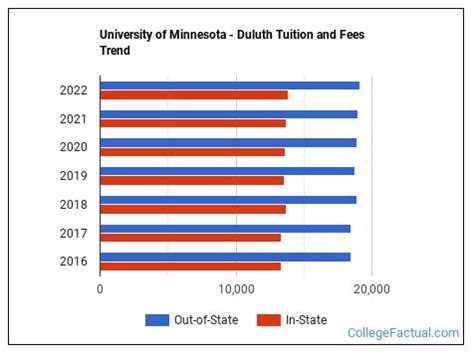
Navigating the complexities of higher education costs can be daunting. This comprehensive guide will provide you with all the essential information you need to understand the University of Minnesota Duluth’s tuition and fees, as well as the various financial aid options available to help you finance your studies.

Tuition and Fees
U of M Duluth’s tuition and fees vary depending on your residency status, level of study, and program of interest. Here is a breakdown of the estimated annual costs for the 2023-2024 academic year:
| Residency Status | Undergraduate Tuition | Graduate Tuition |
|---|---|---|
| Minnesota Resident | $15,312 | $14,940 |
| Non-Minnesota Resident | $32,124 | $29,880 |
These estimates include tuition, mandatory fees, and technology fees. Additional costs may apply for specific programs or services.
Undergraduate Tuition Rates
Undergraduate tuition rates at U of M Duluth are based on a per-credit-hour system. The cost per credit hour varies depending on your residency status and the number of credit hours you take each semester.
| Residency Status | Cost per Credit Hour |
|---|---|
| Minnesota Resident | $479 |
| Non-Minnesota Resident | $989 |
Graduate Tuition Rates
Graduate tuition rates at U of M Duluth are also based on a per-credit-hour system. The cost per credit hour varies depending on your residency status, the program of study, and the number of credit hours you take each semester.
| Residency Status | Program Type | Cost per Credit Hour |
|---|---|---|
| Minnesota Resident | Master’s Degree | $555 |
| Minnesota Resident | Doctoral Degree | $634 |
| Non-Minnesota Resident | Master’s Degree | $1,110 |
| Non-Minnesota Resident | Doctoral Degree | $1,268 |
Financial Aid Options
U of M Duluth is committed to making higher education accessible to all qualified students, regardless of their financial circumstances. The university offers a wide range of financial aid options to help you cover the cost of your education, including:
Scholarships
Scholarships are gift aid that does not have to be repaid. U of M Duluth offers a variety of scholarships based on academic merit, financial need, and other criteria.
Grants
Grants are also gift aid that does not have to be repaid. Federal and state governments, as well as U of M Duluth, offer grants to students who meet certain eligibility requirements.
Loans
Loans are borrowed funds that must be repaid with interest. U of M Duluth offers a variety of loan options, including federal student loans, private student loans, and alternative loans.
Work-Study
Work-study is a federal program that allows students to earn money to help pay for their education. U of M Duluth offers work-study jobs on campus and in the community.
How to Apply for Financial Aid
To apply for financial aid, you must complete the Free Application for Federal Student Aid (FAFSA). The FAFSA is a form that collects information about your income, assets, and family size. This information is used to determine your eligibility for federal and state financial aid.
The FAFSA is available online at fafsa.gov. You can also request a paper copy of the FAFSA by calling 1-800-433-3243.
The priority deadline to apply for financial aid at U of M Duluth is March 1st. However, you are encouraged to apply as early as possible, as funds are limited.
Tips for Managing College Expenses
In addition to applying for financial aid, there are a number of things you can do to manage your college expenses, including:
- Create a budget and track your spending.
- Consider living on campus or with roommates to save on housing costs.
- Buy used textbooks or rent them instead of buying new ones.
- Take advantage of student discounts on transportation, entertainment, and other expenses.
- Get a part-time job or start a small business to earn extra money.
Conclusion
Understanding the costs of higher education and exploring the various financial aid options available is crucial for planning and financing your academic journey. U of M Duluth provides a comprehensive range of tuition and fee options, as well as generous financial aid packages, to support students from all backgrounds. By carefully considering your financial situation and taking advantage of the resources available, you can make your educational aspirations a reality.