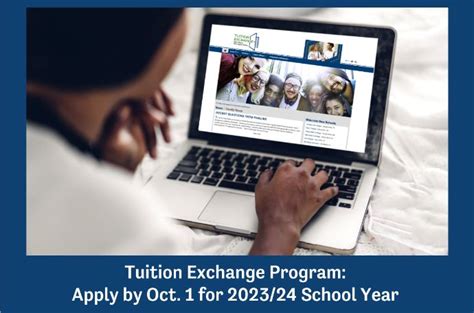
In an era marked by rising tuition costs and student debt, the tuition exchange program emerges as a beacon of hope for faculty and staff seeking affordable higher education for their dependents. This innovative program empowers educators with the means to pursue advanced degrees or provide their children with access to quality education without the burden of exorbitant fees.
Understanding the Tuition Exchange Program
The tuition exchange program is a reciprocal agreement between universities and colleges that allows employees and their eligible dependents to attend participating institutions tuition-free or at a reduced cost. The program was established in 1955 by a group of institutions seeking to alleviate the financial strain on academic professionals and support their professional development.
Since its inception, the tuition exchange program has expanded to encompass over 700 institutions nationwide, representing a wide range of academic disciplines and research fields. The program is governed by The Tuition Exchange, Inc. (TEI), a nonprofit organization that facilitates the exchange process and ensures program integrity.
Benefits of the Tuition Exchange Program
The tuition exchange program offers numerous advantages for participating faculty and staff:
-
Reduced educational expenses: Dependents of eligible employees can attend participating universities tuition-free or at a significantly discounted rate, saving families thousands of dollars in tuition payments.
-
Access to elite institutions: Many prestigious universities participate in the tuition exchange program, providing employees with access to high-quality education for their dependents.
-
Professional development opportunities: Faculty and staff can use the program to pursue advanced degrees, enhance their knowledge, and advance their careers without incurring significant financial burden.
-
Recruitment and retention: The tuition exchange program can serve as a valuable employee benefit, increasing job satisfaction and fostering loyalty among educators.
Eligibility Requirements
To qualify for the tuition exchange program, employees must meet the following eligibility criteria:
-
Full-time or part-time employment: Employees must be employed at a participating institution for a specified minimum period, typically one year.
-
Job classification: Most programs require employees to hold a position that is classified as faculty or staff.
-
Dependent status: Eligible dependents include children, spouses, and sometimes grandchildren or stepchildren.
-
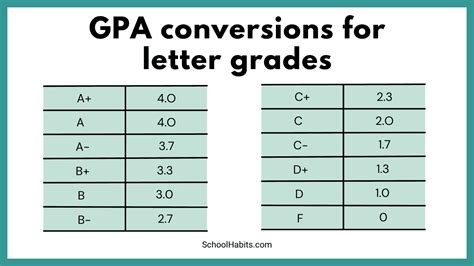
Academic performance: In some cases, dependents may be required to meet certain academic standards, such as a minimum GPA or test scores.
Application Process
The application process for the tuition exchange program typically involves the following steps:
-
Contact the human resources department: Interested employees should inquire with their human resources department to determine if their institution participates in the program.
-
Obtain an application: The human resources department will provide an application form and instructions for completing it.
-
Submit completed application: Completed applications should be submitted to the human resources department for review and processing.
-
Receive approval: Eligible applicants will receive approval from their institution and be provided with a list of participating universities.
-
Apply to participating universities: Dependents must apply to and be accepted by a participating university to receive tuition benefits.
Participating Institutions
Over 700 universities and colleges participate in the tuition exchange program, offering a diverse array of academic disciplines and research opportunities. Some notable participating institutions include:
| University | Location | Enrollment |
|---|---|---|
| University of California, Berkeley | Berkeley, CA | 38,000 |
| Massachusetts Institute of Technology | Cambridge, MA | 11,400 |
| Harvard University | Cambridge, MA | 22,000 |
| Princeton University | Princeton, NJ | 8,000 |
| Stanford University | Stanford, CA | 17,700 |
Considerations for Participants
While the tuition exchange program offers significant benefits, there are a few considerations that participants should keep in mind:
-
Limited availability: The program is only available to employees of participating institutions.
-
Reciprocal nature: Employees can only send dependents to institutions that have a reciprocal agreement with their employer’s institution.
-
Dependent eligibility: Not all dependents may be eligible for tuition benefits, and eligibility requirements can vary between institutions.
-
Academic requirements: Dependents may need to meet certain academic criteria to qualify for tuition benefits.
Conclusion
The tuition exchange program is an invaluable resource for faculty and staff seeking to advance their careers or provide their dependents with access to affordable higher education. By partnering with participating universities and colleges, the program empowers educators with the means to unlock their full academic potential and pursue their educational dreams without the burden of excessive tuition expenses.