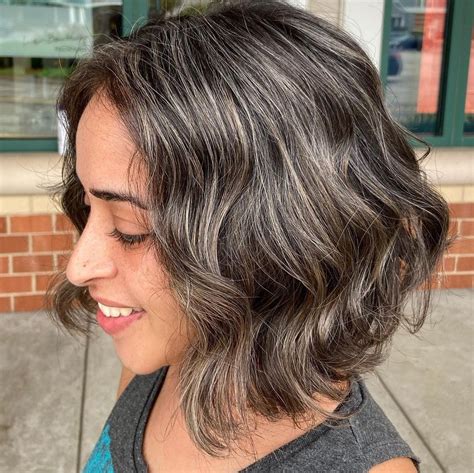
As we age, our hair color inevitably takes on a silvery hue, signaling the passage of time and a wealth of knowledge and experience. While some may embrace this transition, others may seek to blend their gray hairs discreetly or enhance their natural highlights. Here’s a comprehensive guide to help you navigate the transition to gray hair with highlights, making the process both graceful and flattering.

Understanding the Graying Process
The gradual loss of hair pigment (melanin) leads to gray hair. Several factors contribute to this process, including:
- Genetics: The primary determinant of hair color, genetics plays a significant role in the timing and extent of graying.
- Hormonal changes: A decline in the production of melanin-stimulating hormones, such as estrogen and testosterone, contributes to graying.
- Stress: Prolonged periods of stress can trigger premature graying by releasing free radicals that damage hair follicles.
- Environmental factors: Exposure to harsh chemicals, pollutants, and UV light can prematurely age hair, leading to graying.
Highlighting Gray Hair: Techniques and Benefits
Highlighting gray hair can add depth, dimension, and a youthful glow to your locks. Here are the most popular techniques:
Foiling: This method involves wrapping strands of hair in foil with bleach or hair color to create precise highlights.
Balayage: A freehand painting technique that creates subtle, natural-looking highlights.
Ombré: A gradual blending of dark hair roots to lighter ends, often embracing gray tones.
Reverse Balayage: A technique where highlights are placed on the underside of the hair, creating a chic and dimensional look.
Benefits of highlighting gray hair:
- Blends gray hairs seamlessly
- Adds depth and dimension
- Enhances natural highlights
- Creates a modern and stylish look
Choosing the Right Highlight Color
The key to successful highlights is choosing a color that complements your skin tone and gray hairs.
- Warm undertones: Opt for golden, honey, or amber highlights to warm up your complexion and blend with warm-toned gray hairs.
- Cool undertones: Choose ash, beige, or platinum highlights to neutralize cool-toned gray hairs and enhance a cool or neutral complexion.
- Neutral undertones: Warm or cool highlights can complement neutral undertones, allowing for greater flexibility in color choice.
Care and Maintenance for Highlighted Gray Hair
Highlighted gray hair requires a little extra care to maintain its vibrancy and health.
- Use color-protecting shampoo and conditioner: These products help preserve hair color and minimize fading.
- Limit heat styling: Excessive heat can damage both natural and highlighted hair. Use heat protectant sprays and minimize the use of hot tools.
- Regular trims: Trim off split ends to prevent further damage and keep highlights looking fresh.
- Apply a weekly hair mask: Nourishing hair masks can hydrate and revitalize highlighted hair.
- Touch-ups: Schedule regular touch-ups to maintain highlight color and blend new gray hairs.
Embracing the Silver Fox: Tips for a Confident Transition
Gray hair can be a beautiful and empowering symbol of wisdom and maturity. Here are a few tips for embracing the transition:
- Wear it with pride: Embrace your natural gray hair as a sign of experience and self-assurance.
- Experiment with different styles: Gray hair can be styled in various cuts, lengths, and textures to suit your personality and preferences.
- Consider temporary color: If you’re not ready to fully commit to gray hair, try temporary hair color to enhance your natural gray tones or add subtle highlights.
- Use makeup to enhance: Highlight your eyes and lips with makeup that complements your gray hair and enhances your natural beauty.
- Find inspiration: Browse magazines, look for online communities, and connect with others who have embraced their gray hair to gain inspiration and support.
Frequently Asked Questions
1. Will highlighting damage my gray hair?
Highlights can slightly damage both gray and natural hair, but with proper care and maintenance, you can minimize the impact.
2. How often should I get highlights?
This depends on your personal preference and hair growth rate. Generally, touch-ups are recommended every 4-8 weeks to maintain highlights and blend gray hairs.
3. Can I highlight my gray hair at home?
Home highlighting kits are available, but it’s recommended to consult a professional hairstylist for optimal results and to avoid damaging your hair.
4. How much does it cost to highlight gray hair?
Highlighting services vary in cost depending on the technique used, the length and thickness of your hair, and the salon location. Expect to pay between $50-$200 or more.
5. What are some alternative options to highlighting gray hair?
- Root smudging: Blending the dark roots of gray hair with a semi-permanent color to create a softer transition.
- Lowlights: Adding darker colors to gray hair to create depth and avoid a stark contrast.
- Gray hair enhancer: Using a product that amplifies the natural gray tones in your hair.
Conclusion
Transitioning to gray hair with highlights can be a beautiful and empowering journey. By embracing your natural hues and blending them seamlessly with complementary highlights, you can create a modern and stylish look that reflects your wisdom and confidence. With proper care and maintenance, highlighted gray hair can be a source of pride and self-acceptance, allowing you to shine brightly at any age.