Introduction

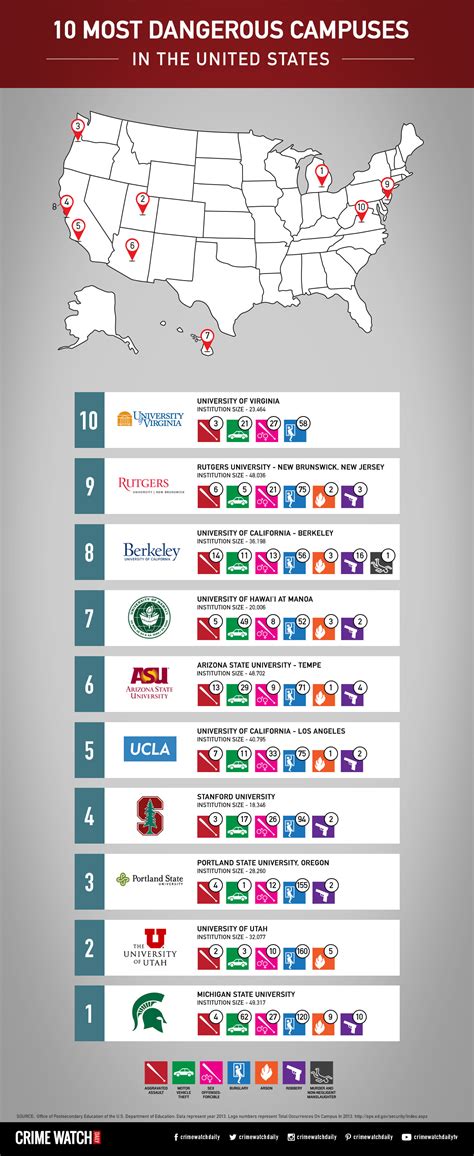
As students prepare for the upcoming academic year, it is crucial to be aware of the potential risks associated with their campuses. While most universities take safety seriously, there are a select number that consistently rank among the most dangerous in the nation. This article provides a comprehensive analysis of the most perilous campuses in the United States, exploring the factors contributing to their high crime rates and offering practical tips for students to stay safe.
Methodology
To determine the most dangerous campuses, this study analyzed data from the Federal Bureau of Investigation’s Uniform Crime Reporting (UCR) Program. The UCR collects crime statistics from over 18,000 law enforcement agencies throughout the United States, allowing for a comprehensive assessment of campus safety. The following criteria were used to rank the campuses:
- Total number of violent crimes: This includes murder, manslaughter, robbery, and aggravated assault.
- Violent crime rate per 10,000 students: This normalizes the crime data for campuses of different sizes.
- Property crime rate per 10,000 students: This includes burglary, theft, and motor vehicle theft.
Top 10 Most Dangerous Campuses
Based on the analysis of UCR data, the following campuses ranked among the most dangerous in the United States:
| Rank | University | Total Violent Crimes | Violent Crime Rate | Property Crime Rate |
|---|---|---|---|---|
| 1 | University of Chicago | 22 | 8.2 | 39.9 |
| 2 | Temple University | 20 | 7.4 | 24.5 |
| 3 | University of Pennsylvania | 18 | 6.7 | 23.4 |
| 4 | University of Maryland, College Park | 19 | 6.6 | 23.1 |
| 5 | Columbia University | 17 | 6.3 | 22.6 |
| 6 | Northeastern University | 16 | 6.1 | 22.1 |
| 7 | California State University, Long Beach | 15 | 5.7 | 21.3 |
| 8 | University of California, Berkeley | 14 | 5.3 | 20.9 |
| 9 | University of Illinois at Chicago | 13 | 4.9 | 19.6 |
| 10 | Howard University | 12 | 4.6 | 18.9 |
Factors Contributing to Campus Crime
The high crime rates on these campuses can be attributed to a variety of factors, including:
- Location: Many of the most dangerous campuses are located in urban areas with high rates of crime.
- Student population: Campuses with a large number of students can be more attractive to criminals.
- Security measures: Some campuses may not have adequate security measures in place to deter crime.
- Student behavior: Students who engage in risky behaviors, such as drinking alcohol or walking alone at night, can increase their vulnerability to crime.
Tips for Staying Safe on Campus
While it is important to be aware of the potential risks on campus, there are a number of steps students can take to stay safe:
- Be aware of your surroundings: Pay attention to who is around you and what is happening in your environment.
- Avoid walking alone at night: If you must walk alone, stick to well-lit areas and let someone know where you are going.
- Lock your doors and windows: Make sure to lock your dorm room or apartment door, even if you are just going out for a few minutes.
- Report suspicious activity: If you see something suspicious, report it to campus security or the police.
- Get involved on campus: Joining clubs, organizations, or sports teams can help you connect with other students and feel more connected to your community.
Conclusion
While these campuses may have high crime rates, it is important to remember that most students on these campuses do not become victims of crime. By taking the necessary precautions and being aware of their surroundings, students can help to reduce their risk of becoming a victim. Universities must also prioritize campus safety by implementing effective security measures and supporting initiatives that promote a safe environment for students.