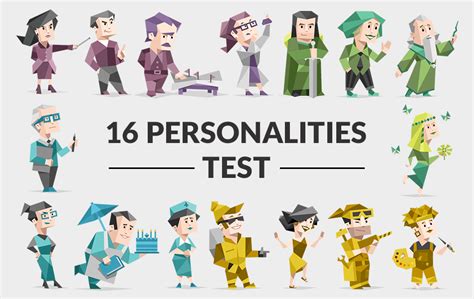
The 16 Personalities Test, based on the Myers-Briggs Type Indicator (MBTI), has gained widespread popularity as a tool for evaluating personality traits. While it has been used in various settings, it’s crucial to recognize its limitations and appropriate uses.
Inappropriateness for Hiring Decisions
The 16 Personalities Test is not designed for predicting job performance or making hiring decisions. A study by the Society for Industrial and Organizational Psychology found that using personality tests for hiring had negligible effects on employee performance. Additionally, a report by the Equal Employment Opportunity Commission (EEOC) highlights the potential for bias when using personality tests in employment decisions.
Limitations in Measuring Personality
The 16 Personalities Test measures self-reported preferences, not actual behavior. This means that individuals may respond in a socially desirable manner or based on their aspirations rather than their true traits. Moreover, the test’s categorization into 16 predetermined types can oversimplify the complexity of human personality.
Ethical Concerns
The use of personality tests in contexts such as education or therapy requires ethical considerations. Some critics argue that the test can lead to labeling and stereotyping individuals, limiting their self-expression and individuality. It’s essential to respect the privacy and autonomy of test-takers and use the results responsibly.
Despite its limitations, the 16 Personalities Test can be a useful tool for personal reflection and self-understanding. It can provide insights into individuals’ strengths, weaknesses, and preferences, which can be valuable in:
Self-Awareness and Development
The test can foster self-awareness by highlighting potential areas for growth and areas where individuals excel. By understanding their personality type, individuals can make informed decisions about their career paths, relationships, and personal development goals.
Communication and Relationships
Knowledge of one’s own and others’ personality types can enhance communication and empathy in interpersonal relationships. By understanding the different perspectives and communication styles associated with various types, individuals can adapt their approach to foster more effective and harmonious interactions.
Individualized Learning
The 16 Personalities Test can inform individualized learning strategies. By understanding their learning preferences and strengths, students can tailor their study methods to maximize their comprehension and retention.
Other Potential Applications
Beyond the traditional uses discussed above, the 16 Personalities Test could be innovatively used to:
- Identify creative teams: By understanding the personality dynamics within a group, organizations can assemble teams with complementary skills and perspectives, fostering innovation and problem-solving.
- Enhance customer experiences: Businesses can use the test to better understand their customers’ personality types, customizing their products and services to meet individual preferences and enhance satisfaction.
- Improve healthcare interventions: Healthcare professionals could use the test to tailor their communication and treatment plans to the specific needs and preferences of patients, potentially improving outcomes.
To ensure ethical and appropriate use of the 16 Personalities Test, consider the following guidelines:
- Use it as a starting point: Recognize that the test provides a snapshot of personality, not a definitive diagnosis.
- Consider contextual factors: Personality traits can be influenced by cultural, social, and situational factors, so interpret results in context.
- Respect individual choice: Individuals should have the option to decline taking the test or to keep their results private.
- Seek professional guidance: If using the test for significant decisions, consider consulting with a qualified psychologist or career counselor.
Table 1: Limitations of the 16 Personalities Test
| Limitation | Impact |
|---|---|
| Not designed for hiring decisions | Can lead to bias or unfair selection |
| Measures self-reported preferences | Results may not reflect actual behavior |
| Oversimplifies human personality | Fails to capture the full complexity of individual traits |
Table 2: Ethical Concerns
| Concern | Potential Impact |
|---|---|
| Labeling and stereotyping | Limits self-expression and individuality |
| Privacy violations | Improper use of results can undermine trust |
| Reliance on subjective interpretations | Results can be influenced by biases or misunderstandings |
Table 3: Appropriate Uses
| Use | Benefits |
|---|---|
| Self-awareness and development | Facilitates personal growth and goal-setting |
| Communication and relationships | Enhances mutual understanding and empathy |
| Individualized learning | Tailors learning strategies to meet individual preferences |
Table 4: Innovative Applications
| Application | Potential Benefits |
|---|---|
| Identifying creative teams | Fosters innovation and problem-solving |
| Enhancing customer experiences | Customizes products and services to meet individual needs |
| Improving healthcare interventions | Tailors treatments to specific patient preferences |
Q: Is the 16 Personalities Test a reliable measure of personality?
A: The test has moderate reliability, but it may be influenced by factors such as social desirability and situational factors.
Q: Can the 16 Personalities Test be used for therapy?
A: The test is not a substitute for professional therapy, but it can provide insights into personality traits that may be relevant in a therapeutic context.
Q: Should employers use the 16 Personalities Test in hiring decisions?
A: The test is not recommended for hiring decisions due to its limitations in predicting job performance and potential for bias.
Q: Is it possible to change one’s personality type?
A: While personality traits are generally stable over time, they can be influenced by life experiences and intentional efforts to develop certain skills or behaviors.
Q: How can I use the 16 Personalities Test to improve my communication?
A: Understanding your own and others’ personality types can help you adapt your communication style to foster more effective interactions.
Q: Can the 16 Personalities Test be used to predict romantic compatibility?
A: While the test can provide insights into relationship dynamics, it should not be used as the sole basis for predicting romantic compatibility.
Q: Is it ethical to use the 16 Personalities Test on children?
A: The test is not designed for children, and its results may not be accurate or informative for individuals under the age of 18.
Q: How can I obtain a copy of my 16 Personalities Test results?
A: You can take the test online for free on the 16 Personalities website and receive your results immediately.