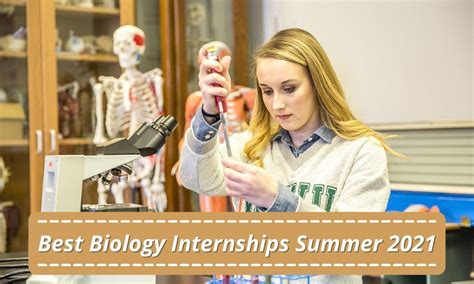
Summer internships provide an exceptional opportunity for biology majors to gain invaluable hands-on experience, explore career paths, and build connections within the industry. With the increasing demand for qualified professionals in the life sciences, securing a summer internship can significantly enhance your competitiveness upon graduation.

Types of Internships for Biology Majors
Summer internships for biology majors encompass a wide range of opportunities, including:
- Research Internships: Engage in original research projects under the guidance of experienced scientists in academic, government, or industry settings.
- Laboratory Internships: Work in laboratory environments, performing experiments, analyzing data, and assisting with ongoing research programs.
- Field Internships: Conduct fieldwork in diverse ecosystems, studying plant and animal species, environmental factors, and ecological processes.
- Industry Internships: Gain exposure to the business side of biotechnology, pharmaceuticals, healthcare, and other life sciences industries.
- Policy Internships: Delve into the policymaking process related to science, health, and the environment.
Benefits of Summer Internships
1. Experiential Learning: Acquire practical skills and knowledge that complement classroom studies.
2. Career Exploration: Discover potential career paths and develop valuable connections within the industry.
3. Professional Development: Improve communication, teamwork, and problem-solving abilities.
4. Resume Enhancement: Demonstrate your enthusiasm for biology, work ethic, and transferable skills.
5. Networking: Establish relationships with mentors, peers, and professionals in the field.
How to Secure a Summer Internship
1. Research Opportunities: Explore websites, industry directories, and professional organizations for internship listings.
2. Network: Attend career fairs, reach out to professors and alumni, and ask for referrals.
3. Apply Early: Most summer internship applications open in the fall semester. Start preparing your resume and cover letter early.
4. Tailor Your Application: Highlight skills and experiences relevant to the specific internship you are applying for.
5. Follow Up: After submitting your application, follow up with the organization to express your interest and inquire about the status of your application.
Common Mistakes to Avoid
1. Waiting Too Long to Apply: Don’t miss out on opportunities by waiting until the last minute to apply.
2. Not Proofreading Your Application: Carefully review your resume and cover letter for any errors.
3. Not Tailoring Your Application: Generic applications are less likely to make an impression.
4. Not Preparing for Interviews: Practice answering common interview questions and prepare questions to ask the interviewer.
Frequently Asked Questions
1. When is it best to start applying for summer internships?
Aim to start applying in the fall semester, typically between September and November.
2. What is the typical duration of summer internships?
Most summer internships last for 8-12 weeks, although some may be longer or shorter.
3. Is housing provided for summer interns?
In some cases, organizations provide housing accommodations for out-of-town interns. Check the internship listing or contact the organization directly for more information.
4. How can I prepare for a summer internship interview?
Research the organization, prepare questions to ask, and practice answering behavioral and technical questions.
5. What are the benefits of completing multiple summer internships?
Gaining experience in different settings and roles can enhance your skills, expand your network, and improve your career prospects.
6. How can I make the most of my summer internship?
Be proactive, ask questions, take on challenges, and establish relationships with your mentor and colleagues.
Conclusion
Summer internships offer biology majors an invaluable opportunity to advance their careers. By securing and maximizing these experiences, you can not only enhance your knowledge and skills, but also gain a competitive edge in the highly competitive life sciences industry. Utilize the resources and strategies provided in this article to optimize your summer internship search and embark on a successful career path in biology.