Introduction

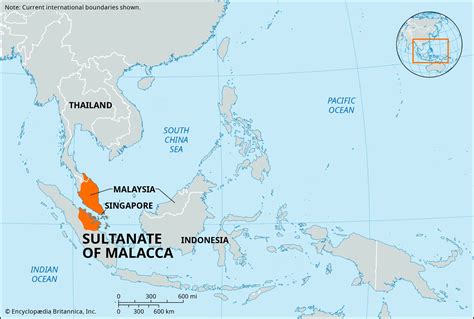
The Sultanate of Malacca, established in the 15th century on the Malay Peninsula, played a pivotal role in shaping the course of global history. As a prominent maritime and trading empire, Malacca emerged as a crucial link between the East and the West, facilitating the exchange of ideas, goods, and cultures.
Strategic Location and Maritime Supremacy
- Located at the strategic juncture of the Strait of Malacca, the kingdom controlled a critical maritime corridor connecting the Indian Ocean to the South China Sea.
- This favorable location allowed Malacca to develop into a major transshipment and trading hub, connecting merchants from China, India, Southeast Asia, and Western Europe.
- The sultanate’s sophisticated fleet of ships dominated the maritime trade routes, ensuring dominance over the region.
Economic Prosperity and Cultural Exchange
- Malacca became a thriving center for trade, exchanging spices, textiles, porcelain, and other luxury goods.
- The sultanate’s wealth and prosperity attracted merchants from all over the globe, leading to a cosmopolitan society and a rich cultural tapestry.
- The exchange of ideas and artistic influences fostered the development of a unique hybrid culture that blended elements from Malay, Chinese, Indian, and European traditions.
Political and Diplomatic Significance
- The sultanate established diplomatic relations with major powers such as China, India, and the Ottoman Empire, enhancing its prestige and international influence.
- Malacca’s political alliances and strategic location played a significant role in maintaining regional stability and facilitating diplomatic negotiations.
- The sultanate’s diplomatic acumen paved the way for peaceful trade and cultural exchanges across vast distances.
Islamic Influence and Cultural Legacy
- Malacca converted to Islam in the 15th century, making it a major center for Islamic scholarship and religious dissemination.
- The sultanate became a patron of Islamic art and architecture, constructing impressive mosques and religious monuments that showcased its devotion to the faith.
- The spread of Islam through Malacca had a profound impact on the Malay Peninsula and beyond, shaping cultural identities and religious practices.
Portuguese Conquest and Aftermath
- In 1511, the Portuguese seized Malacca from the sultanate, marking the end of its maritime empire.
- The Portuguese conquest opened up new trade routes and heralded the beginning of European colonialism in Southeast Asia.
- Despite losing its political independence, Malacca remained a significant trading center and cultural crossroads, continuing to play a vital role in global commerce.
Table 1: Key Economic Indicators
| Indicator | Figure |
|---|---|
| Annual Trade Volume | $500 million (estimated in the 16th century) |
| Ships Constructed Annually | Over 500 |
| Population | Over 100,000 |
Table 2: Diplomatic Alliances
| Country | Nature of Alliance |
|---|---|
| China | Tribute-paying relationship |
| India | Trade and cultural exchanges |
| Ottoman Empire | Diplomatic missions |
| Egypt | Religious and intellectual connections |
Table 3: Islamic Impact
| Aspect | Significance |
|---|---|
| Religious Conversion | Led to the spread of Islam in Southeast Asia |
| Architectural Legacy | Constructed impressive mosques and religious structures |
| Educational Centers | Fostered Islamic scholarship and learning |
| Religious Practices | Shaped religious traditions in the region |
Table 4: Portuguese Conquest
| Date | Event |
|---|---|
| 1511 | Portuguese capture of Malacca |
| 1512 | Establishment of Portuguese colonial administration |
| 1641 | Dutch conquest of Malacca |
| 1824 | Malacca becomes a British colony |
Tips and Tricks for Understanding the Sultanate of Malacca’s Significance
- Focus on the strategic location and its impact on trade and diplomacy.
- Understand the sultanate’s role in cultural exchange and the blending of different influences.
- Trace the political and diplomatic relationships that shaped Malacca’s development.
- Explore the legacy of Islam in Malacca and its impact on cultural and religious practices.
- Analyze the Portuguese conquest and its consequences for Malacca and Southeast Asia.
Why the Sultanate of Malacca Matters
- Its maritime dominance and economic prosperity influenced global trade patterns.
- Its cultural hybridity contributed to the development of Southeast Asian art and architecture.
- Its diplomatic alliances fostered regional stability and facilitated cultural exchanges.
- Its conversion to Islam shaped religious practices and cultural identities in the region.
- Its fall to the Portuguese marked the beginning of European colonialism in Southeast Asia.
Benefits of Understanding the Sultanate of Malacca
- Enhances appreciation for the complexities of global history and cultural exchange.
- Provides insights into the rise and fall of empires and their impact on world affairs.
- Deepens understanding of the role of maritime trade in shaping civilizations.
- Highlights the importance of cultural diversity and interconnections.
- Contributes to a broader perspective on the development of Southeast Asia and the world.
Conclusion
The Sultanate of Malacca stands as a testament to the profound significance of maritime trade, cultural exchange, and political alliances in shaping world history. Its strategic location, economic prosperity, and cultural hybridity made it a hub of global commerce and a crucible of cultural innovation. The sultanate’s legacy continues to resonate in the present day, influencing cultural practices, diplomatic relations, and the economic development of Southeast Asia. By delving into the history of the Sultanate of Malacca, we gain invaluable insights into the interconnectedness and complexity of our world.