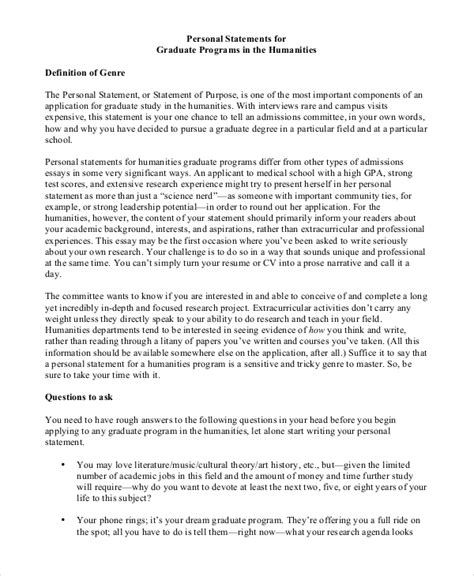
Introduction

A graduate program is a significant investment in your future, and the personal statement is a crucial element of the application process. It provides an opportunity to showcase your qualifications, motivation, and aspirations, and it can make all the difference in whether or not you are accepted.
In this guide, we will provide a step-by-step approach to writing a personal statement that will maximize your chances of admission. We will discuss the elements of a strong personal statement, provide tips and tricks from admissions experts, and offer a sample statement to inspire you.
Elements of a Strong Personal Statement
- A Clear and Compelling Hook: The first few paragraphs of your personal statement are critical. They must immediately grab the reader’s attention and make them want to learn more about you. Consider starting with a compelling quote, a personal anecdote, or a thought-provoking question.
- A Strong Statement of Purpose: Define your career and academic goals, clearly stating why you are applying to the program. Explain how your experiences, skills, and interests have prepared you for the rigors of graduate study.
- Specific Examples: Provide concrete examples of your accomplishments, skills, and qualities that demonstrate your potential for success in the program. Avoid vague or generic statements.
- A Personal Connection to the Program: Explain why you are interested in the specific program you are applying to. Discuss how your research interests, career aspirations, and values align with the program’s mission and faculty expertise.
- A Vision for the Future: Briefly discuss what you hope to achieve in the program and beyond. Explain how a graduate degree from this program will contribute to your future success.
Tips and Tricks from Admissions Experts
- Be authentic: Write in your own voice and let your personality shine through. Admissions officers want to get to know the real you.
- Show off your research: Highlight your research interests and demonstrate your understanding of the field you are applying to.
- Quantify your accomplishments: Use numbers and data to support your claims and demonstrate your impact.
- Edit carefully: Proofread your statement thoroughly for grammatical errors and typos. Consider seeking feedback from a mentor, professor, or friend.
- Be patient: Writing a personal statement takes time and effort. Don’t rush the process and give yourself plenty of time to brainstorm, write, and revise.
Sample Personal Statement
“As a young girl, I was captivated by the intricate patterns of nature. I would spend hours observing the wings of butterflies, the veins of leaves, and the spirals of seashells. This innate curiosity led me to pursue a degree in biology, where I discovered the fascinating world of genetics.
Through my research on gene expression in plants, I realized the immense potential of genetic engineering to address global challenges such as food security and climate change. Inspired by this knowledge, I am eager to pursue a graduate degree in biotechnology to further enhance my understanding and contribute to the development of sustainable solutions for the future.
The Master’s program at [University Name] aligns perfectly with my research interests and career aspirations. The program’s focus on cutting-edge techniques in genetic engineering and its collaboration with industry leaders provides an ideal environment for me to refine my skills and collaborate on transformative research projects.
Upon graduating, I aspire to become a research scientist in the field of biotechnology. I envision myself working on innovative solutions to address pressing health and environmental issues. I am confident that the knowledge and training I will gain through this program will empower me to make meaningful contributions to the scientific community and society as a whole.”
Conclusion
Writing a personal statement for graduate school can be a daunting task, but by following the guidelines outlined in this guide, you can craft a compelling and persuasive statement that will increase your chances of admission. Remember to be authentic, specific, and passionate, and take the time to carefully edit and proofread your work. With dedication and effort, you can create a personal statement that will showcase your unique qualifications and aspirations, and open doors to the next chapter of your academic and professional journey.