Introduction
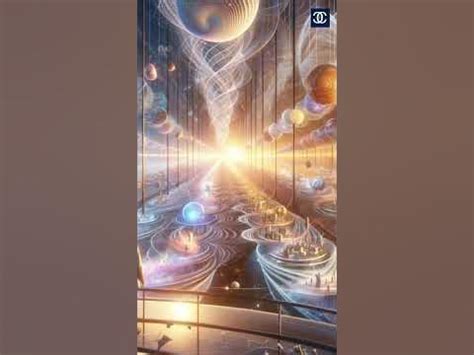
The concept of parallel lives has captivated the imagination of philosophers, writers, and scientists for centuries. It suggests the intriguing possibility that we each exist across multiple realities, simultaneously embodying different paths and experiences. While this idea remains a theoretical puzzle, its implications are both profound and thought-provoking.
Defining Parallel Lives
Parallel lives, also known as alternate realities or alternate lives, refer to the notion that each individual has multiple versions of themselves coexisting in parallel universes. These alternate selves embark on different journeys, make distinct choices, and lead unique existences.
The idea of parallel lives arises from the many-worlds interpretation of quantum mechanics. According to this theory, every possible outcome of a quantum event exists in a distinct universe, effectively creating a vast multiverse of parallel realities.
Is the Concept of Parallel Lives Real?
The existence of parallel lives remains unproven scientifically. However, the sheer vastness of the universe and the intricate nature of quantum mechanics make it a fascinating possibility.
A study published in the journal “Nature” estimated that the observable universe contains over 2 trillion galaxies, each with an average of 100 billion stars. With this many stars, it becomes mathematically plausible that countless alternate realities may exist.
Experiencing Parallel Lives
While we may not have direct access to our alternate selves, certain phenomena hint at the possibility of their existence.
- Déjà Vu: The eerie feeling of having experienced a present moment before may indicate a glimpse into a parallel timeline where the same event occurred.
- Synchronicity: The seemingly coincidental occurrence of unrelated events may suggest an underlying connection between parallel lives.
- Out-of-Body Experiences: Some individuals report leaving their bodies and observing themselves from a detached perspective, potentially experiencing a parallel existence.
The Importance of Parallel Lives
The concept of parallel lives has significant implications for our understanding of identity, free will, and the nature of reality.
- Identity: If parallel lives exist, it challenges the notion of a singular, fixed identity. Instead, our identity becomes a tapestry woven from the countless choices we make across multiple realities.
- Free Will: The possibility of alternate paths in parallel universes raises questions about the nature of free will. If every decision leads to a different outcome, does that diminish our responsibility for our actions?
- Reality: The existence of parallel lives suggests that our reality is not absolute but rather a projection of the choices we make. By embracing the possibility of multiple realities, we broaden our understanding of the world and our place within it.
Applications and Implications
The concept of parallel lives has inspired numerous applications and implications:
- Fiction: Parallel lives have become a common trope in science fiction and fantasy literature, exploring the possibilities of alternate histories and the consequences of different choices.
- Psychology: Researchers have suggested that parallel lives may provide a theoretical framework for understanding multiple personality disorder and the phenomenon of split selves.
- Philosophy: Parallel lives challenge traditional notions of determinism and free will, prompting philosophers to re-examine the nature of reality and human agency.
New Word: “Parallexity”
To capture the essence of the concept of parallel lives, we propose a new word: “parallexity.” This term embodies the idea of multiple perspectives, coexisting realities, and the intricate interplay between choices and outcomes.
Useful Tables
Table 1: Parallel Lives in Fiction
| Title | Author | Description |
|---|---|---|
| “The Man in the High Castle” | Philip K. Dick | Explores an alternate history where the Axis powers won World War II |
| “Sliding Doors” | Peter Howitt | Depicts the divergent lives of a woman based on her decision to catch or miss a train |
| “The Matrix” | The Wachowskis | Portrays a dystopian world where humans live in a simulated reality separate from their true parallel lives |
Table 2: Parallel Lives in Philosophy
| Philosopher | Theory | Implications |
|---|---|---|
| David Lewis | Modal Realism | Argues that all possible worlds exist in parallel and that our decisions have real consequences in these alternate realities |
| William James | Pragmatism | Proposes that the usefulness of an idea determines its truth, opening the door to the possibility of multiple valid realities |
| John Wheeler | Many-Worlds Interpretation | Suggests that the universe branches into parallel universes every time a quantum event occurs |
Table 3: Parallel Lives in Psychology
| Phenomenon | Description | Implications |
|---|---|---|
| Déjà Vu | The feeling of having experienced a present moment before | May indicate a connection to a parallel life |
| Synchronicity | The coincidence of unrelated events | Could be evidence of interconnectedness between parallel realities |
| Out-of-Body Experiences | Separating from one’s body and observing oneself from a detached perspective | May allow for exploration of parallel lives |
Table 4: Applications of Parallel Lives
| Field | Application | Significance |
|---|---|---|
| Fiction | Alternate histories, parallel timelines | Enhances storytelling, explores alternative perspectives |
| Psychology | Understanding multiple personality disorder | Provides a theoretical framework for complex mental phenomena |
| Philosophy | Re-examining free will, determinism | Challenges traditional notions and expands our understanding of reality |
| Science | Research into quantum mechanics, multiverse | Contributes to our knowledge of the universe and its fundamental principles |
Conclusion
The concept of parallel lives remains a fascinating and enigmatic realm of possibility. While its scientific validity may still be debated, its implications for our understanding of identity, free will, and reality are both profound and thought-provoking. As we continue to explore the nature of existence, the idea of parallel lives will undoubtedly remain a captivating subject of inquiry and imagination.