Introduction

Ohm’s law is a fundamental concept in physics that describes the relationship between voltage, current, and resistance in an electrical circuit. This relationship is crucial for understanding the behavior of electrical circuits and designing electrical systems. In AP Physics C, Ohm’s law is a core topic that students must master.
Ohm’s Law Statement
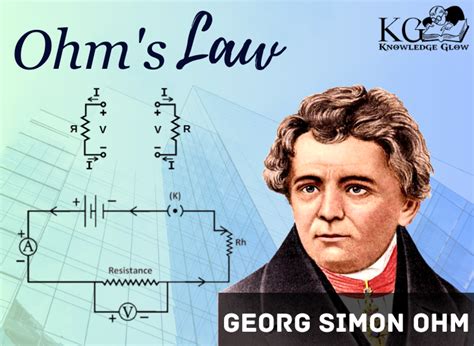
Ohm’s law states that the current flowing through a conductor between two points is directly proportional to the voltage across the two points and inversely proportional to the resistance of the conductor. Mathematically, this can be expressed as:
I = V / R
where:
- I is the current in amperes (A)
- V is the voltage in volts (V)
- R is the resistance in ohms (Ω)
Understanding the Concepts
Voltage: Voltage is the difference in electrical potential between two points in a circuit. It is analogous to the pressure in a fluid-filled pipe or the height of a water reservoir.
Current: Current is the flow of electrical charge through a conductor. It is analogous to the rate of flow of water in a pipe or the speed of electrons in a wire.
Resistance: Resistance is the opposition to the flow of current through a conductor. It is analogous to the friction in a fluid-filled pipe or the resistance encountered by a moving object in a fluid.
Applications of Ohm’s Law
Ohm’s law has numerous applications in electrical engineering and daily life. Some common applications include:
- Circuit Analysis: Ohm’s law is used to calculate the voltage, current, or resistance in a circuit given the other two quantities.
- Electrical Design: Ohm’s law is used to design electrical circuits that meet specific requirements, such as controlling the flow of current or providing a desired voltage.
- Electrical Fault Diagnosis: Ohm’s law can be used to identify faults in electrical circuits by measuring the voltage, current, and resistance.
- Power Calculations: Ohm’s law is used to calculate the power dissipated in a resistor or the power supplied by a voltage source.
Examples and Calculations
Example 1: A battery with a voltage of 12 V is connected to a resistor with a resistance of 6 Ω. What is the current flowing through the circuit?
Using Ohm’s law: I = V / R = 12 V / 6 Ω = 2 A
Example 2: A circuit has a current of 0.5 A flowing through it. The resistance of the circuit is 10 Ω. What is the voltage across the circuit?
Using Ohm’s law: V = IR = 0.5 A × 10 Ω = 5 V
Key Tables for Ohm’s Law
| Quantity | Unit | Symbol |
|---|---|---|
| Voltage | Volt | V |
| Current | Ampere | A |
| Resistance | Ohm | Ω |
| Power | Watt | W |
Advanced Applications of Ohm’s Law
Beyond its basic applications, Ohm’s law can be extended to more complex circuits and non-linear devices. Some advanced applications include:
- Kirchhoff’s Laws: Ohm’s law is used in conjunction with Kirchhoff’s laws to analyze complex circuits.
- Non-Linear Resistors: Ohm’s law applies to linear resistors, but non-linear resistors have a resistance that varies with voltage or current.
- Alternating Current (AC) Circuits: Ohm’s law can be used to analyze AC circuits with the addition of complex impedance.
Conclusion
Ohm’s law is a fundamental concept in AP Physics C and electrical engineering. By understanding the relationship between voltage, current, and resistance, students can analyze, design, and troubleshoot electrical circuits effectively. The applications of Ohm’s law extend far beyond basic circuits, making it a valuable tool in various areas of science, technology, and industry.