1. Introduction to Psychology
- Define psychology and discuss its goals.
- Explain the different perspectives in psychology and their key concepts.
- Describe the scientific method and its application in psychological research.
2. History of Psychology
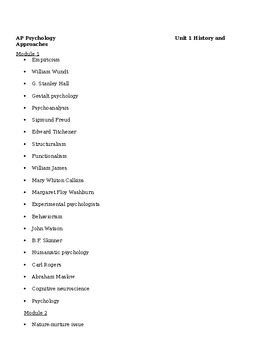
- Trace the historical roots of psychology from its philosophical origins to modern scientific approaches.
- Discuss the contributions of major figures such as Wilhelm Wundt, William James, and Sigmund Freud.
- Explain how the field of psychology has evolved over time.
3. Methods of Research
- Describe the different types of research methods used in psychology, including correlational studies, experiments, and case studies.
- Explain the strengths and weaknesses of each research method.
- Discuss ethical considerations in psychological research.
4. Biological Bases of Behavior
- Explain the structure and function of the nervous system, including neurons and synapses.
- Discuss the role of hormones in behavior and emotion.
- Describe the relationship between genetics and behavior.
5. Sensation and Perception
- Define sensation and perception and explain the sensory systems involved.
- Describe the processes of visual, auditory, somatosensory, olfactory, and gustatory perception.
- Explain how perception is influenced by factors such as attention, expectation, and cognitive schemas.
6. States of Consciousness
- Describe the different states of consciousness, including sleep, dreaming, hypnosis, and meditation.
- Explain the physiological and psychological characteristics of each state.
- Discuss the role of consciousness in psychological functioning.
7. Learning
- Define learning and discuss the different types of learning models.
- Explain the basic principles of classical conditioning, operant conditioning, and cognitive learning.
- Describe how learning is influenced by factors such as reinforcement, punishment, and social context.
8. Memory
- Define memory and explain the different types of memory systems.
- Describe the processes of encoding, storage, and retrieval of memories.
- Explain how memory is influenced by factors such as attention, motivation, and emotion.
9. Thinking and Language
- Define thinking and discuss the different types of thinking processes.
- Explain the role of language in thought and communication.
- Describe the processes of problem-solving, decision-making, and creativity.
10. Motivation and Emotion
- Define motivation and explain the different types of motivational drives.
- Describe the theories of emotion and explain how emotions are influenced by both physiological and cognitive factors.
- Discuss the role of motivation and emotion in psychological functioning.
11. Personality
- Define personality and discuss the different theories of personality development.
- Explain the methods used to assess personality and describe the major personality dimensions.
- Discuss the relationship between personality and behavior.
12. Social Psychology
- Define social psychology and discuss the different areas of research within the field.
- Explain the basic principles of social influence, social cognition, and interpersonal relationships.
- Describe the role of culture in social behavior.
13. Clinical Psychology
- Define clinical psychology and discuss the different approaches to mental health treatment.
- Describe the major types of mental disorders and explain how they are diagnosed and treated.
- Discuss the role of psychotherapy and psychopharmacology in clinical practice.
14. Practical Applications of Psychology
- Describe the practical applications of psychology in various fields, such as education, business, and healthcare.
- Explain how psychological principles can be used to improve individual well-being, organizational performance, and social outcomes.
- Discuss the ethical responsibilities of psychologists in applied settings.