Introduction

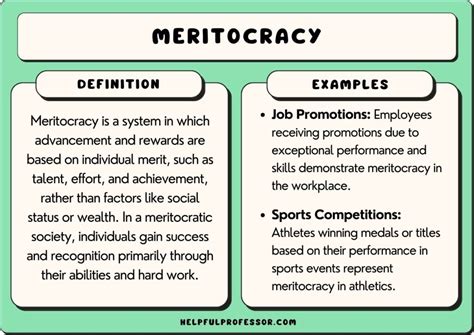
Meritocracy, a concept coined by the British sociologist Michael Young in 1958, refers to a system in which individuals are selected for positions and rewards based solely on their abilities and accomplishments. This system emphasizes the importance of individual merit over factors such as social status, family background, or wealth.
Definition of Merit
Merit encompasses a range of qualities, including:
- Intelligence and cognitive abilities
- Skills and competencies
- Knowledge and expertise
- Hard work and dedication
- Ethical behavior and integrity
Meritocracy aims to create a fair and just society where individuals are given equal opportunities to succeed based on their own achievements.
Key Principles of Meritocracy
- Equal access to education and resources: All individuals should have opportunities to develop their abilities and talents, regardless of their background.
- Objective assessment of performance: Hiring and promotion decisions should be based on clear criteria and evaluations of individual performance.
- Reward for merit: Individuals who demonstrate superior abilities and accomplishments should be recognized and rewarded accordingly.
- Accountability: Individuals should be held accountable for their actions and responsible for the outcomes they achieve.
Benefits of Meritocracy
- Increased productivity: By ensuring that the most capable individuals are in positions of leadership and influence, meritocracy promotes productivity and innovation.
- Improved economic growth: A meritocratic society encourages hard work and achievement, which can lead to higher levels of economic growth and prosperity.
- Reduced inequality: By breaking down barriers based on social status or wealth, meritocracy can help reduce income inequality and promote social mobility.
- Increased transparency and trust: A transparent and objective system for rewarding merit fosters trust and confidence in the fairness of society.
Challenges of Meritocracy
- Bias and discrimination: Meritocracy can perpetuate existing biases and discrimination if the criteria used for assessment are not fair or objective.
- Elitism: Meritocratic systems can sometimes create an elite group of individuals who dominate positions of power and privilege.
- Lack of diversity: A strict focus on merit can lead to a lack of diversity in key positions, as individuals from underrepresented groups may face barriers to entry.
- Performance pressure: Meritocratic systems can create intense pressure to perform and achieve, which can lead to stress and burnout.
Measuring Merit
Assessing merit objectively is crucial to the success of a meritocracy. Common methods include:
- Cognitive ability tests
- Academic credentials and qualifications
- Performance evaluations and assessments
- Peer and stakeholder feedback
Innovative Applications of Meritocracy
The concept of meritocracy can be applied in various contexts beyond traditional education and employment systems:
1. Meritocratic Capitalism: A system where economic rewards are based on individual contribution and productivity, rather than inheritance or market manipulation.
2. Meritocratic Philanthropy: Directing charitable donations to organizations and initiatives that demonstrate a proven track record of impact and efficiency.
3. Meritocratic Governance: Creating political systems where leaders are selected based on their qualifications and leadership abilities, rather than simply through popularity or partisan support.
4. Meritocratic Education: Reforming educational systems to provide equal opportunities for all students and focus on developing individual talents and skills.
Tables of Meritocracy
| Aspect | Description | Example |
|---|---|---|
| Definition | A system where individuals are rewarded based on their abilities and accomplishments | Hiring a teacher based on their teaching experience and qualifications |
| Principles | Equal access, objective assessment, reward for merit, accountability | Transparent promotion criteria based on performance evaluations |
| Benefits | Increased productivity, economic growth, reduced inequality, increased trust | A meritocratic workforce drives innovation and competitiveness |
| Challenges | Bias, elitism, lack of diversity, performance pressure | Unconscious bias in hiring decisions leading to underrepresentation of minority groups |
Conclusion
Meritocracy is a valuable concept that can promote fairness, productivity, and social mobility. However, it is important to carefully address the challenges and consider how to measure merit objectively. By implementing meritocratic principles in various areas of society, we can move towards a more just and equitable world where individuals are given the opportunity to succeed based on their own abilities and accomplishments.