Introduction

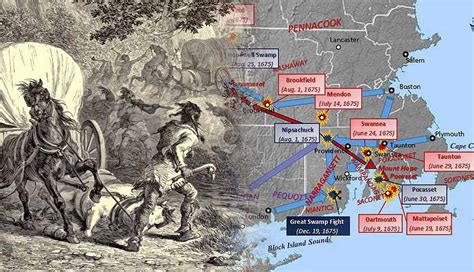
King Philip’s War, also known as the First Indian War, was a pivotal conflict in American history that pitted English colonists against Native American tribes in the New England region. The war erupted in 1675 and raged for over a year, culminating in significant losses for both sides.
Causes of the War
The war was sparked by a series of grievances and misunderstandings between the colonists and Native Americans. Key factors included:
- Land encroachment: The colonists’ expanding settlements were encroaching on Native American hunting grounds and villages.
- Cultural differences: The colonists’ worldview and values clashed with those of the Native Americans, leading to misunderstandings and tensions.
- Religious conflict: Puritan missionaries sought to convert Native Americans to Christianity, which was met with resistance from some tribes.
Key Battles
The war was marked by several significant battles, including:
- First Battle of Hadley: A major raid on the English town of Hadley in 1675.
- Battle of Turner’s Falls: A decisive battle in 1676 that resulted in the deaths of hundreds of Native Americans.
- Second Battle of Hadley: A smaller raid on Hadley in 1677 that failed to breach the town’s defenses.
Impact of the War
King Philip’s War had a profound impact on both the colonists and Native Americans:
- Colonial losses: The colonists suffered over 1,000 casualties, a significant loss given the small population of the New England colonies.
- Native American losses: The Native Americans sustained far greater losses, with estimates ranging from 3,000 to 11,000 fatalities.
- Land concessions: The war resulted in the cession of large tracts of Native American land to the colonists.
- Increased tensions: The war deepened the distrust and hostility between the colonists and Native Americans, setting the stage for future conflicts.
Aftermath and Legacy
The war ended with the Treaty of Casco in 1678. However, the legacy of King Philip’s War continued to shape American history:
- Increased colonial power: The war demonstrated the colonists’ growing military power and their determination to expand their territory.
- Weakened Native American resistance: The loss of life and land devastated Native American tribes in the New England region, weakening their ability to resist colonization.
- Lessons for future wars: The war provided valuable lessons for both sides on tactics, weaponry, and the complexities of warfare in the American wilderness.
Historical Significance
King Philip’s War is a significant event in American history due to its:
- Role as a turning point: The war marked a major turning point in the relationship between colonists and Native Americans, transitioning from initial cooperation to open hostility.
- Impact on American identity: The war shaped the colonists’ perception of themselves and their destiny in the New World.
- Continued relevance: The lessons and legacies of King Philip’s War continue to inform and influence our understanding of American history and race relations.
Key Figures
- King Philip: The Wampanoag leader who led Native American resistance to colonial encroachment.
- John Winthrop: The Puritan governor of Massachusetts who played a key role in the war effort.
- Metacomet: King Philip’s brother and a prominent Native American war chief.
Conclusion
King Philip’s War was a complex and pivotal conflict that left a lasting impact on American history. Its legacy continues to resonate today, influencing our understanding of race relations, colonization, and the challenges faced by both Native Americans and English colonists in the early days of the United States.