Deciding whether or not to double major is a big decision. There are many factors to consider, such as your academic interests, career goals, and financial situation. If you’re thinking about double majoring, it’s important to do your research and talk to your academic advisor to make sure it’s the right choice for you.
Is it Hard to Double Major?
The answer to this question depends on a number of factors, including the majors you choose, your academic ability, and your willingness to work hard. Generally speaking, double majoring will require more time and effort than majoring in just one subject. You’ll need to take more courses, and you’ll need to be able to balance your workload effectively.
Time Commitment
One of the biggest challenges of double majoring is the time commitment. You’ll need to take more courses than if you were only majoring in one subject, and you’ll need to be able to manage your time effectively. This may mean sacrificing some of your free time or extracurricular activities.
Workload
Another challenge of double majoring is the workload. You’ll have more assignments, more exams, and more projects than if you were only majoring in one subject. This can be difficult to manage, especially if you’re also working part-time or have other commitments.
Academic Ability
Your academic ability will also play a role in how difficult it is to double major. If you’re a strong student with good time management skills, you may be able to handle the workload of double majoring without too much difficulty. However, if you’re struggling academically, double majoring may not be the best option for you.
Pros and Cons of Double Majoring
There are both pros and cons to double majoring. Here are some of the potential benefits:
- Increased knowledge and skills: Double majoring can give you a broader knowledge base and a wider range of skills. This can make you more competitive in the job market and open up more career opportunities.
- Greater flexibility: Double majoring can give you more flexibility in your career. You’ll have the option to pursue a variety of different career paths, and you’ll be able to adapt more easily to changes in the job market.
- Increased earning potential: Double majoring can lead to increased earning potential. Studies have shown that people with multiple degrees earn more money than those with only one degree.
Here are some of the potential drawbacks:
- Time commitment: Double majoring requires a significant time commitment. You’ll need to take more courses and spend more time studying. This can be difficult to manage, especially if you’re also working part-time or have other commitments.
- Workload: Double majoring can be a lot of work. You’ll have more assignments, more exams, and more projects. This can be difficult to manage, especially if you’re not a strong student or if you don’t have good time management skills.
- Cost: Double majoring can be more expensive than majoring in just one subject. You’ll need to pay for more courses and you may need to extend your stay in school.
Making the Decision
Deciding whether or not to double major is a personal decision. There is no right or wrong answer. The best decision for you will depend on your individual circumstances and goals. If you’re considering double majoring, it’s important to do your research and talk to your academic advisor to make sure it’s the right choice for you.
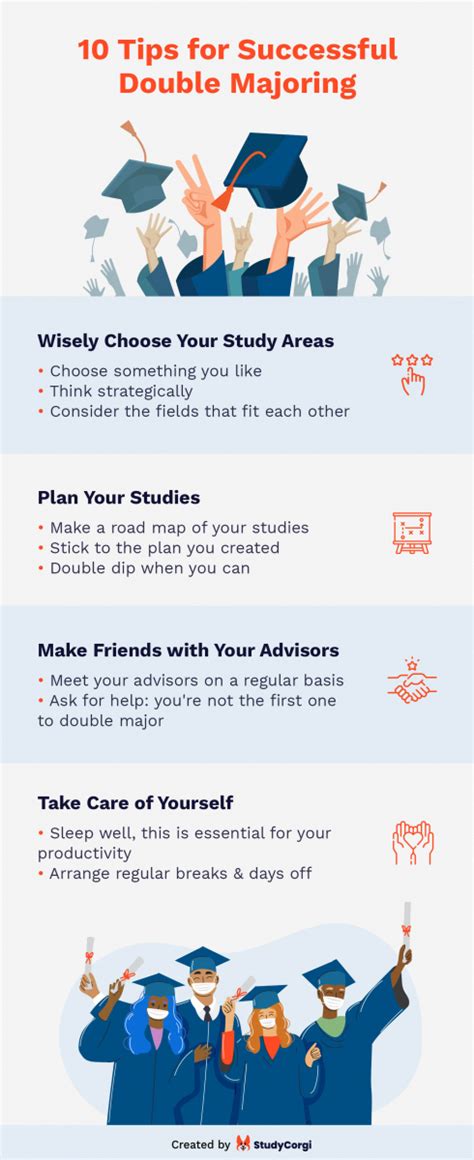
If you’re determined to double major, there are a few things you can do to increase your chances of success:
- Choose your majors wisely. Make sure your majors are compatible and that they will complement each other. You should also consider your career goals when choosing your majors.
- Create a realistic schedule. Plan out your course schedule carefully and make sure you have enough time to complete all of your assignments. Be realistic about how much time you can commit to each major.
- Get organized. Keep track of your assignments, due dates, and reading materials. Use a planner or calendar to stay organized and on track.
- Take advantage of resources. Your academic advisor, professors, and classmates can all be helpful resources. Don’t be afraid to ask for help when you need it.
- Be prepared to work hard. Double majoring is a lot of work, but it’s also a rewarding experience. Be prepared to put in the time and effort, and you’ll be successful.
Double majoring can be a great way to broaden your knowledge, increase your skills, and improve your career prospects. However, it’s important to do your research and make sure it’s the right choice for you. If you’re willing to work hard and you’re passionate about your chosen subjects, double majoring can be a great way to achieve your academic and career goals.
Q: Is it hard to double major?
A: The difficulty of double majoring depends on a number of factors, including the majors you choose, your academic ability, and your willingness to work hard. Generally speaking, double majoring will require more time and effort than majoring in just one subject.
Q: What are the benefits of double majoring?
A: There are many potential benefits to double majoring, including increased knowledge and skills, greater flexibility, and increased earning potential.
Q: What are the drawbacks of double majoring?
A: There are also some potential drawbacks to double majoring, including increased time commitment, workload, and cost.
Q: How can I increase my chances of success if I double major?
A: There are a few things you can do to increase your chances of success if you double major, such as choosing your majors wisely, creating a realistic schedule, getting organized, taking advantage of resources, and being prepared to work hard.