In the intricate tapestry of world civilizations, imperial bureaucracies have played a pivotal role in shaping the course of history. These vast administrative systems served as the backbone of ancient and medieval empires, enabling rulers to govern vast territories and wield immense power.

What is an Imperial Bureaucracy?
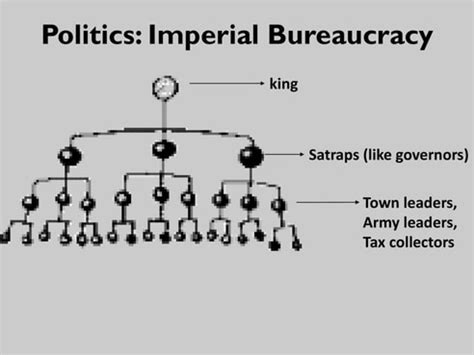
An imperial bureaucracy is a highly organized administrative system established by an emperor or an imperial government to manage the affairs of an empire. It typically consists of an elaborate network of officials, departments, and procedures responsible for carrying out the policies and directives of the imperial authority.
Functions of an Imperial Bureaucracy
Imperial bureaucracies perform a wide range of functions essential to the operation of an empire, including:
- Tax collection
- Administration of justice
- Maintenance of law and order
- Management of military affairs
- Diplomatic relations
- Public works construction
Characteristics of an Imperial Bureaucracy
Imperial bureaucracies share several common characteristics:
- Hierarchy: Officials are organized into a rigid hierarchy, with each level reporting to a higher authority.
- Centralization: Power is concentrated in the hands of a centralized authority, often the emperor or a select group of high-ranking officials.
- Meritocracy: In some cases, officials are appointed based on merit or qualifications.
- Professionalism: Bureaucrats are trained and employed specifically to perform administrative functions.
- Depersonalization: Officials are impersonal and accountable to the organization, not to individuals.
Examples of Imperial Bureaucracies
Throughout history, numerous empires have established their own imperial bureaucracies. Some notable examples include:
- Ancient Egypt: The Egyptian bureaucracy was highly centralized and efficient, responsible for administering a vast empire for over 3,000 years.
- Roman Empire: The Roman bureaucracy was one of the most sophisticated in the ancient world, with a complex system of provinces and officials.
- Chinese Empire: The Chinese bureaucracy was renowned for its meritocracy and its elaborate civil service examination system.
Impact of Imperial Bureaucracies
Imperial bureaucracies have had a profound impact on the development of human civilizations:
- Stabilization: Bureaucracies provide stability by ensuring the continuity of administration and the implementation of policies.
- Efficiency: By streamlining administrative processes, bureaucracies improve efficiency and reduce corruption.
- Expansion: Bureaucracies facilitate the expansion of empires by creating the necessary infrastructure and manpower.
- Cultural diffusion: Bureaucrats often belonged to different ethnicities or cultures, facilitating the spread of ideas and technologies.
Challenges of Imperial Bureaucracies
However, imperial bureaucracies also present challenges:
- Complexity: The vast size and complexity of bureaucracies can lead to inefficiency, delay, and confusion.
- Corruption: Bureaucrats can exploit their positions for personal gain, leading to corruption and mismanagement.
- Stagnation: Bureaucracies can become stagnant and resistant to change, hindering innovation and progress.
Conclusion
Imperial bureaucracies have been integral to the functioning of empires throughout history. These vast administrative systems provide stability, efficiency, and support to rulers, enabling them to govern extensive territories and wield immense power. However, they also face challenges such as complexity, corruption, and stagnation, which can hinder their effectiveness and undermine the legitimacy of the empire.