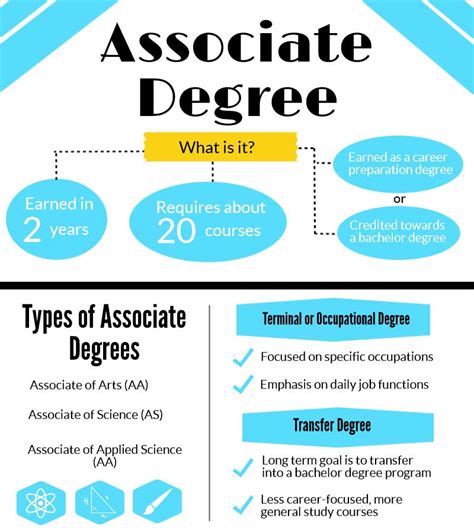
An associate’s degree is a two-year postsecondary degree that provides students with the skills and knowledge necessary for entry-level employment in a specific field. Associate’s degrees are typically offered in two formats: associate of arts (AA) and associate of science (AS). AA degrees are typically designed for students who plan to transfer to a four-year university, while AS degrees are typically designed for students who plan to enter the workforce immediately after graduation.

Number of Credits Required
The number of credits required for an associate’s degree varies depending on the institution and the specific field of study. However, most associate’s degrees require between 60 and 90 credits.
| Degree Type | Number of Credits Required |
|---|---|
| Associate of Arts (AA) | 60-70 |
| Associate of Science (AS) | 60-90 |
Breakdown of Credits
Associate’s degree programs typically require students to complete a combination of general education courses and major-specific courses. General education courses provide students with a foundation in the humanities, social sciences, and natural sciences. Major-specific courses provide students with the skills and knowledge necessary for their chosen field of study.
The following is a breakdown of the typical credit distribution for an associate’s degree:
| Course Type | Number of Credits |
|---|---|
| General Education Courses | 20-30 |
| Major-Specific Courses | 40-60 |
Common Mistakes to Avoid
When pursuing an associate’s degree, it is important to avoid common mistakes that can delay or prevent graduation. These mistakes include:
- Not attending class regularly
- Not completing assignments on time
- Not seeking help when needed
- Not understanding the requirements for graduation
Why an Associate’s Degree Matters
An associate’s degree can provide numerous benefits for students, including:
- Increased earning potential
- Improved job opportunities
- Greater career flexibility
- Enhanced personal development
Benefits of an Associate’s Degree
- Increased earning potential: According to the Bureau of Labor Statistics, associate’s degree holders earn, on average, 15% more than high school graduates.
- Improved job opportunities: Associate’s degree holders have more job opportunities than high school graduates, and they are more likely to be employed in high-paying jobs.
- Greater career flexibility: Associate’s degree holders can pursue a variety of careers, giving them greater flexibility to change jobs or careers as needed.
- Enhanced personal development: Associate’s degree holders have a greater understanding of the world around them, and they are more likely to be involved in civic and community activities.
Conclusion
An associate’s degree is a valuable investment that can provide students with a solid foundation for their future. By understanding the number of credits required, the typical course distribution, common mistakes to avoid, and the benefits of an associate’s degree, students can make informed decisions about their education and careers.