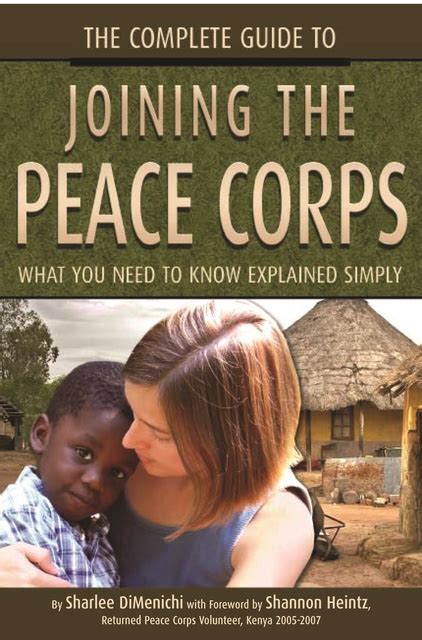
The Peace Corps is a volunteer program that sends Americans abroad to work on projects in developing countries. Volunteers work in a variety of fields, including education, health, agriculture, and community development.

The Peace Corps is a great way to make a difference in the world and gain valuable experience in a new culture. If you’re interested in joining the Peace Corps, here’s what you need to know.
Eligibility Requirements
To join the Peace Corps, you must:
- Be a U.S. citizen
- Be at least 18 years old
- Have a bachelor’s degree or equivalent experience
- Be in good physical and mental health
- Be able to pass a background check
Application Process
The Peace Corps application process is competitive. To apply, you’ll need to:
- Create an account on the Peace Corps website
- Complete an online application
- Submit transcripts and letters of recommendation
- Interview with a Peace Corps recruiter
The application process can take several months. Once you’ve been selected, you’ll be invited to participate in a pre-service training program.
Pre-Service Training
Pre-service training is a three-month program that prepares volunteers for their service abroad. During training, you’ll learn about the Peace Corps mission, the culture of your host country, and the technical skills you’ll need to be successful.
Service Abroad
Peace Corps volunteers serve for two years. During your service, you’ll live and work in a host community. You’ll work on projects that are designed to meet the needs of the community.
Benefits of Joining the Peace Corps
Joining the Peace Corps is a life-changing experience. Volunteers gain valuable experience in a new culture, learn new skills, and make a difference in the world.
According to a study by the National Peace Corps Association, Peace Corps volunteers are more likely than non-volunteers to:
- Have higher levels of job satisfaction
- Earn higher salaries
- Be involved in community service
- Be politically active
Common Mistakes to Avoid
If you’re thinking about joining the Peace Corps, it’s important to avoid making these common mistakes:
- Not doing your research. Before you apply, take the time to learn about the Peace Corps mission and the different programs available.
- Applying for the wrong program. There are many different Peace Corps programs available. Make sure you choose a program that’s a good fit for your skills and interests.
- Not being prepared for the challenges. Service in the Peace Corps can be challenging. Be prepared for culture shock, language barriers, and other difficulties.
- Giving up. Peace Corps service is a two-year commitment. Be prepared to stick with it, even when things get tough.
How to Join the Peace Corps Step-by-Step
- Create an account on the Peace Corps website.
- Complete an online application.
- Submit transcripts and letters of recommendation.
- Interview with a Peace Corps recruiter.
- Attend pre-service training.
- Serve for two years in a host community.
Why the Peace Corps Matters
The Peace Corps is a valuable program that makes a difference in the world. Volunteers work on projects that address a variety of global challenges, including poverty, hunger, disease, and environmental degradation.
In addition to its work abroad, the Peace Corps also helps to promote understanding between the United States and other countries. Volunteers return home with a deep understanding of the cultures they’ve served in, and they often go on to work in fields related to international development.
Tables
Table 1: Peace Corps Application Timeline
| Step | Timeline |
|---|---|
| Create an account on the Peace Corps website | Anytime |
| Complete an online application | Deadline varies by program |
| Submit transcripts and letters of recommendation | Deadline varies by program |
| Interview with a Peace Corps recruiter | Deadline varies by program |
| Attend pre-service training | Deadline varies by program |
| Serve for two years in a host community | 2-year commitment |
Table 2: Peace Corps Programs
| Program | Description |
|---|---|
| Education | Volunteers work in schools and other educational settings to improve access to quality education. |
| Health | Volunteers work in clinics and hospitals to provide healthcare services and promote healthy behaviors. |
| Agriculture | Volunteers work with farmers and communities to improve agricultural productivity and food security. |
| Community development | Volunteers work with communities to improve infrastructure, access to clean water, and other essential services. |
Table 3: Benefits of Joining the Peace Corps
| Benefit | Description |
|---|---|
| Gain valuable experience in a new culture | Live and work in a host community for two years. |
| Learn new skills | Develop technical skills in your field of service. |
| Make a difference in the world | Work on projects that address global challenges. |
| Increase your job prospects | Peace Corps volunteers are more likely to have higher levels of job satisfaction and earn higher salaries. |
| Be more involved in community service | Peace Corps volunteers are more likely to be involved in community service after their service. |
| Be more politically active | Peace Corps volunteers are more likely to be politically active. |
Table 4: Common Mistakes to Avoid
| Mistake | Description |
|---|---|
| Not doing your research | Before you apply, take the time to learn about the Peace Corps mission and the different programs available. |
| Applying for the wrong program | There are many different Peace Corps programs available. Make sure you choose a program that’s a good fit for your skills and interests. |
| Not being prepared for the challenges | Service in the Peace Corps can be challenging. Be prepared for culture shock, language barriers, and other difficulties. |
| Giving up | Peace Corps service is a two-year commitment. Be prepared to stick with it, even when things get tough. |