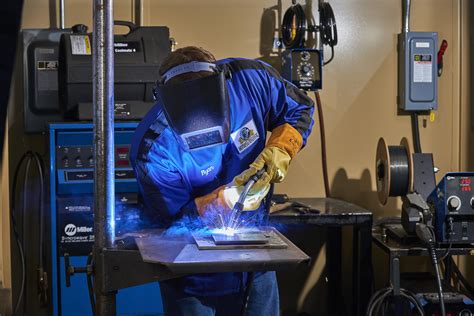
Nestled in the heart of Troy, Ohio, stands the Hobart Institute of Welding, a renowned institution dedicated to advancing the art and science of welding. With a legacy spanning over 90 years, the Hobart Institute has established itself as a global leader in welding education, training, and research. This comprehensive article will delve into the rich history, exceptional programs, and groundbreaking innovations that define the Hobart Institute of Welding.

A Legacy of Excellence in Welding Education
Established in 1930 as the Hobart Brothers Trade School, the Hobart Institute has a long history of producing highly skilled and certified welders. The institution’s curriculum has evolved over the years to reflect the ever-changing demands of the welding industry. Today, the Hobart Institute offers a wide range of programs, from entry-level certificates to advanced associate degrees.
Cutting-Edge Programs for Career Success
The Hobart Institute of Welding offers a variety of programs designed to prepare students for successful careers in the welding industry. The most popular programs include:
-
Welding Technology Associate Degree: This two-year program provides students with a comprehensive foundation in welding, including arc welding, MIG welding, TIG welding, and plasma cutting. Graduates are prepared for a wide range of welding careers in industries such as manufacturing, construction, and energy.
-
Welding Certificate Programs: These programs offer a shorter, more specialized training in specific welding techniques. Students can choose from a variety of programs, including Arc Welding, MIG Welding, TIG Welding, and Pipe Welding.
-
Continuing Education Programs: The Hobart Institute also offers a variety of continuing education programs for welders who want to update their skills or learn new techniques. These programs include Advanced Welding Technologies, Welding Inspection, and Welding Safety.
Innovation and Research: Driving the Industry Forward
The Hobart Institute of Welding is not only a leader in education, but also a pioneer in welding innovation and research. The institute’s state-of-the-art Welding Research Laboratory conducts cutting-edge research in a variety of areas, including:
-
Welding Processes: The lab investigates new and improved welding processes to enhance speed, efficiency, and quality.
-
Welding Materials: Researchers study the properties and performance of new welding materials to optimize joint strength and durability.
-
Welding Equipment: The lab evaluates the latest welding equipment to identify the most effective and cost-efficient tools for welders.
The findings of the Hobart Institute’s research have a significant impact on the welding industry, helping to advance technology and improve welding practices.
Unique Applications of Welding: Expanding the Boundaries
Beyond traditional welding applications, the Hobart Institute is also exploring innovative and unconventional uses for welding. The institute’s “Weld Anything Wednesday” program encourages students and faculty to push the boundaries of welding and discover new and creative applications. Some notable examples include:
-
WeldSparkle Jewelry: Students have created stunning jewelry pieces by welding together small metal beads and gems.
-
Welding Architectural Sculptures: Welders have fabricated large-scale sculptures using welding techniques, demonstrating the artistic potential of welding.
-
Welding Musical Instruments: Musicians have collaborated with welders to create unique and resonant musical instruments, such as welded guitars and percussion instruments.
These innovative applications of welding showcase the versatility and limitless possibilities of this transformative technology.
Tables: Key Statistics and Data
Hobart Institute of Welding by the Numbers
| Metric | Value |
|---|---|
| Number of Programs | 20+ |
| Number of Students | 1,200+ |
| Number of Faculty and Staff | 120+ |
| Number of Welding Labs | 12 |
| Number of Industry Partnerships | 500+ |
Welding Industry Growth
| Source | Projection |
|---|---|
| American Welding Society (AWS) | 13% growth by 2026 |
| U.S. Bureau of Labor Statistics (BLS) | 9% growth in welding jobs by 2031 |
| Industry Week | 500,000 welding jobs to be filled by 2025 |
Earnings Potential for Welders
| Level | Median Annual Salary |
|---|---|
| Entry-Level Welder | $45,000 |
| Journeyman Welder | $60,000 |
| Senior Welder | $75,000+ |
Effective Strategies for Welding Success
To succeed in the welding industry, it is essential to adopt effective strategies for learning and development. These strategies include:
-
Develop Strong Technical Skills: Focus on developing proficiency in a variety of welding techniques and processes.
-
Stay Up-to-Date with Technology: Embrace new welding technologies and equipment to enhance efficiency and productivity.
-
Pursue Certifications and Credentials: Obtain industry-recognized certifications to demonstrate your skills and knowledge.
-
Build a Network: Connect with welding professionals, attend industry events, and participate in online communities to expand your knowledge and connections.
-
Explore Diverse Applications: Expand your horizons by exploring unique and innovative applications of welding beyond traditional industries.
Common Mistakes to Avoid in Welding
To avoid common pitfalls and ensure welding success, it is crucial to avoid the following mistakes:
-
Rushing the Process: Take your time and follow proper procedures to achieve high-quality welds.
-
Ignoring Safety Precautions: Always wear appropriate protective gear and observe safety protocols to prevent injuries.
-
Using Incorrect Techniques: Master the proper techniques for different welding processes to ensure strong and durable welds.
-
Neglecting Continuing Education: Stay updated with the latest welding technologies and best practices through ongoing training and education.
-
Underestimating the Importance of Practice: Regular practice is essential to refine your skills and improve your welding capabilities.
Pros and Cons of Welding as a Career
Pros:
-
High Demand: Welders are in high demand across various industries, ensuring job security.
-
Competitive Salaries: Welders can earn competitive salaries and benefits, especially with experience and certifications.
-
Career Advancement Opportunities: Welders can advance to supervisory or management roles with experience and further education.
-
Job Satisfaction: Welding can be a rewarding career that offers opportunities for creativity and problem-solving.
-
Skills Transferable to Other Industries: Welding skills can be applied to a variety of other industries, offering flexibility in career paths.
Cons:
-
Physical Demands: Welding can be a physically demanding job, requiring prolonged standing, bending, and lifting.
-
Exposure to Hazards: Welders may be exposed to heat, fumes, and other potential hazards, but these can be mitigated with proper safety precautions.
-
Limited Career Growth: Career advancement opportunities can be limited for welders without additional education or experience.
-
Potential for Repetitive Motions: Welding can involve repetitive motions, which may lead to musculoskeletal disorders if proper ergonomics are not observed.
-
Job Market Fluctuations: The welding job market can be influenced by economic conditions and industrial trends, potentially affecting employment prospects.
Conclusion
The Hobart Institute of Welding has established itself as a global leader in welding education and innovation. Through its exceptional programs, groundbreaking research, and unwavering commitment to excellence, the Hobart Institute has empowered generations of welders to succeed in their careers. As the welding industry continues to evolve at a rapid pace, the Hobart Institute remains at the forefront of advancing technology, shaping the future of welding, and inspiring new generations of welding professionals.