Introduction
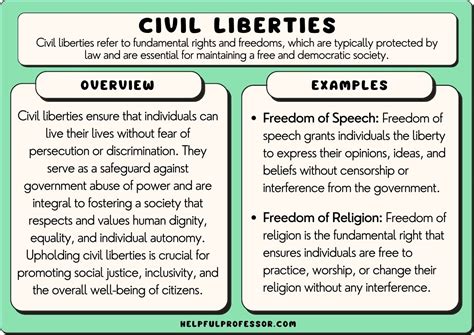
Civil liberties are fundamental rights and freedoms guaranteed to individuals by the Constitution of the United States. These rights protect individuals from government overreach and ensure a balance of power between citizens and the state. In GOVT 2306, students delve into the history, evolution, and scope of civil liberties, examining their significance in upholding the principles of democracy, equality, and justice.

Historical Foundations
The concept of civil liberties emerged during the Enlightenment era, influenced by the ideas of John Locke and Montesquieu. The American Revolution was sparked by colonists’ grievances against British encroachment on their rights. The Declaration of Independence enshrines these principles, declaring that “all men are created equal” and endowed with “unalienable Rights.”
Constitutional Safeguards
The Bill of Rights, the first ten amendments to the Constitution, provides specific protections for individual liberties. These include:
- Freedom of speech, press, religion, and assembly
- Right to bear arms
- Protection against unreasonable searches and seizures
- Right to due process of law
- Equal protection under the law
Supreme Court Interpretation
The Supreme Court plays a crucial role in interpreting and applying the civil liberties provisions of the Constitution. Landmark cases have shaped the scope and interpretation of these rights, including:
- Marbury v. Madison (1803): Established the principle of judicial review
- Brown v. Board of Education (1954): Ended segregation in public schools
- Miranda v. Arizona (1966): Required police to inform suspects of their rights before questioning
Contemporary Challenges
In recent decades, technological advancements and evolving societal norms have presented new challenges to civil liberties. Issues such as:
- Digital privacy and surveillance: Government and private entities collect vast amounts of data, raising concerns about intrusion on individuals’ privacy
- Free speech on social media: Social media platforms grapple with balancing free expression with hate speech and misinformation
- Discrimination and bias: Systemic racism and other forms of discrimination continue to threaten civil liberties, highlighting the ongoing need for protection and advocacy
Significance of Civil Liberties
Civil liberties are essential for a just and equitable society. They:
- Protect individuals from government oppression: Safeguarding citizens from arbitrary arrest, illegal search, and excessive punishment.
- Foster diversity and dissent: Encourage the free exchange of ideas and opinions, ensuring a vibrant and informed citizenry.
- Ensure accountability and transparency: Limit the government’s power and hold it accountable to the people.
Common Mistakes to Avoid
When discussing civil liberties, it is essential to avoid common pitfalls:
- Equating freedom with license: Civil liberties are not absolute and can be limited in the interest of public safety and order.
- Confusing rights with privileges: Rights are protected by the Constitution, while privileges are granted by the government and can be revoked.
- Ignoring the impact on others: The exercise of one’s civil liberties should not infringe on the rights of others or harm society.
Benefits of Understanding Civil Liberties
Understanding civil liberties empowers individuals with the following benefits:
- Informed citizenship: Enables active participation in the democratic process and advocacy for civil rights.
- Protection from government abuse: Provides knowledge of one’s rights and how to defend them against potential violations.
- Increased social harmony: Promotes respect for diversity, tolerance, and the rule of law.
Tables
| Table 1: Bill of Rights and Corresponding Amendments | ||
|---|---|---|
| Freedom of speech, press, religion, and assembly | First Amendment | |
| Right to bear arms | Second Amendment | |
| Protection against unreasonable searches and seizures | Fourth Amendment | |
| Right to due process of law | Fifth Amendment | |
| Equal protection under the law | Fourteenth Amendment |
| Table 2: Landmark Supreme Court Cases and Their Impact | ||
|---|---|---|
| Case: Marbury v. Madison (1803) | Impact: Established judicial review | |
| Case: Brown v. Board of Education (1954) | Impact: Ended segregation in public schools | |
| Case: Miranda v. Arizona (1966) | Impact: Required police to inform suspects of their rights before questioning |
| Table 3: Challenges to Civil Liberties in the Digital Age | ||
|---|---|---|
| Pain Point | Motivation | Potential Impacts |
| Erosion of privacy due to data collection | Desire for convenience and efficiency | Increased surveillance and loss of personal autonomy |
| Spread of misinformation on social media | Fear of missing out on information | Public distrust and democratic erosion |
| Algorithmic bias in technology | Desire for personalized experiences | Unfair treatment and discrimination based on protected characteristics |
| Table 4: Benefits of Understanding Civil Liberties | ||
|---|---|---|
| Empowered citizenship | Informed participation in democracy and advocacy for rights | |
| Protection against abuse of power | Knowledge of rights and ability to defend them | |
| Social harmony | Respect for diversity, tolerance, and the rule of law |
Conclusion
GOVT 2306 provides a comprehensive examination of civil liberties, tracing their historical origins, legal basis, and contemporary challenges. Understanding these fundamental rights is crucial for individuals to protect their own freedoms, ensure accountability, and foster a just and equitable society. By embracing the principles of civil liberties, we can uphold the values upon which our democracy was founded.