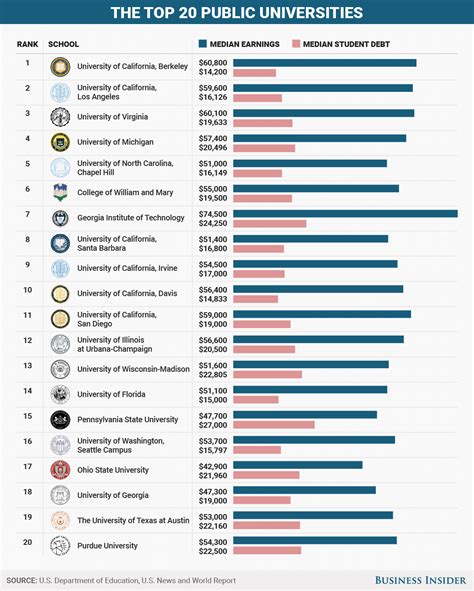
In today’s competitive higher education landscape, choosing the right public university is critical for students’ success. Forbes magazine, a renowned authority on business and finance, publishes annual rankings that provide valuable insights into the performance of public universities across the nation. This comprehensive guide will delve into the intricacies of the Forbes public university rankings, helping you make informed decisions about your academic future.

Key Factors in the Forbes Rankings
Forbes evaluates public universities based on a wide range of metrics that encompass academic excellence, student experience, and career opportunities. These factors include:
- Academic Achievement: Measures the institution’s academic reputation, faculty resources, and graduation rates.
- Student Satisfaction: Assesses students’ satisfaction with their educational experience, including faculty quality, campus life, and extracurricular activities.
- Post-Graduate Success: Examines the salaries and employment rates of graduates, as well as the number of students who pursue advanced degrees.
- Financial Resources: Considers the institution’s endowment, research expenditures, and tuition costs.
- Alumni Success: Measures the accomplishments of alumni in various fields, including business, academia, and public service.
How to Use the Forbes Rankings
The Forbes public university rankings can serve as a valuable tool for students and families as they navigate the college search process. Here are some tips on how to effectively utilize the rankings:
- Identify Your Priorities: Consider which factors matter most to you in a university. Do you prioritize academic excellence, student satisfaction, or career opportunities?
- Explore the Rankings: Visit the Forbes website to access the complete rankings. Use the filters to sort universities based on the metrics that are most important to you.
- Compare Institutions: Create a list of universities that align with your priorities and compare their rankings in each category.
- Read the Methodology: Understand the methodology behind the rankings to ensure they align with your values and aspirations.
Common Mistakes to Avoid
When using the Forbes public university rankings, it is essential to avoid common mistakes that can lead to suboptimal decision-making:
- Overreliance on Rankings: While the rankings provide valuable information, they should not be the sole determinant of your university choice. Consider other factors such as location, size, and campus culture.
- Ignoring Fit: The best university for you is not necessarily the one with the highest ranking. Consider your individual strengths, interests, and career goals when making a decision.
- Focusing on Prestige: Prestige alone does not guarantee a fulfilling or successful experience. Explore universities that offer a balance of academic rigor, student support, and career opportunities.
Frequently Asked Questions
Q: What is the top public university according to the Forbes rankings?
A: The University of California, Berkeley has consistently ranked at the top of the Forbes public university rankings in recent years.
Q: How often are the Forbes rankings updated?
A: The Forbes public university rankings are updated annually, typically in August or September.
Q: What is the difference between the Forbes public university rankings and other rankings?
A: The Forbes rankings focus on a broader range of factors than other rankings, including student satisfaction, post-graduate success, and financial resources.
Q: Are the Forbes rankings credible?
A: Yes, Forbes is a reputable publication with a long history of providing in-depth analysis of various industries, including higher education.
Q: How can I improve my chances of getting into a top public university?
A: Maintain a strong academic record, participate in extracurricular activities, and seek out opportunities for leadership and community service.
Q: What resources are available to help me navigate the college search process?
A: Your high school guidance counselor, college admissions websites, and online ranking platforms can provide valuable support and guidance.
Additional Considerations
Beyond the Forbes rankings, there are other factors to consider when selecting a public university. These include:
- Faculty Diversity: A diverse faculty can enhance the educational experience and expose students to a wider range of perspectives.
- Research Opportunities: Universities with robust research programs provide students with hands-on learning experiences and access to cutting-edge knowledge.
- Location: The location of a university can influence the cost of attendance, access to internships, and overall quality of life.
Conclusion
The Forbes public university rankings offer valuable insights into the performance of public universities across the nation. By understanding the key factors, how to use the rankings, and avoiding common mistakes, students and families can make informed decisions about their academic futures. Remember to consider additional factors and seek out resources that support your college search journey. With careful planning and consideration, you can find a public university that aligns with your aspirations and sets you on the path to success.