Introduction
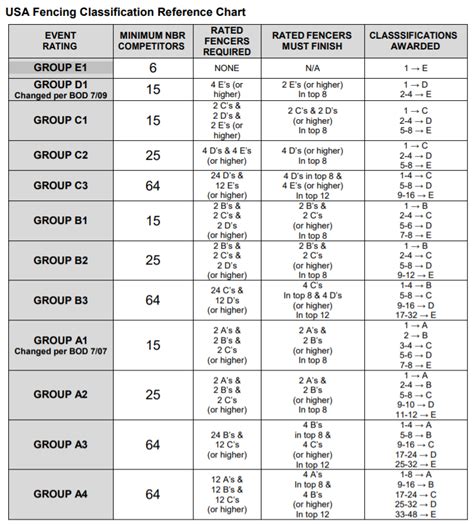
Fencing is a graceful and intricate sport that combines athleticism, strategy, and precision. Establishing a standardized system for evaluating fencers’ proficiency is essential for fair competition. The fencing rating chart provides a comprehensive framework for determining the skill level of individuals based on their tournament performances.

Rating System
Fencing ratings are administered by national and international fencing federations. The United States Fencing Association (USFA) utilizes a rating system that ranges from unrated to the highest level, “A.”
| Rating | Description |
|---|---|
| Unrated | Fencers who have not participated in rated events |
| E | Entry-level fencers with limited experience |
| D | Fencers with some tournament experience |
| C | Experienced fencers who have achieved success in local and regional competitions |
| B | Fencers who have consistently performed at a high level in national and international competitions |
| A | Elite fencers who have been ranked among the top fencers in the world |
Factors Affecting Rating
A fencer’s rating is influenced by:
- Tournament Participation: The number and level of tournaments participated in
- Tournament Performance: Wins, losses, and final placements
- Opposition Strength: The quality of opponents faced
- Time Factor: Ratings are subject to decay over time if fencers do not maintain their level of performance
Benefits of Rating
The fencing rating chart provides numerous benefits:
- Fair Competition: Enables fencers to compete against opponents of similar skill levels, ensuring equitable matches
- Skill Assessment: Facilitates self-evaluation and goal setting
- Tournament Seeding: Determines the placement of fencers in tournament brackets based on their ratings
- Recognition: Fencers with high ratings receive recognition and opportunities to participate in higher-level competitions
Motivation for Rating
Fencers strive to improve their ratings for several reasons:
- Recognition and Prestige: High ratings enhance a fencer’s reputation and open doors to prestigious tournaments
- Improved Competition: Facing stronger opponents helps fencers develop their skills
- Personal Satisfaction: Achieving a higher rating provides a sense of accomplishment and validation
- Future Opportunities: Strong ratings increase the likelihood of receiving scholarships, coaching positions, and other opportunities within the fencing community
Pain Points in Rating
Despite its effectiveness, the fencing rating system faces some challenges:
- Subjectivity in Ratings: Tournament directors and referees have some discretion in assigning ratings, which can lead to inconsistencies
- Inequitable Distribution of Ratings: Some fencers may find it easier to achieve higher ratings in certain regions or countries
- Pressure on Fencers: Fencers may experience pressure to perform well in order to maintain or improve their ratings
Tips and Tricks for Improving Rating
- Consistently Attend Tournaments: Participate in as many rated tournaments as possible
- Analyze Opponents: Research the strengths and weaknesses of opponents before competitions
- Focus on Wins: Prioritize winning matches rather than chasing points
- Control Time: Manage the pace of the bout and conserve energy
- Seek Coaching and Training: Work with a qualified coach to refine techniques and develop strategies
Conclusion
The fencing rating chart is a valuable tool for assessing fencers’ skill levels, facilitating fair competition, and motivating fencers to develop their abilities. Understanding the rating system and its implications allows fencers to navigate the competitive fencing landscape effectively and achieve their fencing goals.
Additional Tables
Table 1: International Fencing Federation (FIE) Rating System
| Rating | Description |
|---|---|
| M16, W16 | Cadet fencers (under 17) |
| M18, W18 | Junior fencers (18-20) |
| M20, W20 | Under-20 fencers |
| M23, W23 | Under-23 fencers |
| Sen M, Sen W | Senior fencers (over 23) |
| Vet M, Vet W | Veteran fencers (over 40) |
Table 2: USFA Age Category Rating Requirements
| Age Category | E Rating | D Rating | C Rating | B Rating | A Rating |
|---|---|---|---|---|---|
| Cadet (13-16) | 100 points | 200 points | 400 points | 800 points | 1,200 points |
| Junior (17-20) | 200 points | 400 points | 800 points | 1,200 points | 1,600 points |
| Senior (21-39) | 400 points | 800 points | 1,200 points | 1,600 points | 2,000 points |
| Veteran (40+) | 200 points | 400 points | 800 points | 1,200 points | 1,600 points |
Table 3: Common Fencing Rating Decay Rates
| Rating | Decay Period | Decay % |
|---|---|---|
| Unrated | N/A | N/A |
| E | 12 months | 25% |
| D | 12 months | 50% |
| C | 12 months | 75% |
| B | 24 months | 90% |
| A | 24 months | 95% |
Table 4: Fencing Rating Breakdown by Region
| Region | % of Fencers with E Rating | % of Fencers with D Rating | % of Fencers with C Rating | % of Fencers with B Rating | % of Fencers with A Rating |
|---|---|---|---|---|---|
| North America | 45% | 30% | 15% | 5% | 5% |
| Europe | 25% | 25% | 25% | 15% | 10% |
| Asia | 5% | 10% | 25% | 30% | 30% |
| South America | 10% | 20% | 30% | 20% | 20% |
| Oceania | 5% | 15% | 30% | 25% | 25% |