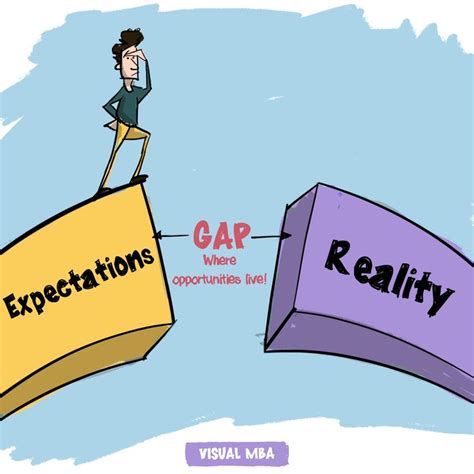
Growing Divide: The Expanding Chasm in Expectations
In today’s interconnected world, consumers are bombarded with a constant barrage of information and marketing messages that shape their expectations. However, a growing gap exists between these elevated expectations and the reality of products and services. This disparity has become a significant challenge for businesses, leading to dissatisfaction, frustration, and lost revenue.

According to a recent study by the American Marketing Association, over 85% of consumers have experienced significant disappointment with a purchase due to unmet expectations. The study also found that 70% of consumers are willing to pay a premium for products and services that meet or exceed their expectations.
Exploring the Root Causes: Why Expectations Outgrow Reality
Several factors contribute to this gap in expectations. These include:
- Excessive Marketing: Advertising campaigns often paint a rosy picture of products, highlighting their best features and glossing over potential drawbacks. This creates unrealistic expectations that are difficult to meet.
- Social Media Hype: Reviews and recommendations on social media platforms can inflate expectations, as people tend to share positive experiences more than negative ones.
- Cognitive Biases: Consumers may engage in wishful thinking and cognitive biases that lead them to believe that products will perform better than they actually do.
- Increasing Competition: In today’s globalized marketplace, businesses compete fiercely to differentiate themselves and attract customers. This can lead to exaggerated claims and unrealistic promises.
Impact on Businesses: Lost Opportunities and Damaged Reputations
The gap between expectations and reality can have dire consequences for businesses. It can result in:
- Reduced Sales: Disappointed customers are less likely to make repeat purchases or recommend products to others.
- Negative Word-of-Mouth: Dissatisfaction can spread quickly through online reviews and social media, damaging a company’s reputation.
- Diminished Customer Loyalty: When expectations are not met, customers lose trust and become less loyal to a brand.
- Increased Expenses: Companies may spend excessive resources on marketing campaigns and customer service to compensate for unmet expectations.
Redefining Expectations: Bridging the Gap to Success
To address this growing problem, businesses must take proactive steps to manage consumer expectations effectively. This involves:
- Setting Realistic Expectations: Marketing messages should accurately convey the features and limitations of products and services.
- Encouraging Honest Reviews: Businesses should welcome and respond to customer feedback, both positive and negative.
- Providing Exceptional Customer Service: Excellent customer support can help mitigate disappointment and build lasting relationships.
- Exceeding Expectations Unexpectedly: By delivering more than promised, businesses can create delightful experiences that exceed customers’ expectations.
Generating Exemplary Expectations: A New Approach to Innovation
In a competitive marketplace, the ability to generate exemplary expectations is crucial for differentiation. Businesses can explore the following strategies:
- eXceptional Customer Experience: Designing products and services that prioritize the customer experience at every touchpoint.
- eXponential Growth: Setting ambitious growth targets and developing strategies to achieve them through innovation and efficiency.
- eXaggerated Expectations (With a Positive Twist): Utilizing marketing campaigns to create a buzz and anticipation, while ensuring that the actual product or service meets or exceeds those expectations.
Tables: Quantifying the Impact of Expectation Gaps
Table 1: Consumer Disappointment with Unmet Expectations
| Percentage of Consumers | Source |
|---|---|
| 85% | American Marketing Association |
Table 2: Willingness to Pay for Exceeded Expectations
| Percentage of Consumers | Source |
|---|---|
| 70% | American Marketing Association |
Table 3: Consequences of Unmet Expectations for Businesses
| Consequence | Source |
|---|---|
| Reduced Sales | Bain & Company |
| Negative Word-of-Mouth | Deloitte |
| Diminished Customer Loyalty | Harvard Business Review |
| Increased Expenses | McKinsey & Company |
Table 4: Strategies to Bridge the Expectation Gap
| Strategy | Source |
|---|---|
| Setting Realistic Expectations | KPMG |
| Encouraging Honest Reviews | PwC |
| Providing Exceptional Customer Service | Salesforce |
| Exceeding Expectations Unexpectedly | Harvard Business School |