Introduction
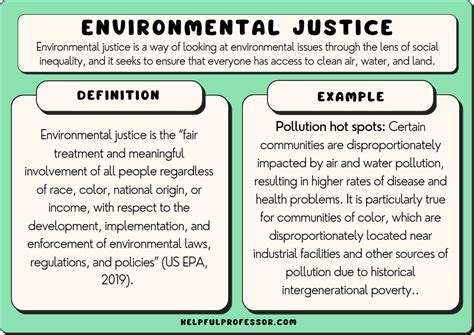
Environmental injustice refers to the disproportionate burden of environmental hazards and negative health outcomes faced by minority and low-income communities. This inequality has become a pressing concern globally, with devastating impacts on the well-being of marginalized populations. This article explores the causes, consequences, and potential solutions to environmental injustice, emphasizing its relevance to AP Human Geography.
Disproportionate Impacts on Minority Communities
- According to the Environmental Protection Agency (EPA), people of color are more likely to live near hazardous waste sites than whites, with a disparity of 41%.
- The Center for Disease Control (CDC) reports that African Americans have a 54% higher rate of childhood asthma than whites, due in part to exposure to air pollution.
- Low-income communities often lack access to adequate housing, sanitation, and clean water, increasing their risk of infectious diseases and other health issues.
Consequences of Environmental Injustice
- Health Impacts: Air pollution, water contamination, and other environmental hazards contribute to a range of health problems, including respiratory illnesses, cardiovascular disease, and cancer.
- Economic Impacts: Environmental injustice can reduce property values, damage infrastructure, and limit economic opportunities in affected communities.
- Social Impacts: Environmental injustice fosters social unrest, erodes trust in institutions, and perpetuates poverty and discrimination.
Causes of Environmental Injustice
- Historic Redlining: Past practices of redlining, which denied mortgages to Black and Hispanic neighborhoods, led to the concentration of low-income communities near hazardous sites.
- Zoning Practices: Zoning laws often allow polluting industries to locate near minority and low-income neighborhoods without proper oversight or environmental protections.
- Systemic Racism: Discrimination and prejudice contribute to the unequal distribution of environmental hazards and the lack of resources for marginalized communities.
Solutions to Environmental Injustice
- Policy Reforms: Enact stricter regulations on polluting industries and promote environmental equity in zoning laws.
- Community Empowerment: Engage affected communities in decision-making processes and provide them with resources to address environmental challenges.
- Investment: Invest in clean energy, waste management, and other infrastructure projects that benefit low-income communities.
Environmental Justice in AP Human Geography
Environmental justice is a key concept in AP Human Geography because it examines the relationship between human activities and the environment. It is relevant to several themes, including:
- Population and Settlement: Environmental injustice highlights the unequal distribution of environmental hazards and its consequences for vulnerable populations.
- Urban Geography: Urban planning and zoning practices can contribute to environmental injustice in cities.
- Environmental Change and Management: Environmental policies and regulations have the potential to address or exacerbate environmental injustice.
- Energy and Resources: The extraction and use of energy resources can have disproportionate environmental impacts on marginalized communities.
Conclusion
Environmental injustice is a systemic problem with profound impacts on minority and low-income communities globally. Understanding its causes and consequences is crucial for addressing this inequality and promoting sustainable and just societies. AP Human Geography provides a framework for examining environmental justice and empowering students to advocate for environmental equity.
- Environmental Racism: The intentional or unintentional placement of environmental hazards near minority or low-income communities.
- Redlining: A discriminatory practice that denied mortgages to Black and Hispanic neighborhoods, leading to concentrated poverty and environmental injustice.
- Zoning Laws: Regulations that determine the use and development of land, which can perpetuate environmental injustice when they allow polluting industries to locate near sensitive areas.
- Environmental Equity: The fair distribution of environmental benefits and burdens across all populations, regardless of race, income, or other factors.
- What are the most common forms of environmental injustice? Air pollution, water contamination, waste disposal sites, and hazardous industries.
- What are the health impacts of environmental injustice? Respiratory illnesses, cardiovascular disease, cancer, and developmental disorders.
- What are the economic impacts of environmental injustice? Reduced property values, infrastructure damage, and limited economic opportunities.
- What are some examples of zoning practices that perpetuate environmental injustice? Allowing polluting industries to locate near schools, hospitals, and residential neighborhoods.
- What are the key principles of environmental equity? Fair distribution of environmental benefits and burdens, community involvement in decision-making, and protection of sensitive populations.
- What is the role of government in addressing environmental injustice? Enacting regulations, promoting equity in zoning laws, and investing in infrastructure and cleanup projects.
Table 1: Disproportionate Environmental Hazards Faced by Minority Communities
| Environmental Hazard | Disparity Between People of Color and Whites |
|---|---|
| Hazardous Waste Sites | 41% |
| Air Pollution | Higher rates of asthma and respiratory illness |
| Water Contamination | Higher rates of waterborne diseases |
| Lead Poisoning | Higher rates of lead poisoning in children |
Table 2: Health Impacts of Environmental Injustice
| Health Issue | Risk for Residents of Environmental Justice Communities |
|---|---|
| Asthma | 54% higher rate of childhood asthma among African Americans |
| Cardiovascular Disease | Increased risk of heart disease and stroke |
| Cancer | Higher rates of certain types of cancer, such as lung and breast cancer |
| Developmental Disorders | Increased risk of birth defects and developmental disabilities |
Table 3: Economic Impacts of Environmental Injustice
| Economic Impact | Consequences for Affected Communities |
|---|---|
| Reduced Property Values | Lower property values in areas near environmental hazards |
| Infrastructure Damage | Increased damage to roads, bridges, and other infrastructure |
| Limited Economic Opportunities | Reduced investment and job creation in affected areas |
Table 4: Principles of Environmental Equity
| Principle | Description |
|---|---|
| Fair Distribution | Environmental benefits and burdens should be fairly distributed across all populations. |
| Community Involvement | Community members should be actively involved in decision-making processes that affect their environment. |
| Protection of Sensitive Populations | Special protections should be in place to protect vulnerable populations, such as children, the elderly, and people with disabilities. |