Introduction

As students embark on their high school journey, navigating the complex landscape of college-preparatory options can be daunting. Two prominent pathways that have gained significant traction are Dual Credit and Advanced Placement (AP) programs. While both offer students the opportunity to earn college credit while still in high school, they differ in their structure, curriculum, and assessment methods. This comprehensive guide decodes the nuances of each program to empower students and parents in making informed decisions about their academic trajectory.
Dual Credit vs. AP Classes: A Comparative Overview
Structure
- Dual Credit: Dual credit programs are partnerships between high schools and local colleges or universities. Students take college-level courses taught by high school teachers who have met specific qualifications. These courses fulfill both high school graduation requirements and college credit, typically transferring to most public institutions within the state.
- AP Courses: AP courses are standardized, college-level curricula offered by the College Board. Students take AP exams at the end of the course to potentially earn college credit or placement at their postsecondary institution. AP courses are available in a wide range of subjects, including English, Math, Science, History, and Foreign Languages.
Curriculum
- Dual Credit: The curriculum in dual credit courses closely aligns with the college course it represents. It typically covers a broader range of topics compared to the corresponding AP course and may delve into more detail. The pace of instruction is often faster, as students are expected to cover more content in a shorter time frame.
- AP Courses: AP courses adhere to a standardized curriculum set by the College Board. They are designed to mirror the content and rigor of introductory college courses and focus on specific, well-defined modules. The curriculum is structured to prepare students for the AP exams, which assess their knowledge and skills in the subject area.
Assessment
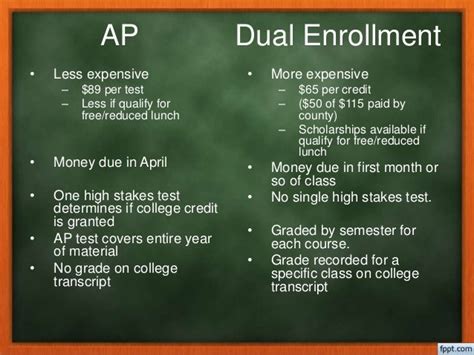
- Dual Credit: Students taking dual credit courses are graded by their high school teacher based on coursework, assignments, and exams. The grades earned in these courses are typically included in the high school transcript and may affect the student’s GPA.
- AP Courses: Students taking AP courses culminate their year with an AP exam. These exams are scored on a scale of 1 to 5, with a score of 3 or higher typically qualifying for college credit. AP exams are administered by the College Board, and the results are sent directly to colleges and universities.
Benefits of Dual Credit and AP Classes
Both dual credit and AP classes offer compelling benefits for students:
- College Credit: Both programs provide students with the opportunity to earn college credit while still in high school, saving them time and money in the long run.
- Academic Challenge: Dual credit and AP courses challenge students academically, preparing them for the rigors of college-level coursework and the transition to higher education.
- College Readiness: These courses help students develop essential academic skills, such as critical thinking, problem-solving, and time management, which are crucial for success in college and beyond.
- Career Exploration: The diverse subject offerings in dual credit and AP programs allow students to explore their interests and potential career paths early on.
- Stand Out: Taking dual credit or AP courses demonstrates to colleges and universities a student’s willingness to challenge themselves academically and excel in rigorous coursework.
Considerations for Choosing Between Dual Credit and AP Classes
When selecting between dual credit and AP classes, students and parents should carefully consider several factors:
- College Plans: The type of college the student plans to attend and the specific requirements of that institution should be taken into account. Some colleges may prefer AP courses, while others may accept dual credit courses.
- Academic Abilities: Students should assess their academic strengths and weaknesses and choose the program that best aligns with their learning style and readiness.
- Course Availability: The availability of specific dual credit or AP courses may vary depending on the high school and partnerships with local colleges or universities.
- Cost: Dual credit courses often incur additional fees, while AP exams are paid for by the student. It is important to factor in the financial implications when making a decision.
- Time Commitment: Dual credit and AP courses demand a significant time commitment beyond regular coursework. Students should be prepared to invest extra time in studying, completing assignments, and preparing for exams.
Tips for Success in Dual Credit and AP Classes
To maximize success in dual credit or AP classes, students can employ the following strategies:
- Attend class regularly: Regular attendance ensures that students do not miss important lectures, discussions, and assignments.
- Take effective notes: Develop strong note-taking skills to capture key concepts and organize information.
- Engage in active learning: Participate in class discussions, ask questions, and seek help outside of class when needed.
- Manage time effectively: Plan a study schedule and allocate time for reviewing material, completing assignments, and preparing for exams.
- Seek support: Utilize resources such as teachers, tutors, and classmates to address areas of need and boost understanding.
Conclusion
Dual credit and AP classes represent valuable pathways for students to enhance their college preparation and pursue their academic goals. By carefully considering the structure, curriculum, assessment methods, benefits, and considerations of each program, students can make an informed decision that aligns with their unique strengths, aspirations, and postsecondary plans. Embracing the challenges and opportunities presented by these rigorous courses can empower students to excel in college and beyond.