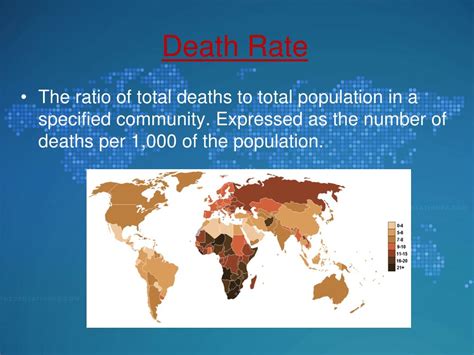
In geography, death rate refers to the number of deaths occurring within a specific geographical area over a specific period of time, typically expressed as the number of deaths per 1,000 people per year. It is an important indicator of the health and well-being of a population and is used to monitor changes in mortality patterns and identify potential health problems.

Factors Influencing Death Rate
The death rate of a population is influenced by a complex interplay of factors, including:
- Age: The death rate generally increases with age due to the natural aging process and the increased prevalence of chronic diseases.
- Gender: In many countries, men have higher death rates than women, due to factors such as higher rates of smoking, alcohol use, and risky behaviors.
- Socioeconomic status: People living in poverty or with limited access to healthcare tend to have higher death rates than those with higher socioeconomic status.
- Lifestyle factors: Smoking, unhealthy diet, physical inactivity, and excessive alcohol consumption can significantly increase the risk of death.
- Environmental factors: Poor air quality, contaminated water, and exposure to hazardous substances can contribute to higher death rates.
- Health care access: Access to quality healthcare, including preventive care, early detection, and timely treatment, can significantly reduce death rates.
- Public health policies: Effective public health policies, such as immunizations, tobacco control, and safe water initiatives, can contribute to lower death rates.
Measuring and Interpreting Death Rate
Death rates are typically calculated using data from vital registration systems or population surveys. The World Health Organization (WHO) provides global and regional estimates of death rates based on data collected from its member countries.
When interpreting death rates, it is important to consider the following:
- Crude death rate: This is the total number of deaths per 1,000 people in a year and provides a general overview of mortality in a population.
- Age-adjusted death rate: This takes into account the age distribution of a population and allows for comparisons between populations with different age structures.
- Cause-specific death rates: These provide information on the leading causes of death, such as heart disease, cancer, and infectious diseases.
Applications of Death Rate Data
Death rate data is used in a variety of applications, including:
- Health planning: Identifying areas with high mortality rates and targeting interventions to improve health outcomes.
- Policy development: Informing public health policies and programs aimed at reducing mortality.
- Demographic studies: Understanding population trends and predicting future mortality patterns.
- Monitoring progress: Tracking changes in mortality rates over time and evaluating the effectiveness of health interventions.
Tables
Table 1: Global Death Rates by Region, 2020
| Region | Death Rate (per 1,000) |
|---|---|
| Africa | 7.5 |
| Americas | 7.2 |
| Europe | 9.4 |
| Asia | 7.3 |
| Oceania | 7.1 |
Table 2: Leading Causes of Death Globally, 2019
| Cause of Death | Number of Deaths (millions) |
|---|---|
| Heart disease | 18.6 |
| Stroke | 11.6 |
| Chronic respiratory diseases | 9.6 |
| Cancer | 9.6 |
| Diabetes | 4.2 |
Table 3: Factors Influencing Death Rates
| Factor | Influence |
|---|---|
| Age | Increases with age |
| Gender | Higher in men |
| Socioeconomic status | Higher in poverty |
| Lifestyle factors | Smoking, unhealthy diet, physical inactivity, excessive alcohol consumption increase risk |
| Environmental factors | Poor air quality, contaminated water, hazardous substances can contribute to higher rates |
Table 4: Applications of Death Rate Data
| Application | Use |
|---|---|
| Health planning | Identifying areas with high mortality rates and targeting interventions |
| Policy development | Informing public health policies and programs aimed at reducing mortality |
| Demographic studies | Understanding population trends and predicting future mortality patterns |
| Monitoring progress | Tracking changes in mortality rates over time and evaluating the effectiveness of health interventions |
Frequently Asked Questions
1. What is the difference between the crude death rate and the age-adjusted death rate?
The crude death rate is the total number of deaths per 1,000 people in a year, while the age-adjusted death rate takes into account the age distribution of a population and allows for comparisons between populations with different age structures.
2. What are the leading causes of death globally?
According to the World Health Organization, the leading causes of death globally in 2019 were heart disease, stroke, chronic respiratory diseases, cancer, and diabetes.
3. How can I reduce my risk of death?
There are several ways to reduce your risk of death, including:
- Quit smoking
- Eat a healthy diet
- Exercise regularly
- Moderate alcohol consumption
- Get vaccinated against preventable diseases
- Manage chronic conditions effectively
- Access timely healthcare
4. What are the implications of increasing death rates?
Increasing death rates can have significant implications, including:
- Reduced life expectancy
- Increased strain on healthcare systems
- Economic losses due to reduced productivity
- Social and emotional impacts on families and communities
5. What can governments do to reduce death rates?
Governments can play a significant role in reducing death rates by:
- Implementing public health policies that promote healthy lifestyles and prevent chronic diseases
- Ensuring access to quality healthcare for all citizens
- Addressing socioeconomic inequalities that contribute to health disparities
- Investing in research and development to improve medical treatments and technologies
6. What is the death rate in my country?
To find the death rate in your country, you can refer to official statistics published by your government’s national health agency or the World Health Organization.