Introduction

Household size, a fundamental demographic measure, plays a critical role in shaping socioeconomic policies and resource allocation. Understanding its definition and implications is essential for policymakers, analysts, and researchers. This comprehensive guide will delve into the concept of household size, its measurement approaches, and its significance in various contexts.
What is Household Size?
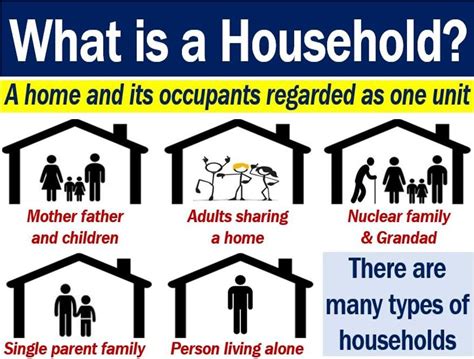
Household size refers to the number of individuals living together in the same place and sharing common living arrangements and expenses. According to the United States Census Bureau, a household comprises “all the people who occupy a housing unit.” This definition encompasses both related and unrelated individuals who reside under the same roof and consider themselves part of the same economic and social unit.
Measurement Approaches
Household size is primarily measured through population censuses and household surveys. Censuses provide a comprehensive count of all households and individuals within a specific geographic area at a given time. Household surveys, on the other hand, collect data from a sample of households to estimate population characteristics, including household size.
Factors Influencing Household Size
Household size is influenced by a multitude of factors, including:
- Cultural norms and traditions: Cultural practices and social values shape household arrangements and size. For example, some cultures emphasize extended families living together, while others prioritize nuclear families.
- Economic conditions: Economic factors, such as housing costs and job opportunities, can impact household size. Rising housing costs may lead to smaller households as individuals or couples choose to live separately.
- Demographic trends: Age structure, fertility rates, and migration patterns influence household size over time. Increasing life expectancy and declining fertility rates can contribute to smaller households.
- Government policies: Government policies, such as housing subsidies or tax breaks for families, can affect household formation and size.
Significance of Household Size
Household size holds significant implications for socioeconomic planning and policymaking:
1. Housing需求: Household size is a key determinant of housing demand and the allocation of housing resources. Larger households require larger dwellings, which can impact housing affordability and supply.
2. Income and poverty: Household size has a strong correlation with income and poverty levels. Larger households often face higher living expenses, while smaller households may have higher per capita incomes.
3. Educational attainment: Studies have shown that household size can influence educational outcomes. Children in larger households may face more competition for parental resources and attention, potentially affecting their academic performance.
4. Social welfare programs: Household size is a criterion for eligibility and benefit levels in many social welfare programs, such as food assistance, housing assistance, and tax credits.
Applications in Planning and Policy
Understanding household size is crucial for developing effective policies and plans that address the needs of communities:
1. Urban planning: Planners use household size data to inform land use decisions, zoning regulations, and the provision of public amenities, such as parks and schools.
2. Social services: Social service agencies rely on household size information to determine eligibility for assistance programs and allocate resources efficiently.
3. Economic development: Policymakers utilize household size data to assess economic growth potential, labor force participation rates, and consumer spending patterns.
4. Infrastructure planning: Household size projections inform the planning and development of infrastructure, including transportation systems, utilities, and healthcare facilities.
Frequently Asked Questions
1. What are the different types of households?
There are various types of households, including:
- Nuclear families: Two parents and their biological or adopted children
- Extended families: Nuclear families with additional relatives, such as grandparents or cousins
- Single-parent families: A parent and their children
- Unrelated individuals: Individuals who live alone or with roommates
2. How is household size calculated?
Household size is typically calculated by counting the number of individuals who reside in the same housing unit and share common living arrangements and expenses.
3. How does household size affect eligibility for government programs?
Many government programs, such as food assistance, housing subsidies, and tax credits, use household size as a criterion for eligibility and benefit levels.
4. What are the key factors influencing household formation and size?
Household formation and size are influenced by factors such as cultural norms, economic conditions, demographic trends, and government policies.
5. How does household size impact the provision of public services?
Household size data informs the planning and provision of public services, including housing, education, transportation, and healthcare.
6. Is household size a static measure?
No, household size is not static. It can change over time due to births, deaths, marriages, divorces, and migration.
7. How can household size data be used to improve social and economic outcomes?
Household size data can be used to identify vulnerable populations, target interventions, and develop policies that promote social and economic well-being.
8. What are the challenges in measuring household size accurately?
Challenges in measuring household size accurately include undercounting or overcounting individuals, especially in informal settlements or where there is shared living arrangements.