
Understanding GPA Measurement
When it comes to assessing academic performance, two primary metrics are commonly used: cumulative GPA and weighted GPA. Both methodologies serve distinct purposes and provide valuable insights into a student’s academic achievements.
Cumulative GPA
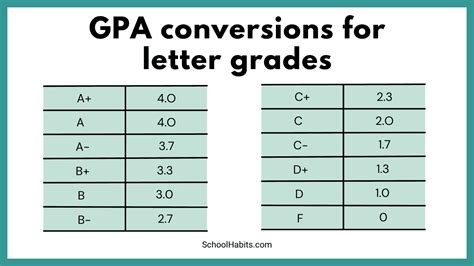
Cumulative GPA (Grade Point Average) is a straightforward calculation that includes all earned grades across a student’s academic career. Each course grade is assigned a numerical value based on a 4.0 scale, with 4.0 representing an A. The cumulative GPA is simply the average of all these numerical values.
Weighted GPA
Weighted GPA takes into account the level of difficulty of the courses taken. Honors, accelerated, or Advanced Placement (AP) classes carry more weight in the calculation compared to standard courses. This means that students who enroll in more challenging coursework can potentially earn a higher weighted GPA.
Comparison of GPA Types
Similarities
- Both GPA types reflect a student’s overall academic performance.
- They provide a standardized measure that facilitates comparisons between students and applicants.
Differences
| Feature | Cumulative GPA | Weighted GPA |
|---|---|---|
| Course Difficulty | Does not consider course level | Considers course level |
| Calculation | Average of all grades | Average of weighted grades |
| Effect of Challenging Courses | Less impact | More impact |
| Purpose | General assessment of academic performance | Emphasizes academic rigor |
Importance of GPA Types
Cumulative GPA
- Generally used for initial screenings by colleges and universities.
- Provides a broad overview of a student’s academic performance.
- Often used to determine eligibility for scholarships and honors.
Weighted GPA
- More heavily weighted in college admissions decisions.
- Demonstrates a student’s ability to handle challenging coursework.
- Can boost a student’s competitiveness for selective programs.
Common Mistakes to Avoid
- Overemphasizing GPA: While GPA is important, it should not be the sole determinant of a student’s qualifications.
- Inflating GPA with Easy Courses: Avoid padding your GPA with an excessive number of easy courses.
- Ignoring Course Difficulty: For weighted GPA, ensure that the challenging courses you take are relevant to your interests and goals.
- Comparing GPAs Blindly: GPA comparisons should only be made between students with similar academic backgrounds and course loads.
Benefits of Understanding GPA Types
- Informed Decision-Making: Knowing the differences between GPA types helps students make informed decisions about coursework and educational goals.
- Improved College Applications: Students can tailor their course selection and extracurricular activities to maximize their GPA for college admissions.
- Increased Self-Awareness: Understanding GPA allows students to assess their academic strengths and weaknesses.
- Enhanced Motivation: A clear understanding of GPA can motivate students to pursue academic excellence.
Grade Inflation: A Critical Consideration
Grade inflation, the phenomenon of grades rising over time, has implications for GPA interpretation. In recent decades, the average GPA for high school students in the United States has steadily increased. This trend may lead to a devaluation of GPA as a meaningful metric.
According to the National Education Association (NEA), the average high school GPA in the United States was 3.0 in 1990. By 2021, it had risen to 3.4. This substantial increase suggests that grades have become more inflated, potentially reducing the significance of GPA comparisons.
Emerging Trends in GPA Measurement
- Holistic Admissions: Colleges are increasingly adopting a more holistic approach to admissions, considering factors beyond GPA, such as extracurricular activities, personal essays, and letters of recommendation.
- Grade Deflation: Some schools are implementing measures to combat grade inflation, such as stricter grading policies and more rigorous coursework.
- Alternative Metrics: New metrics, such as growth mindset and academic portfolio, are gaining traction as alternative measures of student potential.
- Data Analytics: Colleges are using data analytics to identify patterns and trends in student performance, leading to more sophisticated GPA interpretations.
Conclusion
Cumulative GPA and weighted GPA serve distinct purposes in assessing student academic performance. Cumulative GPA provides a broad overview, while weighted GPA emphasizes academic rigor. By understanding the differences between these GPA types and avoiding common mistakes, students can make informed decisions about their academic journey and maximize their competitiveness for college admissions.