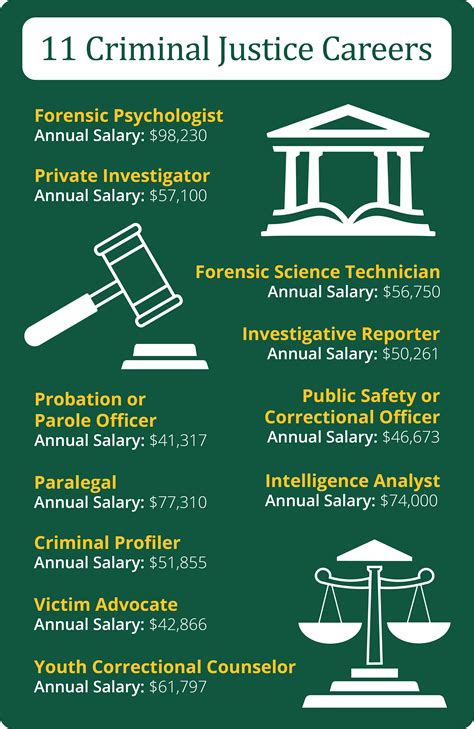
In the intricate tapestry of society, the criminal justice system stands as a cornerstone, upholding the rule of law, protecting citizens, and ensuring the fair administration of justice. With the surge in global crime rates and evolving societal challenges, the demand for highly skilled and dedicated professionals in this domain continues to soar.

A criminal justice degree provides a comprehensive foundation for individuals aspiring to make a meaningful impact in this field. It equips graduates with the knowledge, skills, and ethical compass necessary to navigate the complexities of the criminal justice system. From law enforcement to corrections and rehabilitation, the career opportunities available to criminal justice degree holders are as diverse as the challenges they face.
Career Pathways in Criminal Justice
Law Enforcement
- Police Officer: Enforces laws, responds to emergencies, conducts investigations, and arrests suspects.
- Detective: Investigates crimes, collects evidence, interviews witnesses and suspects, and presents cases for prosecution.
- Special Agent: Investigates specialized types of crimes, such as narcotics, cybercrime, or terrorism.
Corrections
- Correctional Officer: Supervises and manages incarcerated individuals, ensures their safety and security, and maintains order in correctional facilities.
- Probation and Parole Officer: Monitors and assists individuals on probation or parole, providing guidance, support, and supervision.
- Case Manager: Develops and implements individualized treatment plans for incarcerated individuals, focusing on rehabilitation and reintegration into society.
Judicial System
- Prosecutor: Represents the government in criminal cases, investigates crimes, prepares indictments, and presents evidence in court.
- Defense Attorney: Represents defendants in criminal cases, advises clients on legal options, and advocates for their rights.
- Court Administrator: Coordinates the daily operations of courts, including scheduling, case management, and recordkeeping.
Other Related Fields
- Forensic Psychologist: Assesses psychological factors in criminal cases, provides expert testimony in court, and develops therapeutic interventions for offenders.
- Criminologist: Studies crime and its causes, develops prevention strategies, and evaluates the effectiveness of criminal justice policies.
- Victim Advocate: Provides support and assistance to victims of crime, helping them navigate the criminal justice system and access resources.
Industry Overview: Trends and Projections
According to the U.S. Bureau of Labor Statistics, the demand for criminal justice workers is expected to grow by 7% from 2020 to 2030, faster than the average for all occupations. This growth is primarily driven by increasing crime rates, societal changes, and the need for improved public safety.
Projected Job Growth by Occupation:
| Occupation | Projected Growth Rate 2020-2030 |
|---|---|
| Police Officers | 5% |
| Detectives and Criminal Investigators | 8% |
| Correctional Officers | 6% |
| Probation Officers and Correctional Treatment Specialists | 10% |
| Lawyers | 9% |
Skills and Competencies: Essential Attributes
To excel in criminal justice careers, individuals should possess a diverse range of skills and competencies, including:
- Strong analytical and problem-solving abilities
- Excellent communication and interpersonal skills
- Proficiency in report writing and documentation
- Familiarity with criminal law and procedures
- Commitment to ethical and impartial decision-making
- Empathy and compassion for victims and offenders
- Physical fitness and agility
Education and Training: The Path to Success
Earning a criminal justice degree is the primary pathway to a career in this field. Bachelor’s and master’s degree programs in criminal justice provide a comprehensive curriculum that covers the legal, sociological, and psychological aspects of crime and its impact on society.
Common Degree Paths:
- Associate’s Degree in Criminal Justice (2-year program)
- Bachelor’s Degree in Criminal Justice (4-year program)
- Master’s Degree in Criminal Justice (2-year program)
Additionally, criminal justice professionals often pursue specialized training and certifications to enhance their skills and knowledge in specific areas, such as forensic science, corrections administration, or law enforcement leadership.
Career Development: Climbing the Ladder
Career advancement in criminal justice can take various paths depending on the field and individual aspirations. Common career progression opportunities include:
- Promotion to supervisory or management roles within law enforcement or corrections
- Transition to specialized units or assignments, such as narcotics or juvenile delinquency
- Educational advancement to obtain a master’s degree or doctorate
- Specialization in a particular area, such as forensic accounting or cybercrime investigation
- Pursuing leadership positions in government agencies or non-profit organizations
Challenges and Rewards: The Faces of Criminal Justice
Working in criminal justice presents both challenges and rewards. Challenges may include:
- Exposure to potentially dangerous situations
- Dealing with demanding workloads and high stress levels
- Navigating ethical dilemmas and biased perspectives
However, the rewards of a criminal justice career can be immensely fulfilling:
- Making a tangible difference in society by upholding justice and protecting citizens
- Helping victims of crime and supporting them through the legal process
- Contributing to the safety and well-being of communities
Innovations and Future Directions: Shaping the Future of Criminal Justice
The criminal justice system is constantly evolving, embracing innovations and technologies to enhance its effectiveness and efficiency. Emerging trends include:
- Data Analytics: Leveraging data to identify crime patterns, predict future crimes, and improve resource allocation.
- Predictive Policing: Using artificial intelligence to anticipate crime hot spots and deploy resources accordingly.
- Community Policing: Building strong relationships between law enforcement and the communities they serve to foster trust and enhance crime prevention.
- Restorative Justice: Focusing on repairing harm caused by crime through victim-offender reconciliation and community involvement.
These innovations are shaping the future of criminal justice, creating new opportunities and challenges for professionals in the field.
Frequently Asked Questions (FAQs)
- What is the average salary for a criminal justice professional? According to the U.S. Bureau of Labor Statistics, the median annual salary for police officers and detectives is $66,100 as of May 2021.
- What is the job outlook for criminal justice graduates? The job outlook for criminal justice professionals is projected to be strong, with a growth rate of 7% from 2020 to 2030.
- What are the benefits of earning a criminal justice degree? A criminal justice degree provides a solid foundation for a career in law enforcement, corrections, the judicial system, and other related fields. It also offers opportunities for career advancement and specialized training.
- What are the challenges of working in criminal justice? Working in criminal justice can be challenging due to potential dangers, high stress levels, and ethical dilemmas. However, the rewards of making a difference in society can be immense.
- What are the emerging trends in criminal justice? Emerging trends in criminal justice include the use of data analytics, predictive policing, community policing, and restorative justice.
Conclusion
A criminal justice degree opens doors to an array of challenging and rewarding careers dedicated to upholding the rule of law and ensuring public safety. With the increasing demand for skilled and ethical professionals in this field, graduates with a criminal justice education are well-positioned to make a significant impact on their communities and the world at large.