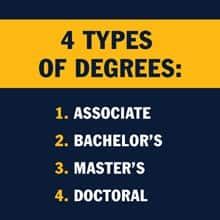
Introduction
In today’s competitive job market, a college degree is more important than ever before. But with so many different degree options available, it can be difficult to know which one is right for you. Two of the most popular choices are a bachelor’s degree and a master’s degree. But what’s the difference between the two? And which one should you choose?

In this article, we’ll break down the key differences between a bachelor’s degree and a master’s degree. We’ll also provide information on the costs, benefits, and career opportunities associated with each degree. By the end of this article, you’ll have all the information you need to make an informed decision about your education.
What Is a Bachelor’s Degree?
A bachelor’s degree is a four-year undergraduate degree that provides a broad foundation in a particular field of study. Bachelor’s degrees are offered in a wide variety of subjects, including the arts, sciences, business, and education.
What Is a Master’s Degree?
A master’s degree is a two-year graduate degree that builds on the knowledge and skills acquired in a bachelor’s degree program. Master’s degrees are offered in a wide variety of subjects, including the arts, sciences, business, and education.
What Are the Key Differences Between a Bachelor’s Degree and a Master’s Degree?
The key differences between a bachelor’s degree and a master’s degree are:
- Length: A bachelor’s degree takes four years to complete, while a master’s degree takes two years to complete.
- Depth of knowledge: A bachelor’s degree provides a broad foundation in a particular field of study, while a master’s degree provides a more specialized and in-depth knowledge of a particular subject.
- Research: Bachelor’s degree programs typically do not require students to complete a research project, while master’s degree programs typically require students to complete a thesis or dissertation.
Which Degree Is Right for You?
The best way to decide which degree is right for you is to consider your career goals. If you’re interested in a career that requires a broad foundation in a particular field of study, then a bachelor’s degree may be the right choice for you. If you’re interested in a career that requires a more specialized and in-depth knowledge of a particular subject, then a master’s degree may be the right choice for you.
Costs of a Bachelor’s Degree and a Master’s Degree
The cost of a bachelor’s degree or a master’s degree varies depending on the school you attend and the program you choose. However, the average cost of a bachelor’s degree is around $25,000 per year, while the average cost of a master’s degree is around $30,000 per year.
Benefits of a Bachelor’s Degree and a Master’s Degree
A bachelor’s degree or a master’s degree can provide you with a number of benefits, including:
- Increased earning potential: According to the U.S. Bureau of Labor Statistics, workers with a master’s degree earn on average 20% more than workers with a bachelor’s degree.
- Improved job opportunities: A master’s degree can open up doors to new job opportunities that may not be available to those with only a bachelor’s degree.
- Greater career advancement: A master’s degree can help you move up the corporate ladder more quickly than those with only a bachelor’s degree.
Career Opportunities for Bachelor’s and Master’s Degree Holders
Bachelor’s and master’s degree holders have a wide range of career opportunities available to them. Some of the most common career paths for bachelor’s degree holders include:
- Business
- Education
- Healthcare
- Information technology
- Social work
Some of the most common career paths for master’s degree holders include:
- Business management
- Education administration
- Healthcare administration
- Information technology management
- Public administration
How to Choose the Right Bachelor’s Degree or Master’s Degree Program
Choosing the right bachelor’s degree or master’s degree program is an important decision. Here are a few tips to help you make the best choice for you:
- Consider your career goals. What type of career do you want to have? What kind of education do you need to achieve your goals?
- Research different schools and programs. There are many different schools and programs that offer bachelor’s and master’s degrees. Take some time to research different schools and programs to find one that is a good fit for you.
- Talk to your advisor. Your academic advisor can provide you with valuable advice on choosing the right bachelor’s degree or master’s degree program for you.
Conclusion
Choosing the right college degree is a big decision. A bachelor’s degree can provide you with a broad foundation in a particular field of study, while a master’s degree can provide you with a more specialized and in-depth knowledge of a particular subject. Both degrees can provide you with a number of benefits, including increased earning potential, improved job opportunities, and greater career advancement. When choosing the right degree for you, it’s important to consider your career goals, research different schools and programs, and talk to your advisor.
Tables
Table 1: Average Cost of Bachelor’s and Master’s Degrees
| Degree | Average Cost |
|---|---|
| Bachelor’s Degree | $25,000 per year |
| Master’s Degree | $30,000 per year |
Table 2: Benefits of a Bachelor’s Degree and a Master’s Degree
| Degree | Benefits |
|---|---|
| Bachelor’s Degree | Increased earning potential, improved job opportunities, greater career advancement |
| Master’s Degree | Increased earning potential, improved job opportunities, greater career advancement, access to new job opportunities |
Table 3: Career Opportunities for Bachelor’s and Master’s Degree Holders
| Degree | Career Opportunities |
|---|---|
| Bachelor’s Degree | Business, education, healthcare, information technology, social work |
| Master’s Degree | Business management, education administration, healthcare administration, information technology management, public administration |
Table 4: Tips for Choosing the Right Bachelor’s Degree or Master’s Degree Program
| Tip | Description |
|---|---|
| Consider your career goals | What type of career do you want to have? What kind of education do you need to achieve your goals? |
| Research different schools and programs | There are many different schools and programs that offer bachelor’s and master’s degrees. Take some time to research different schools and programs to find one that is a good fit for you. |
| Talk to your advisor | Your academic advisor can provide you with valuable advice on choosing the right bachelor’s degree or master’s degree program for you. |