Introduction
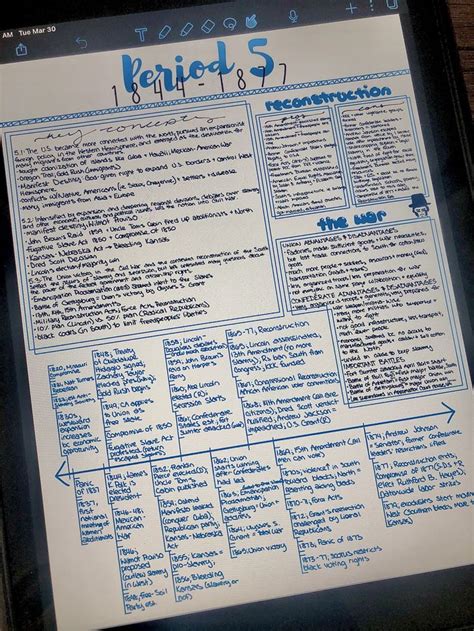
APUSH Period 5, spanning from 1844 to 1877, is a pivotal era in American history marked by rapid industrialization, territorial expansion, and political turmoil. This period witnessed the rise of big business, the emergence of new social and economic classes, and the outbreak of the Civil War.

Industrialization and Economic Growth
Industrial Revolution and the Rise of Big Business
- The Industrial Revolution transformed the American economy, leading to the growth of factories, railroads, and other industries.
- Corporations emerged as powerful economic entities, dominated by industrialists such as John D. Rockefeller and Andrew Carnegie.
- The gap between rich and poor widened dramatically, creating social tensions.
Immigration and the Workforce
- Millions of immigrants from Europe and Asia flocked to the United States in search of work and opportunity.
- Industrialization attracted a largely unskilled immigrant labor force, which contributed to the growth of cities and spurred economic development.
- Immigrants faced discrimination and economic exploitation, contributing to social unrest.
Territorial Expansion and Manifest Destiny
Westward Expansion and Native American Displacement
- The United States expanded its territory westward, acquiring land from Mexico and purchasing Alaska from Russia.
- Settlers and miners poured into the West, displacing Native American tribes and sparking conflicts.
- The Indian Removal Act of 1830 forcibly relocated Native American tribes to reservations, leading to widespread suffering and cultural loss.
The Civil War and Reconstruction
- Sectional tensions over slavery and economic policies culminated in the outbreak of the Civil War in 1861.
- The war resulted in the abolition of slavery and the preservation of the Union.
- Reconstruction after the war attempted to reshape the South and grant rights to freed slaves, but faced resistance and violence.
Social and Political Developments
Social Movements and Reform
- The abolitionist movement fought against slavery, culminating in the Emancipation Proclamation issued by President Abraham Lincoln.
- The women’s suffrage movement emerged, advocating for voting rights for women.
- The temperance movement sought to curb alcohol consumption, reflecting concerns about social ills.
Political Parties and Reform
- The Republican Party emerged as the dominant party in the North, supporting abolition, industrialization, and westward expansion.
- The Democratic Party, dominant in the South, supported slavery and states’ rights.
- Political machines and corruption plagued the political system, leading to calls for reform.
Conclusion
APUSH Period 5 was a transformative era in American history, characterized by significant industrialization, territorial expansion, and social and political upheaval. It laid the foundation for the modern United States, with its complex economic, social, and political landscape. Understanding this period is crucial for students of American history, providing insights into the nation’s origins, challenges, and accomplishments.
FAQs
- What were the key factors that drove the Industrial Revolution in the United States?
- How did immigration impact the American workforce and society?
- What was the significance of Westward Expansion and how did it affect Native Americans?
- What were the main causes and consequences of the Civil War?
- What were the key social movements and reforms that emerged during this period?
- How did political parties and corruption shape American politics in Period 5?
- What are the lasting legacies of this period in American history?
- What are the most important themes to focus on when studying APUSH Period 5?