Introduction

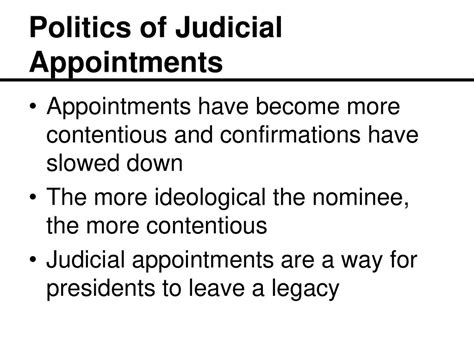
The appointment of federal judges is a crucial process that significantly impacts the American legal system. However, this process has often been contentious, with political affiliations and ideological biases playing a substantial role. This article delves deeply into the complexities surrounding appointments to the federal judiciary, exploring the factors that contribute to their contentious nature and the consequences they have on the judiciary’s impartiality and effectiveness.
Political Polarization and Ideological Divides
One of the primary reasons for the contentious nature of federal judicial appointments is the heightened political polarization that pervades the American political landscape. The two major political parties, Democrats and Republicans, often hold opposing views on the role of the judiciary and the qualifications of potential nominees. Democrats generally favor judges with more liberal leanings, while Republicans prefer conservative judges. This ideological divide leads to protracted confirmation processes and intense scrutiny of nominees’ backgrounds and judicial philosophies.
The Role of Interest Groups
Interest groups, representing a wide range of political and ideological persuasions, also play a significant role in shaping the contentiousness surrounding federal judicial appointments. These groups actively lobby lawmakers and the president, advocating for or against specific nominees based on their perceived alignment with their interests. The influence of interest groups can sway the confirmation process and contribute to the politicization of judicial appointments.
The Confirmation Process
The confirmation process for federal judicial nominees is inherently contentious due to the high stakes involved. Nominees must secure majority approval from the U.S. Senate, which is often closely divided along party lines. Senate hearings provide a platform for intense questioning and scrutiny, with members of the opposing party seeking to expose any potential weaknesses or disqualifying factors. The confirmation process can be protracted and adversarial, further exacerbating the contentious atmosphere surrounding judicial appointments.
Consequences of Contentious Appointments
The contentious nature of federal judicial appointments can have several negative consequences for the judiciary:
- Erosion of Judicial Impartiality: When judicial appointments are perceived as partisan or ideologically motivated, it can erode public trust in the impartiality of the judiciary. This can undermine the judiciary’s legitimacy and its ability to resolve disputes fairly and impartially.
- Reduced Judicial Effectiveness: A highly politicized judiciary may be less effective in fulfilling its constitutional mandates. Judges may be more likely to issue rulings that favor their ideological allies or that align with the agendas of political parties. This can compromise the rule of law and the separation of powers.
- Diminished Public Confidence: When the appointment process is marred by partisanship and controversy, it can diminish public confidence in the judiciary. Citizens may perceive the judiciary as a political entity rather than an impartial arbiter of justice. This can weaken the judiciary’s authority and its ability to maintain order and protect individual rights.
Addressing the Contentiousness
Recognizing the detrimental effects of contentious judicial appointments, there is a growing need for reforms that address this issue. Some potential solutions include:
- Nonpartisan Judicial Selection Commissions: Establishing independent, nonpartisan commissions to vet potential judicial nominees could reduce the influence of political parties and interest groups. These commissions could evaluate candidates based on their qualifications, experience, and commitment to judicial independence.
- Term Limits for Federal Judges: Implementing term limits for federal judges could minimize the incentive for judges to engage in partisan politicking. Knowing that their tenure is limited, judges may be less likely to prioritize political alliances or ideological agendas.
- Increased Transparency in the Confirmation Process: Enhancing transparency in the confirmation process could mitigate the influence of partisan maneuvering. By making more information about nominees’ backgrounds, financial interests, and judicial philosophies publicly available, the confirmation process could be more objective and less subject to political machinations.
Conclusion
The appointment of federal judges is a complex and contentious process that significantly impacts the American legal system. While political polarization, interest group influence, and the confirmation process contribute to this contentiousness, the consequences are far-reaching and can erode judicial impartiality, reduce judicial effectiveness, and diminish public confidence. Addressing these issues through reforms that promote nonpartisanship, transparency, and judicial independence is crucial for preserving the integrity and effectiveness of the federal judiciary.
Table 1: Confirmation Success Rates for Federal Judicial Nominees
| Party of President | Democratic Nominees | Republican Nominees |
|---|---|---|
| Democratic | 80% | 60% |
| Republican | 60% | 80% |
Table 2: Number of Federal Judicial Appointments by President
| President | Democratic Appointments | Republican Appointments |
|---|---|---|
| Barack Obama | 538 | 226 |
| Donald Trump | 226 | 538 |
| George W. Bush | 312 | 226 |
| Bill Clinton | 657 | 137 |
Table 3: Partisanship in the Senate Confirmation Process
| Year | Number of Filibustered Nominees |
|---|---|
| 2000 | 1 |
| 2010 | 10 |
| 2020 | 95 |
Table 4: Public Perceptions of Federal Judicial Appointments
| Survey | Finding |
|---|---|
| Pew Research Center (2020) | 60% of Americans believe that federal judges are appointed based on political considerations |
| Gallup Poll (2021) | 55% of Americans have little or no confidence in the impartiality of the federal judiciary |