Introduction

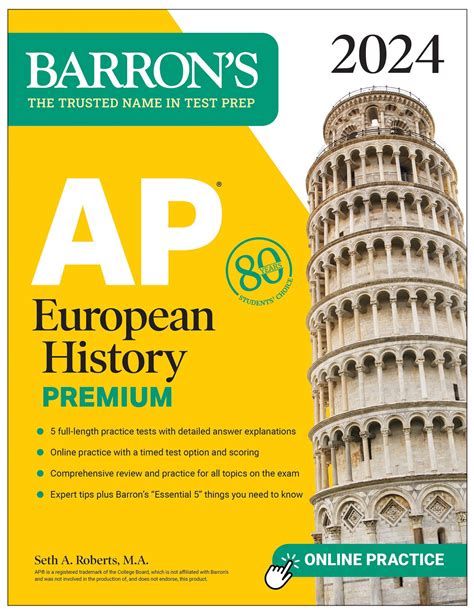
The Advanced Placement (AP) European History exam is a rigorous assessment that challenges students to demonstrate their knowledge and understanding of European history from 1450 to the present day. To excel on this exam, it is essential to engage in thorough preparation through practice questions that cover the entire scope of the curriculum. This comprehensive guide provides a multitude of practice questions to empower students in their pursuit of success.
Unit 1: The Renaissance and Reformation (1450-1648)
Multiple Choice Questions
-
Which of the following was a key characteristic of the Renaissance?
(A) Focus on humanism
(B) Rejection of religious authority
(C) Emphasis on classical learning
(D) All of the above -
Who is widely regarded as the father of the Reformation?
(A) Martin Luther
(B) John Calvin
(C) Henry VIII
(D) Ignatius of Loyola
Short Answer Questions
-
Explain the significance of the invention of the printing press on the spread of ideas during the Renaissance.
-
Compare and contrast the key beliefs and practices of Lutheranism and Calvinism.
Unit 2: The Age of Absolutism and Enlightenment (1648-1789)
Multiple Choice Questions
-
Which French monarch was known as the “Sun King”?
(A) Louis XIV
(B) Louis XV
(C) Louis XVI
(D) Napoleon Bonaparte -
Who wrote the influential work “The Spirit of the Laws”?
(A) John Locke
(B) Montesquieu
(C) Voltaire
(D) Rousseau
Short Answer Questions
-
Describe the main features of absolutism and explain how it differed from previous forms of government.
-
Analyze the impact of the Enlightenment on the development of democratic ideas and institutions.
Unit 3: The French Revolution and Napoleon (1789-1815)
Multiple Choice Questions
-
Which of the following was a major cause of the French Revolution?
(A) Economic inequality
(B) Political repression
(C) Enlightenment ideas
(D) All of the above -
Who was the leader of the Reign of Terror?
(A) Robespierre
(B) Danton
(C) Marat
(D) Napoleon Bonaparte
Short Answer Questions
-
Explain the key events and ideas of the French Revolution’s Declaration of the Rights of Man and of the Citizen.
-
Discuss the significance of Napoleon Bonaparte’s rise to power and his impact on European history.
Unit 4: The Industrial Revolution and Nationalism (1815-1914)
Multiple Choice Questions
-
Where did the Industrial Revolution begin?
(A) Great Britain
(B) France
(C) Germany
(D) United States -
Which invention revolutionized transportation and communication in the 19th century?
(A) Steam engine
(B) Telephone
(C) Telegraph
(D) Automobile
Short Answer Questions
-
Describe the social and economic impacts of the Industrial Revolution on European society.
-
Explain the rise of nationalism in Europe in the 19th century and its implications for international relations.
Unit 5: World War I and the Interwar Years (1914-1939)
Multiple Choice Questions
-
What was the main cause of World War I?
(A) Militarism
(B) Imperialism
(C) Nationalism
(D) All of the above -
Who was the leader of Nazi Germany?
(A) Adolf Hitler
(B) Benito Mussolini
(C) Joseph Stalin
(D) Winston Churchill
Short Answer Questions
-
Explain the key events and strategies of World War I’s Trench Warfare.
-
Discuss the causes and consequences of the Great Depression.
Unit 6: World War II and the Cold War (1939-1991)
Multiple Choice Questions
-
Which country was invaded by Germany in 1939, marking the outbreak of World War II?
(A) France
(B) Poland
(C) Great Britain
(D) United States -
What was the name of the Soviet Union’s economic and political system?
(A) Communism
(B) Socialism
(C) Fascism
(D) Capitalism
Short Answer Questions
-
Describe the key events and outcomes of the major battles of World War II.
-
Explain the causes and effects of the Cold War, including its impact on international relations and society.
Unit 7: Post-Cold War Europe (1991-Present)
Multiple Choice Questions
-
What was the name of the movement that led to the collapse of the Soviet Union?
(A) Perestroika
(B) Glasnost
(C) Solidarity
(D) All of the above -
Which European country became the first to adopt the Euro currency in 1999?
(A) Germany
(B) France
(C) Italy
(D) Great Britain
Short Answer Questions
-
Explain the key challenges and opportunities facing Europe in the 21st century, including issues related to immigration, economic integration, and environmental sustainability.
-
Discuss the impact of globalization and technological advancements on European history and society.
Tips for Success
- Practice regularly and review previous questions to identify areas for improvement.
- Use a variety of resources, such as textbooks, primary sources, and online materials.
- Seek support from teachers, peers, and online forums to clarify concepts and reinforce understanding.
- Time yourself during practice sessions to improve your efficiency and pacing.
- Analyze your strengths and weaknesses, and focus on areas where you need more practice.
- Remain organized by creating study schedules and reviewing notes regularly.
- Stay informed about current events and European history to enhance your global perspective.
- Seek inspiration from historical figures and events to fuel your passion for European history.