Introduction
The College Board’s Advanced Placement (AP) Biology exam is a rigorous assessment that requires students to demonstrate a deep understanding of biological concepts and their applications. The exam consists of two sections: a multiple-choice section and a free-response question (FRQ) section. The FRQ section accounts for approximately 50% of the total exam score, making it crucial for students to master this type of question.

Understanding the AP Bio FRQ
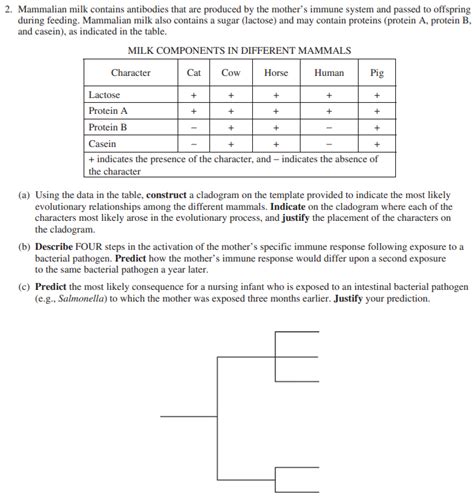
The AP Bio FRQ typically consists of six questions that cover a wide range of topics from across the AP Biology curriculum. These questions are designed to assess students’ ability to apply their knowledge of biology to real-world scenarios and to analyze and interpret data.
Types of AP Bio FRQ Questions
The FRQ questions on the AP Bio exam can generally be categorized into four main types:
- Data-based questions: These questions require students to analyze and interpret data presented in the form of graphs, tables, or other visuals.
- Short answer questions: These questions ask students to provide concise answers to specific biological questions.
- Long answer questions: These questions require students to write extended responses that demonstrate a thorough understanding of a particular biological concept or topic.
- Problem-solving questions: These questions present students with a problem or scenario and ask them to apply their biological knowledge to find a solution.
How to Prepare for the AP Bio FRQ
Preparing for the AP Bio FRQ requires a multifaceted approach that combines strong content knowledge with effective test-taking strategies. Here are some tips for developing the skills and expertise necessary for success:
1. Build a Solid Foundation
Begin by thoroughly studying the AP Biology curriculum and mastering the key concepts and theories. This includes understanding the structure and function of biological molecules, cell biology, genetics, evolution, and ecology.
2. Practice Analyzing Data
Data analysis is a fundamental part of the AP Bio FRQ. Regularly practice analyzing graphs, tables, and other data sets to identify trends, draw conclusions, and support your interpretations with evidence.
3. Hone Your Writing Skills
The AP Bio FRQ requires students to write concise, well-organized, and grammatically correct responses. Practice writing both short and long answers, focusing on using precise language, providing detailed explanations, and supporting your claims with evidence.
4. Utilize Past Exam Questions
The College Board releases past AP Bio exams for students to use for practice. Study these exams carefully, paying attention to the types of questions asked and the level of detail required in the responses.
5. Take Practice Tests
Taking timed practice tests under exam-like conditions helps simulate the actual testing environment and allows you to assess your progress and identify areas for improvement.
Tips and Tricks for the AP Bio FRQ
1. Read the Question Carefully
Take the time to fully understand the question you are being asked. Identify the specific task you are required to perform and any keywords that indicate the type of response expected.
2. Plan Your Response
Before you start writing, take a few moments to outline your response. This will help you organize your thoughts and ensure that you address all parts of the question.
3. Use Specific Evidence
Support your answers with specific examples, data, or concepts from the course material. Avoid using vague or general statements that do not provide concrete support for your claims.
4. Be Concise and Clear
Write your responses in a clear and concise manner, avoiding unnecessary details or jargon. Use precise language and focus on providing the most relevant information.
5. Time Management
Manage your time wisely during the FRQ section. Allocate time for each question based on its difficulty and the number of points it is worth.
Why FRQs Matter and How They Benefit You
Why FRQs Matter:
- In-depth Knowledge Assessment: FRQs require students to demonstrate a deep understanding of biological concepts and their applications, rather than simply memorizing facts.
- Critical Thinking Skills: FRQs test students’ ability to analyze data, draw conclusions, and solve problems, which are essential critical thinking skills for success in college and beyond.
- Preparation for College and Career: FRQs prepare students for the types of questions they will encounter in college-level science courses and in many science-related careers.
How FRQs Benefit You:
- Improved Understanding: The process of preparing for FRQs forces students to grapple with complex biological concepts and develop a deeper understanding of the material.
- Enhanced Analytical Skills: FRQs encourage students to develop strong analytical skills, which are valuable in many aspects of life, including science, research, and everyday problem-solving.
- Increased Confidence: Successfully completing FRQs can boost students’ confidence in their biology knowledge and abilities.
Additional Resources for AP Bio FRQ Preparation
- AP Central: The College Board’s official website for AP Biology, which provides a wealth of resources, including past exams, sample questions, and practice tools.
- Khan Academy: A free online resource that offers video lessons, practice questions, and full-length practice exams for AP Biology.
- Barron’s AP Biology Review Book: A comprehensive study guide that provides in-depth content review, practice questions, and strategies for success on the AP Bio exam.
Innovative Applications of AP Bio FRQ
The analytical and problem-solving skills developed through AP Bio FRQ preparation can be applied to various innovative applications in the field of biology. One creative idea is to use FRQs as a framework for designing “biomedical mysteries” for students.
These mysteries would present students with a real-world medical problem or scenario and challenge them to use their AP Bio knowledge to analyze data, identify potential causes, and propose solutions. Such mysteries could engage students in the interdisciplinary aspects of biology, foster their problem-solving abilities, and inspire them to pursue careers in biomedical research.
Tables
| Table 1: Types of AP Bio FRQ Questions | Percentage of Exam |
|---|---|
| Data-based questions | 30% |
| Short answer questions | 25% |
| Long answer questions | 35% |
| Problem-solving questions | 10% |
| Table 2: Sample AP Bio FRQ Topics |
|—|—|
| Cell structure and function |
| Molecular genetics |
| Evolution |
| Ecology |
| Biotechnology |
| Table 3: Tips for Writing Strong AP Bio FRQ Responses |
|—|—|
| Short Answer Questions: |
| – Answer concisely and directly. |
| – Support your answers with specific evidence. |
| – Use precise language and avoid jargon. |
| Long Answer Questions: |
| – Plan your response before writing. |
| – Organize your answer into paragraphs. |
| – Provide detailed explanations and examples. |
| Table 4: Benefits of Preparing for AP Bio FRQs |
|—|—|
| Cognitive Benefits: |
| – Deepens understanding of biological concepts. |
| – Enhances analytical and problem-solving skills. |
| – Develops scientific reasoning and writing abilities. |
| Practical Benefits: |
| – Prepares for college-level science courses. |
| – Supports success in science-related careers. |
| – Boosts confidence in biology knowledge and abilities. |