
What is Course Equivalency?
Course equivalency is the process of determining whether a course taken at one institution is equivalent to a course offered at another institution. This process is often necessary when students transfer between colleges or universities. By establishing course equivalencies, students can ensure that their previously earned credits will be counted towards their degree requirements at their new institution.
Why Course Equivalency Matters
Course equivalency is important for a number of reasons. First, it can help students to avoid taking unnecessary courses. If a student has already taken a course that is equivalent to a required course at their new institution, they will not need to retake that course. This can save students time and money.
Second, course equivalency can help students to graduate on time. By transferring credits from a previous institution, students can reduce the number of courses they need to take at their new institution. This can help them to graduate sooner and enter the workforce earlier.
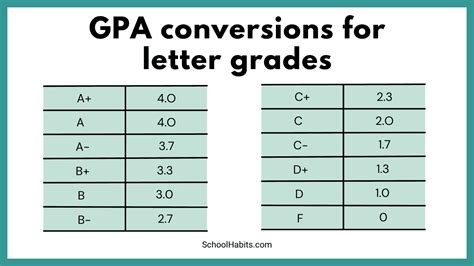
Third, course equivalency can help students to maintain their academic standing. If a student has earned good grades in a course that is equivalent to a course at their new institution, they will be able to transfer those grades to their new school. This can help them to maintain their GPA and stay on track for graduation.
How to Determine Course Equivalency
There are a few different ways to determine course equivalency. One common way is to use a course equivalency guide. These guides are typically published by colleges and universities and list the courses that are equivalent to each other at different institutions.
Another way to determine course equivalency is to contact the registrar’s office at the institution to which you are transferring. The registrar’s office will be able to provide you with information about the courses that are equivalent to those you have taken at your previous institution.
Finally, you can also use a course equivalency tool to determine course equivalency. These tools are available online and can be used to compare the courses you have taken with those offered at other institutions.
Common Mistakes to Avoid
There are a few common mistakes that students make when it comes to course equivalency. One mistake is to assume that all courses are equivalent to each other. This is not always the case. Even if two courses have the same name, they may not be equivalent in terms of content or rigor.
Another mistake is to rely solely on course titles to determine equivalency. Course titles can be misleading. For example, a course titled “Introduction to Psychology” may not be equivalent to a course titled “General Psychology” at another institution.
Finally, it is important to keep in mind that course equivalency is not always an exact science. There may be some cases where two courses are not perfectly equivalent. However, by following the tips above, you can increase your chances of obtaining the most accurate course equivalency possible.
Benefits of Course Equivalency
There are a number of benefits to obtaining course equivalency. These benefits include:
- Saving time: By transferring credits, students can reduce the number of courses they need to take at their new institution. This can help them to graduate sooner and enter the workforce earlier.
- Saving money: Transferring credits can help students to save money on tuition and fees. This is because they will not need to pay for courses that they have already taken.
- Maintaining academic standing: Transferring credits can help students to maintain their GPA and stay on track for graduation. This is because they will be able to transfer the grades they earned in their previous courses to their new institution.
- Gaining a competitive edge: Students who have obtained course equivalency may have a competitive edge over other students who have not. This is because they will have a stronger academic record and will be more likely to graduate on time.
Conclusion
Course equivalency is an important process for students who are transferring between colleges or universities. By obtaining course equivalency, students can save time, money, and maintain their academic standing. If you are planning to transfer, it is important to start the course equivalency process early on. This will give you plenty of time to research your options and make sure that you get the most accurate course equivalency possible.
Tables
Table 1: Course Equivalency Guides
| Institution | Course Equivalency Guide |
|---|---|
| University of Texas at Austin | Course Equivalency Guide |
| Texas A&M University | Course Equivalency Guide |
| University of Houston | Course Equivalency Guide |
Table 2: Course Equivalency Tools
| Tool | Description |
|---|---|
| Transferology | A free online tool that allows students to compare courses from different institutions. |
| CourseMatch | A commercial tool that allows students to compare courses from different institutions. |
| Degree Compass | A tool that allows students to plan their transfer and track their progress towards graduation. |
Table 3: Benefits of Course Equivalency
| Benefit | Description |
|---|---|
| Save time | By transferring credits, students can reduce the number of courses they need to take at their new institution. |
| Save money | Transferring credits can help students to save money on tuition and fees. |
| Maintain academic standing | Transferring credits can help students to maintain their GPA and stay on track for graduation. |
| Gain a competitive edge | Students who have obtained course equivalency may have a competitive edge over other students who have not. |
Table 4: Common Mistakes to Avoid
| Mistake | Description |
|---|---|
| Assuming that all courses are equivalent | Not all courses are equivalent to each other. Even if two courses have the same name, they may not be equivalent in terms of content or rigor. |
| Relying solely on course titles | Course titles can be misleading. For example, a course titled “Introduction to Psychology” may not be equivalent to a course titled “General Psychology” at another institution. |
| Not keeping in mind that course equivalency is not always an exact science | There may be some cases where two courses are not perfectly equivalent. However, by following the tips above, you can increase your chances of obtaining the most accurate course equivalency possible. |