Introduction

In the fading daylight of twilight, when the stars begin to emerge, one celestial object often captures our attention: the planet Venus. Known as the “Evening Star” or “Morning Star” depending on its position relative to the Sun, Venus has fascinated astronomers and poets alike throughout history. This article explores the intriguing nature of Venus as seen at twilight, delving into its scientific characteristics, cultural significance, and practical applications.
Scientific Characteristics of Twilight Venus
Venus is the second closest planet to the Sun and the sixth largest in our solar system. It is an Earth-like planet with a similar size and mass, but it differs markedly in its surface conditions and atmosphere.
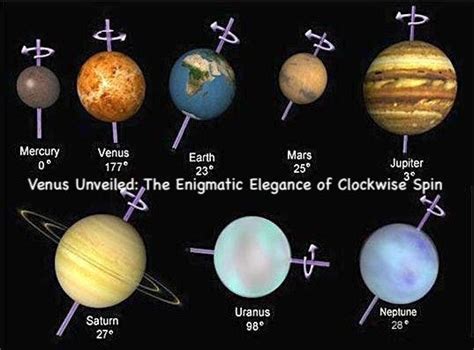
Orbit and Rotation: Venus orbits the Sun every 224.7 Earth days and rotates very slowly, taking 243 Earth days to complete one rotation. This extremely slow rotation leads to extreme surface temperatures and pressure.
Atmosphere and Surface: Venus has a thick atmosphere composed primarily of carbon dioxide and nitrogen. This dense atmosphere traps heat from the Sun, creating a runaway greenhouse effect that makes Venus the hottest planet in the solar system. The surface temperature averages around 864 degrees Fahrenheit (462 degrees Celsius), making it impossible for liquid water to exist.
Cloud Cover: The atmosphere of Venus is also characterized by thick, reflective clouds that completely obscure the planet’s surface from view. These clouds are composed of sulfuric acid droplets and prevent us from directly observing the planet’s topography.
Cultural Significance of Twilight Venus
Venus has held a place of fascination in human culture for millennia. Its bright appearance in the twilight sky has earned it numerous nicknames and mythological associations.
Evening and Morning Star: Venus’s position relative to the Sun determines its visibility in the sky. When it appears after sunset in the western sky, it is known as the “Evening Star.” When it rises before sunrise in the eastern sky, it is called the “Morning Star.”
Mythological Symbolism: In many cultures, Venus was associated with beauty, love, and fertility. The Greek goddess Aphrodite and the Roman goddess Venus were both associated with the planet and represented these qualities.
Practical Applications of Twilight Venus
Despite its inhospitable surface conditions, Venus offers potential practical applications.
Astronomical Research: The dense atmosphere of Venus provides a unique opportunity to study the dynamics and composition of planetary atmospheres. Scientists have used Venus as a test bed for developing atmospheric models and understanding the evolution of planetary climates.
Climate Change Insights: Venus’s extreme greenhouse effect has implications for understanding climate change on Earth. By studying the processes that led to Venus’s runaway greenhouse, scientists can gain insights into potential risks associated with human-induced warming.
Space Exploration: As space exploration advances, Venus has emerged as a potential target for future missions. Its proximity to Earth and its potential for atmospheric modification make it a viable destination for future human missions.
New Applications
The enigmatic nature of Venus continues to inspire new applications. The development of “Venus-like materials” with similar thermal properties to Venus’s surface could lead to advancements in thermal insulation and aerospace applications. Additionally, the study of Venus’s unique atmospheric dynamics may inform the design of future spacecraft and planetary exploration vehicles.
Tables
| Characteristic | Value |
|---|---|
| Orbital Period | 224.7 Earth days |
| Rotation Period | 243 Earth days |
| Surface Temperature | 864°F (462°C) |
| Atmospheric Composition | 96.5% CO2, 3.5% N2 |
| Common Mistakes to Avoid |
|—|—|
| Confusing Venus with Mars |
| Assuming Venus is a habitable planet |
| Underestimating the importance of Venus’s atmospheric research |
How to Step-by-Step Approach
- Observe Venus: Locate Venus in the twilight sky and observe its brightness and position relative to the Sun.
- Understand its Culture: Explore the mythological and cultural associations of Venus in different societies.
- Research its Science: Read scientific articles and visit reputable websites to learn about the characteristics of Venus’s atmosphere, surface, and orbit.
- Apply its Practical Importance: Consider the potential applications of Venus’s unique characteristics in fields such as astronomy, climate science, and space exploration.
Why Matters
Venus matters because it:
- Provides insights into planetary evolution and climate dynamics
- Offers a glimpse into the potential consequences of environmental degradation
- Inspires new technologies and space exploration missions
Benefits
The study and application of Venus’s unique characteristics offer numerous benefits, including:
- Enhanced understanding of planetary atmospheres and climate
- Mitigating risks associated with human-induced climate change
- Advancing space exploration and future human missions
Conclusion
The star seen at twilight is not merely a celestial body but a cosmic enigma that has captivated human imagination and scientific inquiry for centuries. Venus’s extreme surface conditions, thick atmosphere, and cultural significance make it an object of fascination, research, and potential application. As we continue to explore the wonders of our solar system, Venus will undoubtedly remain a source of inspiration and discovery, offering valuable lessons about the complexities of planetary evolution and the possibilities of future exploration.