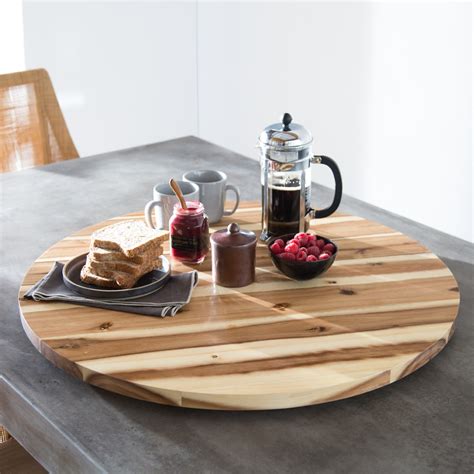
A wood table with a lazy Susan is a versatile and functional centerpiece for any dining room. The rotating platform allows for effortless sharing of dishes, making every meal a communal experience. With its timeless appeal and endless possibilities, a wood table with a lazy Susan is an investment in both style and convenience.

Benefits of a Wood Table with Lazy Susan
Enhanced Accessibility: The lazy Susan eliminates the need to reach across the table or pass dishes around, ensuring that everyone has equal access to every dish.
Space-Saving: The compact design of the lazy Susan maximizes table space, leaving ample room for cutlery, glassware, and decorations.
Conversation Catalyst: The shared experience of rotating the lazy Susan encourages conversation, creating a lively and engaging dining atmosphere.
Versatile Design: Wood tables with lazy Susans come in a variety of sizes, shapes, and finishes, complementing any décor style and accommodating any seating arrangement.
Applications Beyond Dining
While wood tables with lazy Susans are primarily used for dining, their versatility extends far beyond the dinner table:
Coffee Table: A lazy Susan can transform a coffee table into a functional centerpiece for gatherings, allowing guests to easily share snacks, drinks, and games.
Side Table: A smaller lazy Susan can be added to a side table to provide quick access to necessities like remotes, coasters, and magazines.
Craft Station: A lazy Susan can keep craft supplies organized and easily accessible while working on projects.
Office Workspace: A lazy Susan can organize desk accessories like pens, paper clips, and staplers, streamlining workflow.
Choosing the Right Wood Table with Lazy Susan
Size and Shape: Determine the appropriate size and shape based on the number of people you typically dine with and the available space. Round and square tables are suitable for smaller groups, while rectangular and oval tables accommodate larger gatherings.
Wood Type: Choose a wood species that complements your décor and is durable enough to withstand everyday use. Popular options include oak, mahogany, and walnut.
Lazy Susan Material: Lazy Susans are typically made from durable materials such as glass, wood, or metal. Consider the weight and stability of the lazy Susan when making your selection.
Overcrowding the Lazy Susan: Avoid overloading the lazy Susan, as this can make it difficult to rotate smoothly and can create a cluttered appearance.
Using Sharp Objects: Do not use sharp knives or forks on the lazy Susan, as they can scratch or damage the surface.
Ignoring Maintenance: Regularly clean and oil the wood table to preserve its beauty and extend its lifespan.
- Place the Lazy Susan Centrally: Position the lazy Susan in the center of the table to ensure easy access for all diners.
- Load the Lazy Susan: Arrange the dishes evenly on the lazy Susan, ensuring that heavier items are balanced with lighter ones.
- Rotate the Lazy Susan: Encourage diners to rotate the lazy Susan regularly to ensure that everyone has access to all dishes.
- Clear the Lazy Susan: After dining, clear the dishes from the lazy Susan and clean it before storing.
Q: What is the difference between a wood table and a regular table?
A: A wood table with a lazy Susan features a central turntable that allows dishes to be easily rotated for sharing.
Q: Can I use a wood table with a lazy Susan outdoors?
A: Yes, but choose a wood species that is weather-resistant, such as teak or cedar.
Q: How often should I clean the wood table and lazy Susan?
A: Wipe down the table and lazy Susan regularly with a damp cloth. For deeper cleaning, use a wood cleaner or polish.
Q: Can I customize the lazy Susan on a wood table?
A: Yes, some manufacturers offer the option to customize the lazy Susan’s size, material, and finish.
Tables
| Material | Average Price | Pros | Cons |
|---|---|---|---|
| Oak | $800-$1,500 | Durable, classic appearance | Susceptible to scratches |
| Walnut | $1,200-$2,000 | Rich color, smooth texture | Requires regular maintenance |
| Mahogany | $1,500-$2,500 | Luxurious appearance, resistant to rot | Can be expensive |
| Glass | $300-$800 | Modern look, easy to clean | May chip or shatter if dropped |
| Size | Number of People | Pros | Cons |
|---|---|---|---|
| 48 inches | 4-6 | Compact, suitable for small spaces | May be too small for larger groups |
| 60 inches | 6-8 | Accommodates most groups | Can feel crowded with large dishes |
| 72 inches | 8-10 | Suitable for large gatherings | Requires more space |
| Shape | Pros | Cons |
|---|---|---|
| Round | Equal access for all diners | Limited seating capacity |
| Square | Modern look, efficient use of space | May be less comfortable for larger groups |
| Rectangle | Accommodates more diners | Can be bulky in smaller spaces |
| Oval | Elegant appearance, combines the benefits of round and rectangular tables | More expensive than other shapes |
| Lazy Susan Material | Pros | Cons |
|---|---|---|
| Glass | Transparent, easy to clean | May chip or shatter if dropped |
| Wood | Durable, matches the table’s finish | Can scratch or warp if not properly maintained |
| Metal | Strong, stylish appearance | Can rust or tarnish over time |