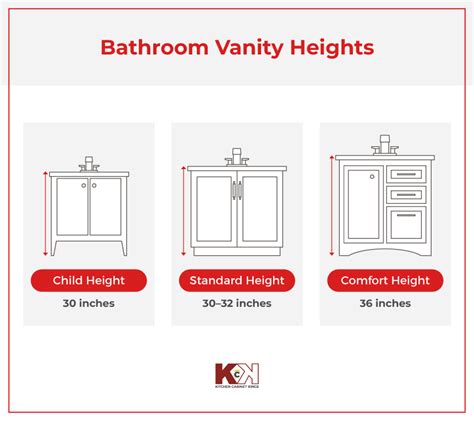
When it comes to bathroom renovations, choosing the right vanity height is crucial for creating a comfortable and functional space. The ideal height depends on various factors, including the height of the users and the overall layout of the bathroom. This guide will provide you with all the information you need to determine the optimal height for your vanity and elevate your bathroom experience.

Determining the Ideal Height: Key Considerations
The key to finding the right vanity height is to ensure that it aligns with the height of the users and provides comfortable access to the sink. Here are some essential considerations:
1. Measuring the User’s Height:
Measure the height of the tallest person who will be regularly using the vanity. This will give you a starting point for determining the appropriate height.
2. Standard Vanity Heights:
Standard vanity heights range from 32 inches to 36 inches off the floor. Most people find a height between 34 and 36 inches to be comfortable.
3. Optimal Elbow Height:
The most comfortable elbow height for using a sink is about 42 inches from the floor. This measurement can help you determine the ideal vanity height based on your height.
4. Countertop Thickness:
Consider the thickness of the countertop material you plan to use. A thicker countertop will elevate the sink height, so adjust the vanity height accordingly.
Table 1: Recommended Vanity Heights Based on User Height
| User Height Range | Recommended Vanity Height |
|---|---|
| < 5'6" | 32-34 inches |
| 5’6″ – 6’0″ | 34-36 inches |
| 6’0″ – 6’4″ | 36-38 inches |
| Over 6’4″ | Consider a custom vanity height |
Benefits of Choosing the Right Vanity Height
By selecting the correct vanity height, you can reap several benefits:
1. Improved Comfort:
A comfortably positioned vanity allows users to access the sink without strain or discomfort, enhancing the overall bathroom experience.
2. Optimal Ergonomics:
A well-chosen height minimizes bending and reaching, reducing the risk of back and neck pain, particularly for taller users.
3. Enhanced Functionality:
The proper height ensures that the sink is within easy reach, allowing for effortless water flow regulation and comfortable use of faucets.
4. Aesthetic Appeal:
A vanity that complements the user’s height and bathroom layout not only provides comfort but also enhances the overall aesthetics of the space.
Drawbacks of Choosing the Wrong Vanity Height
Choosing the wrong vanity height can have several drawbacks:
1. Physical Discomfort:
An improperly positioned vanity can cause discomfort while using the sink, leading to fatigue and pain.
2. Compromised Ergonomics:
A vanity that is too low or high can hinder proper posture, increasing the risk of musculoskeletal issues.
3. Reduced Functionality:
An uncomfortable height can make it challenging to reach the sink or use the faucet effectively, impairing the functionality of the bathroom.
4. Aesthetic Mismatch:
A vanity that does not match the user’s height and bathroom layout can appear disproportionate and unappealing.
Table 2: Common Vanity Height Mistakes and Their Consequences
| Mistake | Consequences |
|---|---|
| Vanity too low | Discomfort, bending, neck pain |
| Vanity too high | Reaching, back pain, impaired functionality |
| Vanity disproportionate to user height | Physical strain, aesthetic mismatch |
| Vanity not aligned with sink height | Water splashing, difficulty using faucets |
FAQs About Bathroom Vanity Height
1. What is the standard height of single sink bathroom vanities?
Most single sink vanities range from 32 to 36 inches in height.
2. How do I determine the ideal height for a double sink vanity?
For double sink vanities, consider the height of the tallest user and choose a height between 36 and 40 inches.
3. What if I have specific height requirements?
You can opt for custom-made vanities that cater to your specific height requirements.
4. How can I adjust the height of an existing vanity?
You can use vanity legs or blocks to raise the height of an existing vanity, but ensure proper stability.
5. How does the height of the vanity relate to the height of the toilet?
The vanity and toilet should be at approximately the same height for comfortable use.
6. What are some tips for making the vanity height more accessible?
Consider adding a step stool or using a vanity with drawers or shelves for easy storage.
7. What are the latest trends in bathroom vanity heights?
Floating vanities and vanities with built-in storage are becoming increasingly popular, allowing for customization and enhanced functionality.
8. How does the style of the vanity influence its height?
Traditional vanities tend to be taller, while contemporary vanities are often lower and more modern.
Conclusion
Determining the ideal bathroom vanity height is essential for creating a comfortable, functional, and aesthetically pleasing space. By considering the user’s height, measuring the elbow height, and understanding the standard vanity heights, you can choose a vanity that perfectly suits your needs. Remember, comfort should always come first when selecting a vanity height. With the information provided in this guide, you can confidently make a well-informed decision and elevate your bathroom experience.