APUSH Definition:

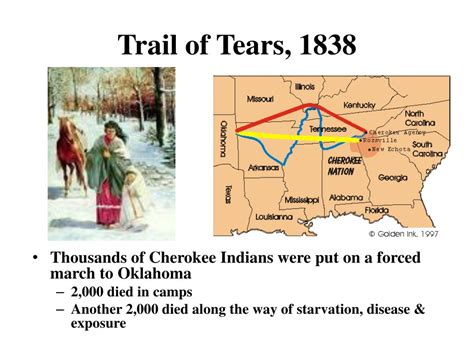
The Trail of Tears refers to the forced relocation of Native American tribes from their ancestral lands in the southeastern United States to present-day Oklahoma in the 1830s.
Historical Context:
The Trail of Tears was a result of the Indian Removal Act of 1830, passed by the United States Congress and signed into law by President Andrew Jackson. The act authorized the federal government to negotiate treaties with Native American tribes and relocate them to lands west of the Mississippi River.
Causes:
- Manifest Destiny: The belief that the United States was destined to expand westward fueled the desire to acquire Native American lands.
- Economic Factors: The southeastern United States was rich in agricultural land and other resources, which drew settlers and pressured the government to remove Native Americans.
- Political Pressure: President Jackson and his supporters sought to strengthen the national government and assert federal authority over Native American tribes.
Consequences:
The Trail of Tears had devastating consequences for Native American tribes:
- Loss of Life: Over 4,000 Native Americans died during the relocation, primarily due to disease, exposure, starvation, and exhaustion.
- Cultural Disruption: Tribes were forced to abandon their ancestral lands, homes, and way of life.
- Economic Hardship: Native Americans lost access to their traditional sources of food and sustenance, leading to widespread poverty and malnutrition.
- Social Trauma: The forced relocation caused immense psychological harm to Native American communities, who were uprooted from their families and traditions.
Resistance and Cooperation:
Native American tribes resisted the relocation in various ways:
- Diplomatic Negotiations: Some tribes attempted to negotiate more favorable terms with the government.
- Armed Resistance: The Seminole Wars in Florida and the Creek War in Georgia were notable examples of Native American resistance.
- Passive Resistance: Many tribes refused to cooperate with the government and had to be forcibly removed.
Historical Significance:
The Trail of Tears is a significant event in American history for several reasons:
- Violation of Treaty Rights: The government violated existing treaties with Native American tribes by forcibly removing them.
- Human Rights Violations: The relocation involved widespread suffering, disease, and death, constituting a clear violation of human rights.
- Racial Prejudice: The Trail of Tears reflected the prevailing racism and discrimination towards Native Americans in the 19th century.
- Legacy of Trauma: The event has had a lasting impact on Native American communities, leaving a legacy of trauma and distrust.
Additional Information:
- Timeline: The Trail of Tears occurred between 1838 and 1839.
- Number of Tribes Affected: Over 60 Native American tribes were forced to relocate.
- Destination: The tribes were moved to Indian Territory, which later became the state of Oklahoma.
- Trail Distance: The distance traveled by different tribes ranged from 500 to 1,200 miles.
- Historical Research: The Trail of Tears has been extensively studied by historians, resulting in books, articles, and documentaries.
Conclusion:
The Trail of Tears was a tragic chapter in American history that violated the rights of Native American tribes and resulted in immense suffering and loss. Understanding the causes, consequences, and historical significance of the event is essential for gaining a comprehensive perspective on American history and its impact on indigenous communities.