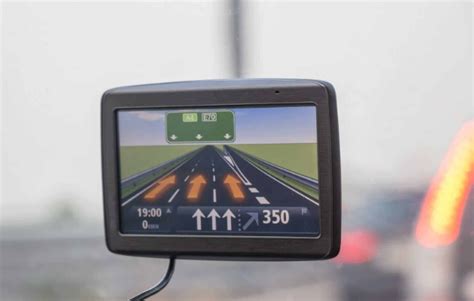
Satellite navigation (sat nav), also known as global navigation satellite systems (GNSS), is a technology that allows devices to determine their location on Earth using signals from satellites orbiting the planet. This technology has become an essential part of our daily lives, providing us with turn-by-turn directions, tracking our movements, and helping us find our way around in unfamiliar places.
How Sat Nav Works
Sat nav systems rely on a network of satellites that transmit signals containing information about their position and the time. Devices on the ground, such as smartphones, car navigation systems, and watches, receive these signals and use them to calculate their own position.
The devices typically use a technique called trilateration to determine their location. By measuring the time it takes for signals to reach them from at least three satellites, the devices can calculate the distance to each satellite and, thus, their own position.
Benefits of Sat Nav
Sat nav has revolutionized the way we navigate, offering numerous benefits over traditional methods such as maps and compasses. Some of the key benefits of sat nav include:
- Accuracy: Sat nav systems provide highly accurate positioning, with an error margin of just a few meters in most cases.
- Real-time updates: Sat nav systems receive real-time updates from satellites, providing users with the most up-to-date information on traffic conditions, road closures, and other important events that may affect their travel.
- Convenience: Sat nav systems are easy to use and provide clear, turn-by-turn directions. They eliminate the need for paper maps, which can be difficult to read and fold, and they reduce the risk of getting lost in unfamiliar places.
- Safety: Sat nav systems can help drivers stay safe by providing information about speed limits, upcoming hazards, and alternative routes in case of traffic congestion or road closures.
Market Size and Growth
The global sat nav market is expected to grow significantly in the coming years. According to a report by Allied Market Research, the market was valued at $48.5 billion in 2020 and is projected to reach $126.5 billion by 2030, with a compound annual growth rate (CAGR) of 10.2%.
This growth is driven by the increasing adoption of sat nav systems in various industries, including automotive, marine, aviation, and agriculture. Additionally, the development of advanced technologies, such as autonomous vehicles and drones, is expected to further fuel the demand for sat nav systems.
Applications of Sat Nav
Sat nav technology has a wide range of applications in various industries and sectors. Some of the most common applications include:
- Navigation: Sat nav systems are used for navigation in a variety of applications, including driving, walking, cycling, and boating.
- Tracking: Sat nav systems can be used to track the location and movement of vehicles, assets, and people.
- Mapping: Sat nav systems provide accurate and detailed maps, which can be used for planning trips, exploring new areas, and identifying points of interest.
- Surveying: Sat nav systems can be used to survey land, measure distances, and create accurate maps.
- Agriculture: Sat nav systems are used in agriculture to guide tractors, optimize crop yields, and monitor livestock.
- Construction: Sat nav systems are used in construction to ensure accurate positioning of equipment and structures.
- Mining: Sat nav systems are used in mining to guide vehicles, track equipment, and monitor production.
Emerging Applications
The potential applications of sat nav technology are constantly expanding. Researchers and innovators are exploring new ways to use this technology to solve problems and create new opportunities. Some emerging applications of sat nav include:
- Precision agriculture: Sat nav systems are being used to optimize crop yields, reduce pesticide use, and improve water management in precision agriculture.
- Autonomous vehicles: Sat nav systems are essential for autonomous vehicles, providing accurate positioning and guidance.
- Smart cities: Sat nav systems are being used to develop smart cities, which use technology to improve transportation, energy efficiency, and public safety.
- Space exploration: Sat nav systems are used to guide spacecraft and landers in space exploration missions.
Key Players in the Sat Nav Industry
The global sat nav market is dominated by a few key players, including:
- Trimble Navigation: Trimble is a leading provider of GNSS technology, offering a wide range of products and services for various industries.
- Garmin: Garmin is a leading manufacturer of sat nav devices for automotive, marine, aviation, and outdoor applications.
- Novatel: Novatel is a leading provider of GNSS modules and antennas for OEMs and system integrators.
- Hexagon AB: Hexagon AB is a leading provider of GNSS technology for surveying, construction, mining, and other industries.
- Septentrio: Septentrio is a leading provider of high-precision GNSS receivers for demanding applications such as autonomous vehicles and robotics.
Challenges and Future Trends
Despite its widespread adoption and numerous benefits, sat nav technology faces some challenges and limitations. These include:
- Signal availability: Sat nav systems can be affected by factors such as weather conditions, terrain, and buildings, which can block or weaken signals.
- Accuracy limitations: Sat nav systems have an error margin of a few meters in most cases, but this accuracy can be affected by environmental factors and other sources of interference.
- Cost: Sat nav devices and systems can be expensive, especially for high-precision applications.
Ongoing research and development efforts are focused on overcoming these challenges and expanding the capabilities of sat nav technology. Key trends that are likely to shape the future of sat nav include:
- Improved accuracy: New technologies, such as real-time kinematic (RTK) positioning, are being developed to improve the accuracy of sat nav systems.
- Increased signal availability: New satellites and signal processing techniques are being developed to improve signal availability in challenging environments.
- Reduced cost: The cost of sat nav devices and systems is expected to decrease over time as the technology becomes more widely adopted.
- Integration with other technologies: Sat nav technology is being integrated with other technologies, such as artificial intelligence (AI) and the Internet of Things (IoT), to create new and innovative applications.
Tips and Tricks for Using Sat Nav
Getting the most out of your sat nav device or system is not difficult. Here are some tips and tricks to help you make the most of this technology:
- Choose the right device: There are a variety of sat nav devices and systems available, so it’s important to choose one that meets your specific needs. Consider factors such as the size of the display, the features you need, and the price.
- Update your maps: Sat nav maps are constantly being updated with new roads, landmarks, and points of interest. Make sure you keep your maps up-to-date to ensure you have the most accurate information available.
- Use real-time traffic updates: Real-time traffic updates can help you avoid traffic congestion and delays. Make sure your sat nav device or system is capable of receiving real-time traffic updates.
- Plan your route in advance: If you’re going to be driving in an unfamiliar area, it’s a good idea to plan your route in advance. This will help you familiarize yourself with the route and avoid getting lost.
- Be aware of your surroundings: Sat nav systems are not perfect, and they can sometimes lead you astray. Always be aware of your surroundings and use your common sense when following directions from a sat nav device.
Conclusion
Sat nav technology has become an indispensable part of our lives, providing us with accurate navigation, real-time updates, and convenience. This technology has revolutionized the way we travel and has enabled new applications in various industries. As sat nav technology continues to evolve and improve, we can expect to see even more innovative and groundbreaking applications in the future.