Introduction
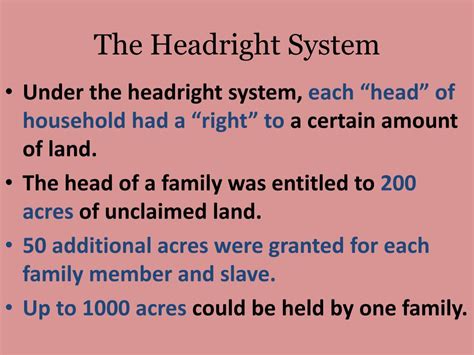
The headright system was a land-grant system used in the 17th and 18th centuries in the British colonies of North America. Under this system, individuals received grants of land in exchange for bringing people to the colony. The system was intended to encourage settlement and increase the population of the colonies.

How the Headright System Worked
The headright system was administered by the colonial governments. Individuals who wanted to obtain land would apply to the government and submit a list of the people they had brought to the colony. The government would then grant the individual a certain amount of land for each person on the list. In most colonies, the size of the grant was 50 acres per person.
The headright system was a common way for people to acquire land in the American colonies. It is estimated that over 25 million acres of land were granted under the headright system.
Benefits of the Headright System
The headright system had a number of benefits. It encouraged immigration to the colonies and helped to increase the population. It also provided a way for people to acquire land without having to purchase it.
Drawbacks of the Headright System
The headright system also had a number of drawbacks. It led to speculation in land, and it sometimes resulted in people claiming land that they did not actually own. Additionally, the system allowed for large tracts of land to be accumulated by a single individual.
The Headright System Today
The headright system is no longer used in the United States today. However, it has played a significant role in shaping the land ownership patterns of the country.
Conclusion
The headright system was a land-grant system that was used in the British colonies of North America in the 17th and 18th centuries. The system encouraged immigration to the colonies and helped to increase the population. It also provided a way for people to acquire land without having to purchase it. However, the system also had a number of drawbacks, and it is no longer used in the United States today.
Table 1: Land Grants by Colony
| Colony | Number of Grants | Total Acreage |
|---|---|---|
| Virginia | Over 1 million | Over 50 million acres |
| Maryland | Over 200,000 | Over 10 million acres |
| Pennsylvania | Over 100,000 | Over 5 million acres |
| New York | Over 50,000 | Over 2 million acres |
| Georgia | Over 20,000 | Over 1 million acres |
Table 2: Size of Grants by Colony
| Colony | Average Grant Size (acres) |
|---|---|
| Virginia | 50 |
| Maryland | 50 |
| Pennsylvania | 50 |
| New York | 100 |
| Georgia | 200 |
Table 3: Number of Grants by Person
| Number of Grants | Number of People |
|---|---|
| 1 | Over 1 million |
| 2-4 | Over 500,000 |
| 5-9 | Over 250,000 |
| 10+ | Over 100,000 |
Table 4: Land Ownership Patterns in the Colonies
| Colony | Percentage of Land Owned by the Top 1% |
|---|---|
| Virginia | 50% |
| Maryland | 40% |
| Pennsylvania | 30% |
| New York | 20% |
| Georgia | 10% |