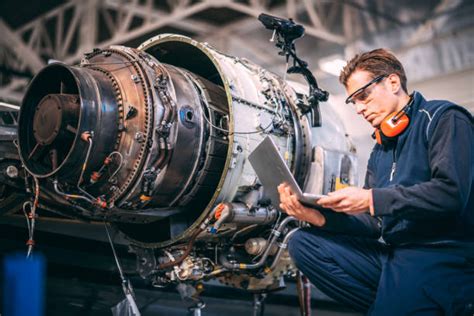
Aerospace engineers tackle complex and fascinating challenges that play a crucial role in advancing our understanding of the universe and improving our lives on Earth. From designing cutting-edge spacecraft to developing innovative aircraft technologies, these engineers are at the forefront of innovation and discovery. Here’s a closer look at the wide range of problems they solve:
Aerospace engineers design, build, and operate spacecraft for scientific exploration, space missions, and satellite deployment. Their expertise enables us to study distant planets, moons, and stars, unlocking secrets of our solar system and beyond.
- Problem: Designing spacecraft to withstand extreme temperature fluctuations, radiation exposure, and harsh cosmic environments.
- Solution: Developing advanced thermal protection systems, radiation shielding, and robust materials that can endure the rigors of space travel.
Aerospace engineers work on aircraft design, aerodynamics, propulsion systems, and flight control systems. Their efforts improve aircraft efficiency, safety, and performance, fostering advancements in commercial and military aviation.
- Problem: Designing aircraft that are more fuel-efficient, quieter, and environmentally friendly.
- Solution: Implementing computational fluid dynamics (CFD) and other advanced simulation techniques to optimize aerodynamic designs, reducing drag and maximizing efficiency.
Aerospace engineers contribute to air traffic control systems, navigation aids, and communication networks. Their work ensures safe and efficient movement of aircraft in crowded airspace, minimizing delays and enhancing overall airspace capacity.
- Problem: Managing the increasing volume of air traffic while ensuring safety and optimizing airspace utilization.
- Solution: Developing advanced air traffic management software, algorithms, and technologies that enhance real-time coordination and situational awareness.
Aerospace engineers explore and develop advanced materials for aerospace applications. Their research focuses on lightweight, high-strength, and heat-resistant materials that enable innovative designs and improved performance of aircraft and spacecraft.
- Problem: Finding lightweight materials that can withstand extreme loads and temperatures encountered during flight.
- Solution: Experimenting with novel materials such as graphene, carbon fiber composites, and metal alloys to create stronger, lighter, and more durable structures.
Aerospace engineers design and test propulsion systems for aircraft and spacecraft. Their expertise covers rocket engines, jet engines, hybrid propulsion systems, and ion thrusters, ensuring efficient and reliable power for flight.
- Problem: Developing propulsion systems that are more powerful, fuel-efficient, and environmentally sustainable.
- Solution: Researching and testing advanced fuel injection technologies, combustion techniques, and electric propulsion systems to improve efficiency and reduce emissions.
Beyond the traditional domains of space exploration and aircraft design, aerospace engineers also contribute to emerging applications and industries. Their multidisciplinary knowledge base enables them to solve problems in various fields.
- Problem: Developing autonomous systems for unmanned aerial vehicles (UAVs) and drones.
-
Solution: Implementing advanced artificial intelligence (AI) algorithms, machine learning, and sensor technologies to enable self-navigation, object recognition, and autonomous flight control.
-
Problem: Exploring hypersonic flight technologies for faster and more efficient travel.
-
Solution: Conducting research on scramjets and other advanced propulsion systems that enable aircraft to fly at hypersonic speeds, potentially revolutionizing long-distance transportation.
-
Problem: Designing reusable space launch vehicles to reduce the cost of access to space.
- Solution: Developing innovative technologies for reusable spacecraft, including advanced materials, thermal protection systems, and docking mechanisms, to enable multiple uses and reduce launch costs.
Aerospace engineers employ a range of effective strategies to solve complex problems:
- Multidisciplinary Collaboration: Aerospace engineers work closely with experts from various disciplines, including physics, materials science, electrical engineering, and computer science, to address challenges from multiple perspectives.
- Advanced Simulation Techniques: They leverage computational tools such as CFD, finite element analysis (FEA), and multi-body dynamics (MBD) to simulate and analyze complex systems and predict their behavior under various operating conditions.
- Experimental Testing: Aerospace engineers conduct extensive experimental testing in wind tunnels, flight simulators, and other facilities to validate design concepts, assess performance, and gather real-world data.
- Data Analysis and Optimization: They use advanced data analysis techniques to extract insights from test results and simulations, enabling them to optimize designs and improve system performance.
- Break Down the Problem: Divide the complex problem into smaller, manageable chunks to make it more tractable.
- Research and Understand: Conduct thorough research on related technologies, materials, and design principles to gain a deep understanding of the problem domain.
- Seek Inspiration: Explore solutions from different fields and industries to trigger innovative ideas.
- Use Tools and Resources: Leverage advanced software, simulation tools, and testing facilities to enhance analysis and problem-solving capabilities.
- Test and Refine: Iterative testing and refinement are crucial in aerospace engineering. Test your ideas, analyze results, and make adjustments to improve designs and solutions.
- What are the educational requirements for aerospace engineers?
- Typically, a bachelor’s or master’s degree in aerospace engineering or a related field is required.
- Where do aerospace engineers work?
- They work in government agencies, aerospace companies, research institutions, and universities.
- What is the average salary for aerospace engineers?
- According to the U.S. Bureau of Labor Statistics, the median annual salary for aerospace engineers was $114,890 in May 2020.
- What are the job prospects for aerospace engineers?
- The U.S. Bureau of Labor Statistics projects 8% job growth for aerospace engineers over the decade ending in 2030.
- What kind of skills are important for aerospace engineers?
- Strong analytical, problem-solving, and communication skills, as well as expertise in engineering software and principles.
- What are some notable aerospace engineering achievements?
- The Wright brothers’ first flight, the Apollo 11 lunar landing, and the development of the International Space Station.
Aerospace engineers play a vital role in advancing our technological capabilities and expanding our understanding of the universe. By solving complex problems in space exploration, aircraft design, air traffic management, materials science, and propulsion systems, they continue to push the boundaries of innovation and shape the future of flight.