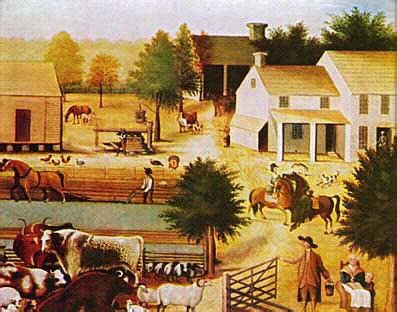
The Role of Geography
The Middle Colonies, comprising Pennsylvania, New Jersey, New York, and Delaware, played a pivotal role in the agricultural development of colonial America. Their advantageous location, fertile soils, and temperate climate endowed them with a unique agricultural landscape.

Fertile Soils: The Middle Colonies possessed a diverse array of soil types, including rich loams, clay loams, and sandy loams. These soils were ideal for growing a wide variety of crops, including grains, vegetables, and fruits.
Temperate Climate: The climate of the Middle Colonies was moderate, with warm summers and mild winters. This climate allowed for a longer growing season, enabling farmers to produce a greater abundance of crops.
Key Crops and Livestock
The Middle Colonies emerged as a major producer of a variety of agricultural products, including:
Grains: Wheat and corn were the predominant grains cultivated in the Middle Colonies. Pennsylvania alone produced over 5 million bushels of wheat annually by the mid-18th century.
Vegetables: Farmers grew an array of vegetables, including potatoes, cabbages, carrots, onions, and peas. The Middle Colonies supplied fresh produce to major urban centers such as New York City and Philadelphia.
Fruits: Apples, pears, plums, and peaches were among the fruits grown in abundance in the Middle Colonies. Farmers established orchards to produce these fruits, which were used for fresh consumption, cider production, and export.
Livestock: The Middle Colonies raised significant numbers of livestock, including cattle, pigs, sheep, and horses. These animals provided food, wool, leather, and transportation. The region became a major supplier of beef and pork to coastal cities.
Agricultural Innovations
Farmers in the Middle Colonies adopted a range of agricultural innovations to enhance productivity:
Crop Rotation: Farmers practiced crop rotation, a technique of alternating different crops in a field to maintain soil fertility and prevent disease.
Fertilizers: Farmers utilized natural fertilizers, such as manure and composted plant material, to replenish soil nutrients.
Plows: Farmers used improved plows, such as the Conestoga plow, to break up the soil more effectively.
Trade and Commerce
The Middle Colonies’ agricultural surplus fueled a thriving trade and commerce industry:
Export Market: Grain, livestock, and other agricultural products were exported to Great Britain, the Caribbean, and other regions. The Middle Colonies became a major exporter of wheat and flour to the British Isles.
Local Markets: Farmers also sold their products to local markets in towns and cities. The growth of urban centers created a steady demand for fresh produce, dairy products, and meat.
Transportation: The development of canals and roads facilitated the efficient transportation of agricultural products from farms to markets.
Impacts on Society
The agricultural prosperity of the Middle Colonies had far-reaching societal impacts:
Population Growth: The availability of abundant food resources contributed to the rapid population growth in the Middle Colonies. Immigrants from Europe and other parts of America flocked to the region in search of farmland and economic opportunities.
Economic Growth: Agriculture played a central role in the economic development of the Middle Colonies. Farmers generated wealth through crop sales and livestock production. The agricultural surplus fueled the growth of other industries, such as transportation, manufacturing, and trade.
Political Influence: The landed gentry, who owned large plantations, held significant political power in the Middle Colonies. They dominated local and state governments and influenced policies related to agriculture and commerce.
Conclusion
Agriculture was the cornerstone of the Middle Colonies’ economic, social, and political development. The region’s fertile soils, temperate climate, and agricultural innovations enabled farmers to produce an abundance of crops and livestock. This agricultural surplus fueled trade, commerce, population growth, and economic prosperity. The legacy of agriculture in the Middle Colonies continues to shape the region’s agricultural landscape and economy to this day.
Tables
Table 1: Crop Production in the Middle Colonies
| Crop | Annual Production (mid-18th century) |
|---|---|
| Wheat | 5 million bushels |
| Corn | 4 million bushels |
| Potatoes | 2 million bushels |
| Apples | 1 million bushels |
Table 2: Livestock Production in the Middle Colonies
| Animal | Population (mid-18th century) |
|---|---|
| Cattle | 250,000 |
| Pigs | 150,000 |
| Sheep | 100,000 |
| Horses | 50,000 |
Table 3: Agricultural Exports from the Middle Colonies
| Product | Export Destination |
|---|---|
| Wheat | Great Britain, Caribbean |
| Flour | British Isles |
| Beef | New York City, Philadelphia |
| Pork | Coastal cities |
Table 4: Agricultural Innovations in the Middle Colonies
| Innovation | Description |
|---|---|
| Crop Rotation | Alternating different crops in a field to maintain soil fertility and prevent disease |
| Fertilizers | Use of manure and compost to replenish soil nutrients |
| Plows | Use of improved plows to break up the soil more effectively |
| Canals and Roads | Development of transportation systems to facilitate the movement of agricultural products |