Understanding Moles and Their Significance
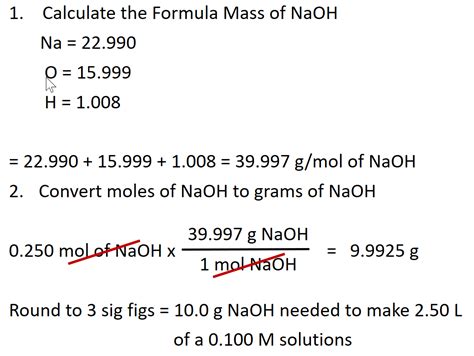
A mole is a fundamental unit of measurement in chemistry that quantifies the amount of a substance present. It represents the amount of a particular substance that contains exactly 6.022 × 10^23 individual entities, which can be atoms, molecules, ions, or electrons. This value, known as Avogadro’s number, provides a convenient way to relate the mass of a substance to the number of individual particles it contains.

Calculating the Number of Moles in 25 g of Water
To determine the number of moles in 25 g of water, follow these steps:
- Convert grams to moles: The molar mass of water is 18.015 g/mol. This means that 18.015 g of water contains 1 mole of water molecules. To convert 25 g of water to moles, divide the mass by the molar mass:
Moles of water = 25 g / 18.015 g/mol = 1.388 moles
Therefore, 25 g of water contains 1.388 moles of water molecules.
Applications of Moles in Chemistry
Moles play a crucial role in various chemical calculations and applications:
- Stoichiometry: Moles are used to balance chemical equations and determine the quantitative relationships between reactants and products in chemical reactions.
- Concentration: Moles are used to calculate the concentration of solutions, such as molarity (moles per liter) and normality (equivalents per liter).
- Titration: Moles are used to determine the unknown concentration of a solution by reacting it with a solution of known concentration.
- Gas Laws: Moles are used in gas law calculations to determine the volume, pressure, temperature, and number of moles of gases.
- Spectroscopy: Moles are used to calculate the number of absorbing or emitting species in a sample based on the absorbance or emission intensity.
Water in Various Contexts
Water, a ubiquitous molecule, is essential for life and has diverse applications in various fields:
- Biology: Water comprises over 70% of the human body and plays a crucial role in cellular processes, nutrient transport, and temperature regulation.
- Industry: Water is used in manufacturing processes, cooling systems, and power generation.
- Agriculture: Water is essential for irrigation and plant growth.
- Environmental Science: Water quality and availability are vital concerns for ecosystems and human health.
- Exploration: Scientists search for water on other planets and moons as a potential indicator of life and habitability.
Tables for Understanding Moles and Water
Table 1: Units of Measurement for Moles
| Unit | Description |
|---|---|
| Mole (mol) | The fundamental unit of measurement for the amount of a substance |
| Avogadro’s Number (NA) | 6.022 × 10^23 |
Table 2: Properties of Water
| Property | Value |
|---|---|
| Chemical Formula | H2O |
| Molar Mass | 18.015 g/mol |
| Density (at 25°C) | 1 g/mL |
| Boiling Point (at 1 atm) | 100°C |
| Freezing Point (at 1 atm) | 0°C |
Table 3: Applications of Moles
| Application | Description |
|---|---|
| Stoichiometry | Balancing chemical equations and determining quantitative relationships |
| Concentration | Calculating the concentration of solutions |
| Titration | Determining the unknown concentration of a solution |
| Gas Laws | Determining the volume, pressure, temperature, and number of moles of gases |
| Spectroscopy | Calculating the number of absorbing or emitting species in a sample |
Table 4: Why Water Matters
| Reason | Benefits |
|---|---|
| Biological Processes | Hydration, nutrient transport, temperature regulation |
| Industrial Applications | Manufacturing, cooling, power generation |
| Agriculture | Irrigation, plant growth |
| Environmental Science | Water quality, ecosystem health |
| Exploration | Indicator of life and habitability |
FAQs About Moles and Water
- What is the difference between a mole and a molecule? A mole is a unit of measurement for the amount of a substance, while a molecule is the smallest indivisible unit of a compound.
- How do I convert grams to moles? Divide the mass in grams by the molar mass of the substance.
- What is the molar mass of water? 18.015 g/mol
- Why is water important? Water is essential for life and has diverse applications in various fields.
- How many moles are in 500 g of water? Approximately 27.73 moles
- What is the relationship between moles and volume? The volume of a gas at a given temperature and pressure is directly proportional to the number of moles of gas present.
- How can I use moles to calculate the concentration of a solution? Multiply the moles of solute by the volume of solution in liters.
- What is the significance of Avogadro’s number? Avogadro’s number provides a bridge between the macroscopic and microscopic scales, allowing us to relate the mass of a substance to the number of individual particles it contains.